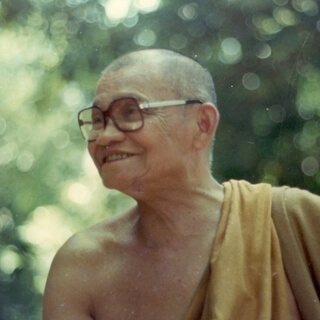
I am a 70-year-old man retired in the Philippines for the last 18 years.
I am married to a Filipina woman,
And we have three children.
None of them follow the Dharma.
This country is Catholic for the most part.
I try to follow the Dharma in the Theravada tradition,
Although I have always struggled to meditate regularly.
I am unhappy in my marriage,
And I don't have much support either.
My multiple medical conditions make it likely that I'll die soon.
I wish to know what chants you would recommend me to listen to and or any other suggestions for my remaining days.
Thank you for your kindness.
So you've gained this feeling that life is not short,
So therefore in the time that you have remaining,
You need to be very mindful.
You can try developing loving-kindness meditation,
And in terms of chanting,
You can chant Ittipiso,
Svakkhato,
Supatipanno,
So the recollection of the Buddha,
The Dhamma,
The Sangha,
And use this as your main chant.
And you can also increase that as well to the Yamkinchi chant,
So the Ratana Sutta.
If you're able to chant that,
Then you just carry on chanting that too.
And the Bhojanga Paritta as well,
And also chant the verse on developing loving-kindness.
And so when your health is not in a good state,
Then these chants of the Ratana Sutta and the Bhojanga Paritta,
They can help with that.
And you can chant those so that there isn't any difficulty or obstructions in the heart.
And try to be in the present moment a lot,
Because the number of breaths left are few.
And so you should think that my time left is not long,
And perhaps I'll go this year,
Or maybe next year,
This month,
Or perhaps next month,
Maybe this week or next week.
And see that the breath one has is of great value,
This in-breath,
This out-breath,
And try to be very mindful of that.
Try to cut away all other thoughts or worries.
And even though your family members respect another religion,
You should understand that religion is the developing of goodness.
It's being generous,
Giving up unskillful qualities,
Developing wholesomeness,
Having loving-kindness towards one another.
And the various religions are just names that you come up with following conventions.
But what the truth of it is,
Is developing a heart of loving-kindness,
Being selfless and not giving,
And abandoning the sense of self.
And so the thing that is really important is this pure emptiness,
Is entering this Buddha,
This nature of awakening.
And to do that we can't attach to anything.
That if we cling to this religion or that religion,
Then that will prevent us from getting there,
Because religion,
In truth,
Is emptiness.
So you should chant to bring the mind to peace,
Recollect the virtues of the Buddha,
Dhamma,
Sangha,
You take these as your highest refuge,
And try to sincerely train your mind and try to see that this body which you take to be yourself is,
In truth,
A collection of earth,
Water,
Fire,
And air,
That the mind clings to these four elements as a self.
And when that happens then there's aggravation and chaos within the mind.
So no matter what has passed within your life,
Having a wife,
Having a family,
If there's been difficulty in that,
You see that that's the nature of it,
That,
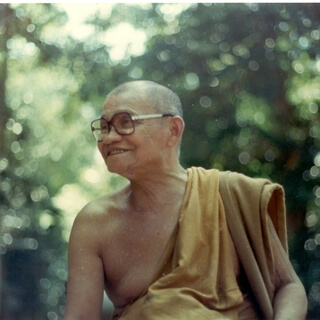
As Ajahn Chah said,
That being in a household that you're held in,
And in Thai the word for family literally translates as like the kitchen frame that you're encased,
And encased in a kitchen,
And within a kitchen there's fire,
And there's cutting,
And there's boiling,
And it's not peaceful there.
But the thing is,
Is that you chose to live that life,
And you have three children now,
But it's reached the time that you need to let go.
All the things in the past,
Don't think about those.
That you've experienced some happiness and some suffering.
It's not the case that you've only experienced happiness or only suffered in the life that you've lived in this world.
So you need to be intent and try to practice,
Try to change,
Train your mind,
Train to not attach to anything,
Because whatever you attach to,
That will cause suffering.
So the time that you have left,
Train your mind,
Whatever you've experienced suffering in the past,
So now come to meditate,
Take up Mekhamma's Baramiya of Renunciation,
And train in Silasamadhipanya,
Virtue,
Firm established mind and wisdom.
And with that then you'll be able to defeat the defilements in your heart,
Because these are what cause suffering to arise.
So do this a lot,
Do it frequently,
Train your mind consistently,
Evenly.
Whenever the mind starts to concoct,
Proliferate,
Then teach it in a way which allows peace to arise,
And bring up wisdom in order to be able to see all things as anatta,
As not-self.
This next question is from Yang Jing Cheng,
China.
Dear Ajahn,
When using chanting as a practice,
Afflictions may create disturbances.
When one is silently reciting a chant,
A slight feeling of irritation may arise,
And the mind may wonder,
Is the chant suitable for my personality?
Is the chant too long or too short?
One with a strong tendency towards anger may even feel dissatisfied with a chant for cultivating loving kindness.
When doubting whether the chosen chant is suitable for one's own temperament,
How can one determine if it truly fits their nature?
For someone who tends to doubt,
Overthink,
And is indecisive,
Worrying about breaking precepts and constantly contemplating,
What kind of practice would be suitable?
So you don't understand the meaning of why it is that we train in chanting.
It's the act of chanting that has a lot of benefits,
Because we are recollecting the virtues of the perfectly self-awakened Buddha,
And the Dhamma,
And the Sangha.
So we chant with this humility of heart,
With the heart of reverence and respect.
And there's many other chants that we can go through as well.
We chant with mindfulness,
To try to not send the mind out to go thinking about any other thing.
So if these thoughts are coming up,
Is this right,
Is this wrong,
Is this too short,
Is it too long,
Is it something that's appropriate for me,
And when thinking like this then the mind is not at peace,
But there's agitation and there's chaos instead.
And what this shows is that if you don't chant then your mind will be even more chaotic than this.
So in chanting there are these doubts,
This uncertainty coming up,
And this is a defilement that will obstruct you from creating goodness.
So like chanting the verse on spreading metta,
Is this appropriate for someone who has the tendency to be angry?
What's happening is that it's the defilements that don't like that chant,
Because they know that if you carry on doing it then you'll win out over that defilement.
So those defilements produce agitation in the mind.
So what it shows is that it's a correct practice for someone who has the tendency to become angry.
Or for those people who like beauty,
Then chanting the Kayakada chant of the 32 parts of the body,
Seeing the unattractive nature of the body,
That that is appropriate for someone of that tendency.
So you take these chants,
The chant of developing metta as well as the main chants that you do,
And also sharing merits and the reflection upon the normalcy of old age,
Sickness and death.
These are the main chants that we chant every day.
And to also chant with the most mindfulness that you can.
And perhaps then as you develop in your practice you'll get the feeling that I don't need to chant a lot,
And just do just the right amount,
And following the energy that I have,
And then come to sit in meditation.
And there's no need to do a lot because when I meditate the heart will be able to reach peace through that.
But if there's a lot of agitation in the mind,
Then you should try to find the time to chant first.
So maybe you can chant for 15 minutes or half an hour,
And if the time that you have is little,
Then just 15 minutes should be enough.
And then sit in meditation after that for half an hour,
45 minutes,
One hour.
And so try this out.
And the nature of doubts is that they will cut off and prevent peace from arising in the mind.
So we need to understand why it is that we chant.
And we do it for the sake of peace,
That it brings a lot of benefit.
And so you can try chanting.
And sometimes when we chant then the mind reaches a place of quietness,
Of stillness.
And when the mind's still then we're not able to chant anymore because it's in the state of peace already.
But when there's a lot of agitation in the mind,
Then you can recollect a verse,
A chant,
And to chant through that mindfully.
And then the heart can go from a place of chaos into peace,
Where there's a feeling of lightness in the body and the mind.
And so any experience,
Sense object,
That we meet with that may bring up agitation,
Greed,
Hatred and delusion,
Through the act of chanting then these can become lighter and can clear out because of the mindfulness that we have with the chanting.
And so this is able to help bring our minds to peace,
Able to help us cultivate samadhi.
And then with that we can contemplate in a way that allows wisdom to arise.
So if there's thinking going on,
Doubts going on,
This is normal.
But have a lot of mindfulness and know what's happening.
That the mind is being afflicted by doubts,
That it's proliferating already.
It's worrying about different things,
Getting involved in this and that.
And try to just put all of that down and focus on the breath,
The in-breath,
The out-breath.
And think that in just 30 minutes I will die and so I don't want anything else.
And just try to be mindful,
Just try to know this breath.
And think I'll die for sure,
I'll die for sure.
And then the doubts,
The agitation of the mind can disappear and can experience peace in its state.
And if there's still not peace there then you can hold your breath.
And so breathe in very deeply and then hold the breath.
And then breathe out all of the air and then breathe in again and hold your breath.
You can try doing this three times or five times,
Seven times,
Nine times.
And then the inner chaos and disturbance should get less and less.
So you can try this out.