How to live a happy life.
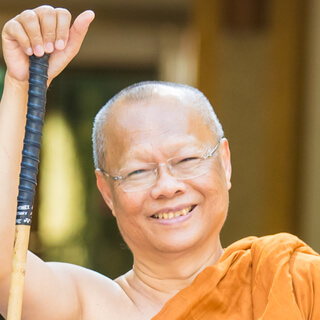
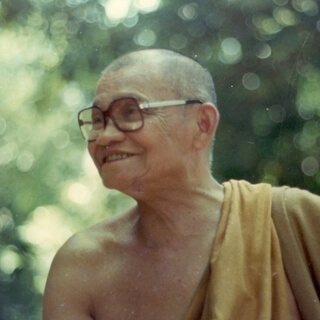
A collection of short Dharma teachings by Venerable Ajahn Anand.
The value of goodness.
The peace that arises from sila,
Or virtue,
Is indispensable for developing concentration.
If our moral conduct is shaky,
Then the mind will be shaky as well.
There'll be remorse,
Regret,
And various other kinds of mental states which keep concentration from arising.
And when concentration is weak,
It's very difficult to see into the truth of things.
It's important to see the value of virtue in this way.
The whole path of practice,
Right from the beginning,
Supports the arising of true peace and happiness.
Having generosity and kindness in daily life brings one kind of happiness to the mind.
The practice of virtue,
Developing care and attention around our speech and actions,
Brings a deeper kind of happiness.
And the practice of meditation brings a kind of happiness that's deeper yet.
The cultivation of Dharma practice is like planting a tree.
If you're living in a place where there's a lot of hot sunshine and no shelter,
This will cause discomfort.
But if you plant a tree and water it and look after that tree,
It can grow up to bring you shade and protection from the hot sun.
In the same way,
By developing generosity,
Virtue,
And meditation,
We're provided with protection from the heat and suffering of the world.
Without them,
It's like having nothing to protect us,
Nothing to give us shade.
A foundation for the heart.
Whether matters of work or family,
The Buddha gave us advice for going about them in a beneficial way.
He taught us to be diligent in all our duties and responsibilities.
He taught us to live harmoniously,
Developing an attitude of well-wishing and consideration for others.
He taught us to be generous with our earnings and possessions,
Allowing us to give up our more selfish desires.
All of these guidelines will aid our spiritual development.
It's important to understand the value of building a strong foundation in goodness.
Just as when we build a hall,
We first need a strong foundation.
In the practice of Dharma,
We need a strong foundation within our heart.
We should try to sincerely commit ourselves to living harmlessly by keeping moral precepts and cultivating feelings of kindness and forgiveness for others.
The mind will then have a sense of renunciation,
Learning how to give up attachment to the world for a higher good.
Living in this way lifts up the level of our mind,
Giving rise to inner peace and happiness.
This is called Sila and forms the foundation of Dharma practice.
Sila We have to begin with the foundation of Sila.
This is very important.
At first,
We may find this aspect of the practice difficult,
And it can even seem like it's increasing our sense of suffering.
But if we have patience and stick with it,
The result will be greater happiness throughout our life.
The moral precepts are teaching us to be very careful,
Very mindful of what we say and do.
Relying on them as a standard will stop the unwholesome mental tendencies from displaying themselves in our speech and actions.
In other words,
They stop us from creating suffering on the coarsest level.
By using these guidelines to live in a skillful way,
We will discover a sense of moral shame and wholesome fear of wrongdoing.
And once we've established this restraint in our heart,
And we're being very careful of how we act and speak,
Immediately we'll gain happiness from that.
This is happiness experienced as a sense of spaciousness and radiance of mind.
It's the freedom from amorous and unwholesome tendencies.
A standard for living The most basic level of Sila is the five precepts.
These are five simple guidelines we undertake to help us live in a way where we're not harming ourselves or others.
They are 1.
To refrain from killing or harming other beings.
2.
To refrain from stealing,
Taking what's not given.
3.
To refrain from sexual misconduct.
4.
To refrain from speech which is untruthful,
Speech which is divisive,
Speech which is coarse and unpleasant,
And speech which is frivolous.
And lastly,
5.
To refrain from taking alcohol,
Drugs,
Or other intoxicants which lead to heatlessness.
Normally we follow the five precepts as our basic standard,
But when we have the opportunity,
We can take on the eight precepts as a way of increasing our effort.
Keeping the eight precepts is a form of renunciation.
We don't eat after midday,
Leaving more time for meditation and eliminating the burden of having to look for food.
We make a determination not to engage in any kind of sexual activity or spend time listening to music and other forms of entertainment.
We don't bother with makeup,
Jewellery,
Or perfume,
And abstain from resting on overly comfortable beds which would cause us to indulge in sleep.
When we keep the eight precepts,
We give up these small external forms of happiness for the sake of dedicating ourselves to the practice of Dhamma.
Just keeping them for one day can bring great benefit,
Helping to prepare the mind for the practice of meditation and spiritual development.
Right View The Noble Eightfold Path begins with Right View,
Which includes an understanding of Kama.
Knowing what is wholesome Kama and what is unwholesome Kama,
What will lead us to happiness and what will lead us to suffering.
It all starts in the mind with our intentions and thoughts.
If our thoughts are skillful,
Our speech and actions will be skillful following that,
Which will bring us happiness.
If our thoughts are unskillful,
Then our speech and actions will also be unskillful,
And this will bring suffering.
We can see in society that when people get caught into situations where they're suffering in different ways,
It usually stems from wrong views and a lack of understanding about Kama.
The results they're experiencing are often just a product of their own unskillful words or actions.
When we have Right View,
Understanding the law of Kama,
It will always keep the mind cool.
This is the way of Dhamma.
When we go the other way,
Falling into wrong views and negativity,
The result is that we feel hot.
But if we understand the suffering that comes from having thoughts based in greed,
Anger,
And delusion,
We'll see the value in not following them.
Even though we can't yet stop them from arising,
By establishing our self in Sila,
Carefulness and restraint,
We can prevent them from spilling out into our external behavior.
Without the presence of Sila in our life,
We'll have nothing to direct us.
When we have to make decisions,
Finding the right way to speak and act,
We won't have any guidelines to follow.
So being well established in Sila is like having a compass to guide us through life.
Whether in the practice itself or in more general issues,
We'll be able to avoid creating suffering for ourselves and others.
This is the importance of Sila.
The Gift of Giving As our practice develops,
It may be that others criticize us for trying to let go of attachment and desire.
They think it's not normal.
You're strange and foolish if you don't want anything in life,
They say.
But we have to understand that there are different levels of desire.
Living in the world,
One earns money in order to buy things,
And as long as we're doing that within the boundaries of Sila,
Not harming or taking advantage of others,
Then there's nothing wrong with that.
On the refined level,
We'd still call it desire in the sense of wanting to get things,
But on the level of Sila,
It's not unwholesome.
It's not going beyond the boundaries of moral conduct.
As we progress in our practice,
We come to see the value of practice in generosity,
Sharing what we have.
We do charitable things like feeding homeless people,
Donating blood,
Assisting the elderly,
Supporting disaster relief,
And often financial aid to worthwhile causes.
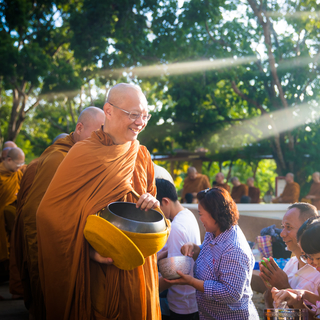
We can also support the sangha with the four requisites of food,
Shelter,
Clothing,
And medicine.
As we nourish their bodies,
They nourish our hearts by teaching us the dharma.
And as we practice giving away and sharing,
We'll find a sense of contentment arising.
But even so,
Others may say,
It's strange,
Why do you give away your possessions and money like that?
We may just have to accept that perhaps they don't see the value in it yet.
But if we contemplate this,
We can see that if we put all our energy into making more and more money,
Then we'd have no time left for spiritual practice.
Reflecting in this way with wisdom,
We may come to question the idea of placing work first,
Of accumulating more material wealth and possessions.
The spiritual wealth we're accumulating,
We can see for ourselves that it's worthwhile,
That it makes us happy.
Faith,
Renunciation,
Generosity,
Virtue,
Wisdom,
These qualities that we develop through the practice will follow us beyond death.
And as for what other people say,
We just have to accept that these are their views.
It's alright for them to have their own views,
Because the happiness we get from the practice is right there in front of us.
Even if they say we're foolish,
We don't need to worry.
We already know for ourselves,
This isn't foolish,
It's wise.