So to speak about the chant that we just did,
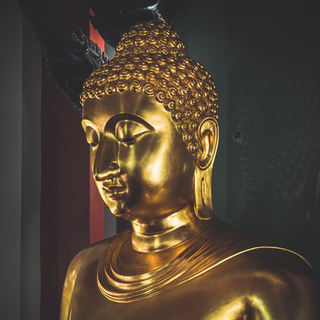
Sakattava Buddha Ratanam,
This means that the virtues of the Buddha are the highest jewel,
The highest treasure,
The best treasure.
And it's a medicine as well,
A medicine that is supreme,
Osatang.
And it's a medicine that cares for the heart,
To bring the heart to be free of all suffering.
And the Dhamma is a medicine for the heart as well,
That takes care of the heart to be free of all danger,
The dangers of old age,
Sickness,
And death.
As having been born,
We all have old age,
Sickness,
And degradation.
This is nature.
But it's also a medicine for the body as well.
In the time of the Buddha,
There were some,
There were arahants that got sick,
But when they listened to this chant,
The rapture of Dhamma,
Or Dhammapiti,
Arose in them and was able to treat their illness.
We also recollect that the qualities or virtues of the Sangha have no limit,
Are boundless,
And they are highest,
Supreme.
So having recollected this,
And this can help us to be free of all illness as well.
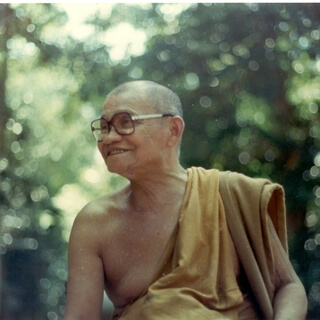
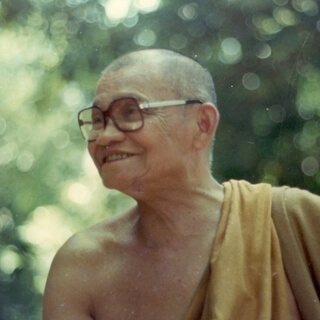
And we can look at the example of Venerable Ajahn Chah,
When he was ill,
He went to rest,
To rest the mind in stillness,
In samadhi.
And he would do that for three days,
Or five days,
To bring himself to be free from sickness.
And he did that at Wat Kuen,
In Si Rintan area.
And that's a very big forest,
About 3,
000 raya.
And it was quiet there.
He's able to care for his illness there.
And then he would return to Wat Nong Phra Phong.
And he said that this Wat Ba Kuen,
Where he cared for his illness,
That the Sangha should take good care of that monastery,
That it's an important place.
And the current abbot is Lungphu Bunchu.
And the prince of Thailand went to offer sangha dana at that monastery.
But back in the early days,
There was no electricity there.
There was no road.
It was not very developed.
I went there in the year 2521.
It was very quiet and secluded,
Secluded from development,
Secluded from society.
There was malaria there as well.
And it was a place where great masters could go on retreat and cultivate samadhi to care for their illnesses.
So we see that the virtues of the Buddha,
The Dhamma and the Sangha are supreme.
They're able to reduce illness and sickness.
And so when we think about all illnesses or all different types of sickness,
They come from kamma.
And when the kamma runs out,
Then the illness can disappear.
There was one Anagarika,
A great precept practitioner.
He had cancer in his bones.
And he meditated on Bhutto all through the night.
His mind became very bright and radiant,
Was able to fight with the pain in the body.
And after that,
He announced that his illness improved,
That it was better.
So this is a miracle of Dhamma.
So we chant Bhutto and we do that a lot.
We recite Bhutto Dhammo Sangho,
Bhutto Dhammo Sangho.
We do that all day long.
We can do it silently in our heart as well.
So we do the chanting and the mind is with the chanting to the point where the mind and the chant become one.
And this gives the mind strength and energy to make the body stronger,
To make the immune system stronger.
And just like the Bojango chant,
So the disciples of the Buddha,
They would chant this and their illnesses would lessen or disappear.
Just like the great ascetics,
Mahamoggalana and Mahakasyapa,
Their illnesses dissipated when they listened to the Bojangas.
They were able to establish mindfulness and contemplate the Dhamma.
So this is medicine of one type that can care for the body and mind.
And for Dhamma practitioners,
This quality of samadhi is important.
Samadhi can reduce illness.
We can also use that samadhi to then contemplate,
To realize the end of suffering.
And this quality of samadhi or mental collectedness,
A firm establishment of mind,
That's something we need to train in,
To practice,
To bring the mind to be firmly established,
Whether a lot or a little.
If our mind has a lot of firm establishment,
Then we'll have a lot of wisdom.
If the mind is firmly established only a little bit,
Then we'll have a little bit of wisdom.
But that great amount of firm establishment arises first from a little bit.
Like when we listen to the Dhamma,
Listening about convention and liberation,
Samuti and vimuti,
Sometimes understanding can arise.
And we can ask,
Well,
Is it the mind to the level of jhana at that point?
Well,
The samadhi isn't to the level of jhana at that point because it's listening,
It's thinking,
It's contemplating Dhamma.
But while it does that,
The mind is still.
And it's possible to understand the Dhamma while listening like this,
To see convention,
To see liberation.
The mind understands.
The experience of Dhamma arises.
One knows and sees the Dhamma.
This is the point at which views change.
Previously,
The mind clinged to conventions,
But then the mind sees it as not-self,
Sees through the convention.
This is something that's not difficult to do.
So we establish mindfulness,
Focus on the Dhamma,
We contemplate.
And the mind's able to see form and mentality as convention,
That all things are convention.
In truth,
There's nothing there.
It's all not-self.
It's vimuti,
Liberation.
So we see things differently than we've seen them before.
We contemplate impermanence,
Stress,
And not-self in order to give rise to this wisdom.
So we contemplate like this all the time.
This is for one who uses contemplation as their primary practice.
Because sometimes if we just meditate on buto,
Buto,
We can think in the mind that,
Well,
What use is this buto to us?
The mind can be stubborn like this.
I think,
Well,
What benefit am I getting from reciting buto?
And so one meditates and the mind doesn't go with buto.
It's not there with buto.
So this is a mind that likes to think.
So if the mind just is only with buto,
Then the mind doesn't like that.
So we set that aside then first and use contemplation as our primary practice.
We contemplate life,
We contemplate change,
We contemplate that the body is a heap of impermanence,
A heap of not-self,
That all things are impermanent and not-self.
We contemplate in this way in order to bring the mind to ease,
To relaxation,
To peace.
And when the mind is at ease,
Then this helps our body as well.
It's able to care for our body.
Sometimes our body has suffering,
The mind feels sad.
So if we bring the mind to feel at ease,
Then this gives rise to strength and energy that can then care for the body to help the body improve.
And if we have a lot of strength and energy,
Then it's able to reduce the illness or completely remove the illness from the body.
So it helps in two different ways.
So the Dhamma cares for the mind.
It's a medicine for the mind.
We also have outer medicines to care for the body as well.
So we use them together like this.
And we keep practicing.
We train in not being heedless,
But to be heedful in our lives.
Because in truth,
Having been born,
We have the in-breath and the out-breath,
And it's constantly degrading.
Our lives are constantly degrading all the time,
Bit by bit.
And having been born,
We all are companions in old age,
Sickness,
And death.
So we contemplate the Dhamma to give rise to rapture,
To peace and collectedness through contemplation.
We contemplate the body as a heap of natural elements,
As a heap of that which is not beautiful,
As a heap of stress,
As a heap of impermanence,
Suffering,
And not-self.
So we contemplate like this,
And we do it a lot.
If we give rise to doubts in the mind,
Then our minds won't be peaceful,
And we won't understand the path of practice.
If that's the case,
Then we endeavor to listen to the Dhamma,
To apply ourselves to the practice,
To understand the path,
The way of practice,
To give rise to understanding,
To knowing in the Dhamma.
So we train like this,
Then in no long time the mind can collect in peace and samadhi.
The mind feels cool and at ease.
The body and mind feel light,
And it's possible to see the Dhamma,
To change our views,
To change the views from seeing everything as self,
To seeing not-self.
And one can ask,
Was there still anger?
There's still anger,
But it's lessened.
One is able to control it,
As one understands.
Just like Lady Visakha,
She still had sadness and even tears,
But she had wisdom as well.
Having listened to the Dhamma from the Buddha,
She had wisdom arise.