When people talk about Buddhist meditation,
They usually talk about two aspects or two branches of meditation practice.
One is called shamatha or calm abiding,
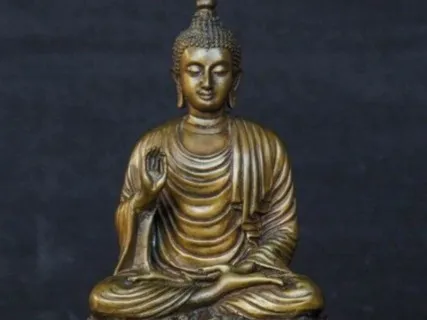
Which is where we place the mind on a single object like the breath or a colored disc or a Buddha image.
Any single object where you rest the mind,
Allow the mind to become single pointed.
When the mind becomes single pointed,
The mind becomes still and calm.
So it's called a calm abiding meditation.
And the second aspect or kind of meditation is called vipassana,
Commonly translated as insight practice.
A better translation would be clear seeing meditation.
In actual fact,
They're not really two branches of meditation as much as they're two sides of the same coin.
To develop vipassana or clear seeing,
You need a modicum,
You need a certain power of shamatha and calm abiding.
A distracted mind cannot cultivate insight and cannot see things clearly.
It's much like if you have a video camera,
Like today at the workshop when we're filming.
If my assistant held the camera and she was not calm and she shook around all the time holding the camera,
It would be impossible to see anything on the footage.
The footage would be blurry and when you went to look back at it,
You'd see no details.
So a distracted mind is like that.
And the mind is not calm and it's distracted by sensations in the body,
It's distracted by emotions,
It's distracted by mental constructs,
It's distracted by the senses.
It's like a shaky camera.
And the way we perceive reality is distorted,
Blurry and unreliable.
So because of this,
In order to cultivate insight or in order to see reality the way things are,
To see things clearly,
We need to put the camera on a tripod so that it can become still.
Putting the camera on the tripod is like resting the mind on a single meditation object.
So we start by resting the mind on the breath or any other chosen meditation object and we find that the mind jumps around and runs around like a monkey or a horse.
This is the nature of the untrained mind to run around and behave poorly.
It's not yet tamed.
The Buddha said that there are those that are fit to be tamed and the words are very carefully chosen.
When you tame something it becomes under your control and still.
So we use shamatha meditation or calm abiding meditation as a tool to tame our own mind so that our own mind comes under control and stops acting wildly.
Then like a camera on a tripod we can use it to see things clearly.
When we begin to see things clearly problems in life start to dissolve all on their own.
Most problems we have in life,
Whether they're in the body,
Whether they're associated with feelings and sensations with the body,
Whether they're emotional problems,
Intellectual issues or whatever arises,
Usually arise because we're seeing things in a distorted manner.
We've all had the experience in life where a close friend comes to us and they tell us their life problem,
Something that's arisen in their life,
It's creating great stress for them and they can't see a way out.
And it's very clear,
All you have to do is A,
B,
C.
It's very clear to us because we're separate.
From the outside it's often quite easy to see the way out.
But when we're caught up in things it's difficult to see the way out.
So seeing things from the outside,
Seeing things clearly is most of the work done for solving problems.
But when we're caught up and we're spinning around in the untamed mind,
In a mind that's not trained,
We can't see the way out of things.
So we have no insight into the nature of our problems,
We have no insight into the nature of our being and we can't see clearly the way things are.
So the Buddhist path is basically made up of three components.
The first component,
Sila,
Often translated as virtue,
More accurately in my opinion translated as restraint,
The ability to restrain our conduct.
We do this in order to create peace in our own life.
When we have no self-restraint we have a wild and untamed life.
Most people know from experience that a wild and untamed life,
Although it offers a false sense of freedom,
We usually end up ruled by the things that arise in this false sense of freedom.
We get caught in addictions,
Caught by bad habits and a poor lifestyle.
So the first step towards peace is to restrain our own behaviour.
Just restraining our own speech,
Our life instantly becomes a lot more peaceful.
If we just spread out whatever comes into our mind and we bark at anybody that annoys us,
We have road rage every time somebody cuts us off while we're driving,
We have no restraint,
Then we have no peace.
We'll have nothing but battles,
Nothing but arguments.
We don't get along with our spouse or our friends,
Our teachers,
Our students.
Everybody and everything in life becomes a battle because of our lack of restraint.
If we can't restrain our habits of eating,
We have all kinds of problems.
We overeat and we don't feel at peace.
Overeating creates all kinds of sufferings.
Eating poorly creates all kinds of sufferings.
We oversleep,
We feel dopey,
Tired,
Get headaches.
If you don't restrain your lifestyle and you stay up too much,
Don't sleep enough,
We have a suffering,
And we don't restrain our own conduct,
There's no peace,
Even on the most basic level.
Then as far as the virtue of that is concerned,
If you don't restrain your interaction with other people,
You go home at night and you feel awful.
Anytime you ever treat somebody poorly or you argue with a loved one or even a stranger,
Never that night do you go home and have a nice sleep with an open,
Warm heart.
Instead we go home and we feel terrible about ourselves.
This is just the human state.
We feel guilty.
So an unrestrained life does not lead to peace in the present moment.
So the first component of the path is simply restraining our own behavior to allow us to begin to find some kind of peace with ourself.
Then we want to use the energy that we generate from that peace.
We're no longer dissipating our energy in every direction with a frantic,
Crazy,
Untamed lifestyle,
Untamed mind,
Untamed energy and untamed body,
But instead it becomes restrained and still guilt free.
We're at ease with our own conduct.
Then when we can sit down and begin to cultivate the second aspect of the path,
Which is the meditation practice,
The shamatha practice of the stilling or the taming of the mind.
So first we restrain the body,
The speech and our conduct.
Then we restrain our mind and tie the mind down to a single meditation practice,
Like watching the breath or vital breathing in and out or the point inside the head.
And really any meditation practice will do.
This is like when we have a wild animal and we tie it to a post in order to tame it,
And we just leave it there and we let it try and run around,
But it can't run very far.
With time it becomes tired and it gets worn out and eventually it lies down and becomes still.
So in the same way we rest the mind on a single meditation object,
And when it runs away we gently bring it back to the breath.
It runs away thinking about last night and we gently bring it back again.
It runs away thinking about tomorrow,
Tonight,
About the next encounter we're going to have with a new lover,
About the new Tai Chi technique we learned,
About a new philosophy,
Music coming into the head.
Whatever the mind fabricates,
Whatever comes up in the mind,
We simply drop that,
Leave it behind and come back to the meditation object.
It's like when the animal tries to run away and hits the end of the rope and then it has to come back down and rest.
With time the mind will become tame and restrained.
A tamed mind can be used and is very useful.
The third aspect of the practice is the wisdom or insight,
Which in this means seeing reality for the way it is.
Often when we hear the word wisdom we think of having fancy Zen-like sayings,
Or poetic sayings that don't really mean anything and leave people kind of confused,
But that's not what we're talking about.
We're talking about simply seeing reality rather than being deluded by reality or confused by the way things are.
It sounds simple but most people are completely confused by the way things are and don't want to see life the way it is.
We want and we do see life the way we want it to be,
Not the way it actually is.
So aging happens,
Sickness happens,
Pain happens,
These natural components of life happen to us all and we don't want them to happen.
We insist that they don't happen.
No,
No,
I can't be injured,
I can't have pain,
I can't have sickness,
I have to be happy and perfect and my relationships are all joy and there's always up and happiness and there's never a down.
Seeing life the way we want it to be,
We suffer when it doesn't turn out like that.
And the fact is that it doesn't turn out like that because there's always duality in life.
So when we start to realize the way things are,
You become at peace with the way things are.
A simple example would be day and night.
If you were totally obsessed with daytime,
You thought that nighttime was terrible and negative,
You never wanted nighttime to come.
And every time that nighttime came,
You were upset by the arising of nighttime and you longed for daytime,
Well you'd be considered a crazy person.
However,
We still do that,
Exactly that same thing with many aspects of our life.
We want to be happy and when we're unhappy,
We're unhappy about being unhappy.
So we increase our unhappiness.
But the unhappiness is just a natural cycle,
Arising and falling,
Just the same way that night comes.
We want our health to last and be perfect,
But when sickness comes,
We're unhappy about being sick.
So we increase our sickness.
Now not only do we have pain in the body,
Maybe we have a chest infection,
So our breathing is painful,
But now we also have a miserable attitude,
We become a cranky bastard,
And we have all kinds of sufferings with our loved ones,
The people around us,
And internally.
We're all around unhappy about the arising of sickness.
And sickness is like night is today,
Sickness and health.
You cannot escape.
All beings that are born will suffer sickness.
So not seeing the natural reality of sickness,
We try to run away from it,
We try to hide from it,
We try to build this perfect life with a perfect diet and perfect air and perfect exercise,
And maybe we can maintain this bubble lifestyle,
But still we can't and we still get sick.
It's like just hoping that the daylight will last forever,
But eventually night time comes and then being upset about night time.
However,
Luckily we've all learnt the lesson about day and night and we don't get upset about night time.
But we still get upset about sickness,
About the ups and downs of the mental world,
About our happiness going up and down,
The ins and outs of relationships,
About normal things that arise,
Exist and fall away.
We want our best friend to be our best friend forever.
We want our love life to be like it was for that first amazing romantic honeymoon period,
But it falls away and it changes because everything changes.
When we grasp it,
Trying to hold things the way we want them to be,
When they change,
We're not happy about it,
We suffer because we want them to be stable,
We want them to be permanent,
But unfortunately they're not stable and they're not permanent.
And everything in life,
Everything that exists,
Everything that is manifest,
Arises,
Exists and falls away and changes.
So we learn to see things the way they are or to see clearly that everything that exists ends.
Everything that arises falls away.
Everything that changes and that nothing will be held onto in a stable way.
Seeing clearly the truth of impermanence,
For example.
So the insight of the past is seeing the way things are or clearly seeing reality.
The nature of reality has different aspects and one aspect,
Like we're talking about,
Is the aspect of change.
Now intellectually when we talk about it,
Nobody's going to deny that everything changes.
Nobody can think of anything that's unchanging.
There's nothing that's manifested that doesn't change.
So intellectually this truth is very easy to understand,
But intellectual understanding doesn't benefit us.
We have to see it clearly,
Repetitively,
By watching with a still and tamed mind so that you see the nature of it.
Then the truth becomes as simple as holding up your hand and knowing your own hand,
Or as simple as knowing that night will follow day.
When you see things very clearly in this way,
It's completely impossible for these truths to bother you anymore.
So when things that are good fall away,
When relationships that were rich end,
All the pleasures of life change,
The comings and goings of things,
No matter cause any fluctuation in your emotional state,
And you become at ease and no longer ruled by the ups and downs of life,
So you begin to tame your own mind.
The mind naturally finds a kind of stillness and a kind of peace in the fluctuations and ups and downs of life.
At the very basic level,
You become more at peace.
And the true sign of practice of spiritual life is not walking around in white robes and acting holy,
Or doing chants,
Or dealing with angels,
Or anything like that.
But the true sign of a cultivated practice is somebody that is at ease and peaceful,
And even when life is not how they want it,
They're still happy.
So they can be in serious physical pain,
They can be sick,
They can be death in the family,
They could be getting divorced,
Financially crashing,
All these things that happen on a daily basis in life,
But they're still at ease and happy.
So you have something that's more reliable than the ups and downs of life.
This is the purpose of training the mind at the very basic level.
We train the mind so that it becomes a refuge for us,
Something that is tamed,
Something that we can restrain,
And is under our control,
Rather than constantly under the control of outside influences,
Cause and effect of the outside world.
The outside world constantly changing,
And causes and conditions constantly changing,
Cannot be relied upon.
Today when we were doing our Tai Chi practice in the morning,
The temperature was quite pleasant.
So that's the causes of,
You know,
Morning,
Air con,
Not too long in the room,
And the condition being a nice temperature,
It's like,
Ah,
It was really comfy,
You know,
We're not sweaty,
It's pleasant.
After the sun beats down for a while and there's 30 or so bodies in the room heating it up,
Then the conditions change and it's hot,
And it's not as pleasant as it was before.
It's only a very small change,
But even that small change in cause and condition can make people,
You know,
Uncomfortable,
Irritated,
Their awareness and their concentration become short,
Because we're ruled by the conditions of the outside world.
And the conditions of the outside world are completely unreliable,
And they follow their own way.
Nobody can command the weather to stay at perfect temperature.
You can't command it to remain daytime.
You can't stop it from raining permanently.
These things constantly change.
Sometimes they're pleasant,
Sometimes they're unpleasant,
And sometimes they're neutral.
But if these basic things affect our happiness,
Then our happiness is completely unreliable,
Because we're dependent on that which is subject to change.
So,
You know,
Temperature and weather are a very basic example.
Let's say our partner that we live with,
Our husband or wife,
Or girlfriend or boyfriend,
Who we live with,
Who we are dependent on for our happiness.
So,
She's just so lovely and charming and smiles every morning and makes me,
You know,
Bacon and eggs for breakfast,
And I'm totally happy.
It's awesome.
But then the next day,
You know,
She's in total mood and cranky and throws the eggs at me,
Okay?
Now I'm upset and miserable.
My happiness was dependent on something on the outside,
Something that I can't rely on.
Can you even control your own mind and your own emotional state?
If you can,
Why don't you just stay right now?
For the rest of my life,
I'm going to be in bliss and happy.
It doesn't work like that.
So we can't even control our own mind,
Yet we still want to control the mind and emotional state of the people around us.
So this is what we call delusion.
We're deluded by the way things are.
We don't see clearly the way things are.
If we did,
We'd know that this person will follow their own nature and that their happiness is going to go up and down,
And that our relationship will have ups and downs,
And that that's just as natural as day and night.
So when it's rotten,
It's rotten,
Then you're happy,
And when it's good,
It's good,
Then you're happy.
Instead of when it's rotten,
You get dragged down into a pit of despair,
And when it's happy,
You fly up into all kinds of joy and bliss.
We develop a restraint of the mind,
A stillness of mind,
A stillness that rests in a natural kind of happiness.
When we develop this,
Whether things are good or bad,
We're at ease.
When they're good,
We enjoy the good,
And when they're bad,
The bad doesn't affect us,
Because we have something more reliable.
We can rely on the peace of our own mind.
So you can be in the worst situation externally and still be happy under these.
This is so valuable,
It can never be exaggerated how valuable it is,
Because there's nothing in life outside that we can rely on.
You can't even rely on your own insides.
You can't even rely on your own mind.
Your own mind will get in moods when you don't want it to.
Sometimes you wake up on the wrong side of the bed,
Cranky.
You don't want that to happen,
But it happens anyway.
So we can't even rely on that.
If you can't rely on your own mind,
Which is for most people what we consider to be the closest thing to ourselves,
The most internal part of our being,
What can we rely on?
If not yourself,
What can we rely on?
Well,
The fact is we can't rely on anything.
Everything changes.
So this is what we learn to see clearly,
The change in nature of things,
And become at peace with the way things are,
So that we're not dependent on things being how we want them to be.
We begin to rely on seeing.
We begin to rely on knowing.
We begin to rely on truth and find a dependency and a refuge in the way things are,
Rather than trying to find a refuge in the way we want things to be.
So when things change and go up and down,
It's almost amusing.
It's like an entertainment or watching a movie.
It's just the changes of life,
And we have a feeling of stepping back from ourselves.
Like before I was talking about when your friend comes and they tell you their life problem,
And it's so easy to solve it for them,
But they couldn't see the way out.
Same way when we go to an old friend asking for advice,
And they just tell you straight away,
And it's like,
Why couldn't I see that?
Because you're so involved.
When we're involved in ourselves,
We can't see clearly.
So we learn to step back from ourselves,
Take a step backwards,
And observe in a very detached manner,
See things clearly,
Just as things happening,
Just as things arising,
Just as things existing and falling away.
You see this change,
And you begin to become at peace with life.
Whether it's good,
Medium,
Or rotten,
Your happiness is pretty much always there.
It doesn't mean you don't enjoy the good,
But it means you're not ruled by the bad.
And if you practice this for a long time,
I guarantee you,
It does what it promises,
And you can be happy even in the worst conditions.
You can be suffering incredible kinds of physical pain or illness,
Or terrible things in family life,
And still be sitting there with a grin on your face,
At ease and happy,
Because you're not dependent on those things,
Nor looking to those things to provide you with happiness.
So the meditation practice,
First of restraining the mind and holding it still,
And then using that cultivated mind to see things clearly is the basis of the practice.
The calm abiding meditation is called shamatha,
And some people put forward that you don't need any calm in your practice.
There's a lot of schools of thought that say,
No need to develop this kind of meditation,
You only need to do vipassana practice,
All you need is mindfulness,
You don't need stillness.
Well,
It's a nice theory,
But the fact is that their mindfulness is like the shaky camera we were talking about before,
And that that un-still mindfulness cannot see things clearly.
This school of thought comes from a partial truth,
The truth being that you don't need to develop calm abiding or shamatha meditation all the way to the pinnacle.
It can be developed to very,
Very powerful and profound degrees of mental absorption,
Called jhana,
Which are powerful meditation states,
And they're incredibly blissful and powerful,
However they're not completely necessary.
You don't need that super-powered concentration in order to see things clearly,
But you do need a stable,
Calm,
Restrained and tamed mind.
The Buddha put forward three benefits of cultivating a calm and focused mind or practicing shamatha meditation.
The first one,
And this is very important,
Is we cultivate shamatha or samadhi for the pleasant abiding in the here and now.
So instead of going out and partying and getting on the drink or listening to music,
We find a new kind of pleasure.
In the beginning it's difficult to grasp it,
But with practice it arises,
And the calm of meditation becomes our new fun,
Our new bliss.
And when you get good at it,
I guarantee it outweighs any other sensation or feeling in life.
You can get more bliss from meditation than you ever can from drugs or sex or any other kind of stimulant.
So what it gives us straight away is a relatively reliable,
As well as wholesome,
Pleasant abiding for the here and now,
And just that is valuable.
So that's the first purpose of shamatha.
The first purpose of calm abiding meditation is that it is pleasant,
That it's nice,
That it's blissful,
That it feels good.
And it also,
Of course,
Makes the mind and body healthy.
The second purpose for practicing meditation is for the development of a supernatural power.
So what that means is developing psychic powers and the powers of a heightened mind.
In order to do that you have to develop a very powerful meditation,
And the jhanas,
Or the mental absorptions,
Where this calm abiding goes right into the pinnacle of that practice.
When you enter the jhanas,
The bliss is so intoxicating that pretty much anybody that ever achieves them once will want to ordain as a monk.
They are a life-changing experience.
It's not like a casual,
Nice feeling you get from meditation.
They are super empowering.
Entering it once,
The bliss will probably last for a week,
And you'll think you're enlightened and you'll want to ordain.
So they're very empowering states,
And it's like a supercharger for the mind.
They empower the mind so much that people can have all kinds of experience,
Like the experience of seeing and hearing things from a great distance,
Or reading the minds of others,
Seeing past life cycles and other psychic faculties.
So that's the second benefit of practicing restraining the mind and cultivating samatha meditation.
The third and most important benefit of practicing samatha is that it empowers the mind to lead the mind towards releasing the mental defilements or releasing the poisons inside our own heart.
So we do this through cultivating the strength and the stable,
Still mind,
And then pointing that stable,
Empowered mind towards seeing clearly the way that we are.
There's words,
Seeing our mental and emotional and physical habits,
How they are,
Not how we think they are,
Not our self-image of ourself,
But actually the truth of the way we behave,
The way we think and the way we act.
And then because this mind is so powerful and so still,
We can use it to gradually uproot the poisons within our heart,
Which cause all the problems in our life.
Because every pain that you experience,
That anybody experiences,
Is caused by the poison inside our own mind and heart.
Somebody that is perfectly purified is incapable of any form of suffering.
And it's hard to believe until you are around somebody that's achieved that state for long enough to observe them and see,
Yes,
This person is truly,
Completely,
Utterly,
100% free from suffering.
For example,
When I spend time with my teacher,
I spend day in,
Day out,
Day and night,
Extended periods of time with him,
And he's an old man,
He's 78 years old,
And he can be just working 24 hours a day for the service of others,
Benefiting other people,
And not sleep for days and days,
Constantly,
Not even get a moment to sit down in meditation,
Not a moment to rest,
Not a moment for himself,
Not even five minutes,
Constantly just benefiting other people,
Working for others,
In extreme physical conditions,
Which most people could not tolerate for even one hour,
That's not an exaggeration.
The physical suffering is so extreme,
But still,
He's beaming with so much happiness that it infects everybody around him.
And the reason is that the poisons are now removed from his heart,
He no longer has internal poisons.
The defilements of the mind have been uprooted forever,
So that there's nothing to bring the happiness down.
So his happiness is now completely reliable,
Completely stable,
Because the mind is completely tamed and completely trained,
And the mind never runs off into the realms of greed,
Never runs off into the realms of aversion and hatred,
And it's never deluded by the world,
It always sees clearly,
Not falling into illusion,
Not being deluded by the way things are.
Free from greed,
Free from aversion,
And free from delusion,
The mind is unbound from these defilements or poisons in the heart,
And is completely free,
We call nibbana,
Or nirvana.
It's unbound from suffering,
And constantly at peace.
So this is the third and ultimate benefit of cultivating a still,
Stable,
And calm mind.
And why we should practice,
First to restrain our conduct,
Because we can talk about restraining or calming the mind,
But if our speech and body are unrestrained and wild,
Well,
We're really just lying to ourselves,
Aren't we?
Because everything that manifests in our speech or our body first comes through the mind.
When we speak,
We create karma,
Even on the most basic understanding.
When you say something,
You can't retract it back.
The person you said it to heard you say it,
The cause and effect has been made,
They're not going to forget it,
You're not going to forget it,
It's done.
Whatever you say is now written in stone.
So we create karma with our speech.
So our unrestrained tongue creates effects,
Positive and negative,
Depending on what we say.
So the wild,
Untamed tongue creates all kinds of problems.
I'm sure that we all know this.
Often we say things we shouldn't,
Which we regret later.
Sometimes they can cause problems for years or even decades in our life.
So not under control,
It's like a wild animal that jumps out and bites things and you don't want it to,
Causing all kinds of problems.
The actions of the body are even stronger than the actions of the tongue.
If we lash out and strike somebody down,
Maybe we're really upset and we hit a loved one,
Or we recklessly drive and hit somebody.
All kinds of actions that can happen in body from unrestrained action cause karma.
And even if we don't think about karma as from life cycle to life cycle,
But just normal cause and effect,
These things affect our life completely and they can make us miserable and the people around us miserable.
So all these things,
They start in the mind.
If we're careless and our mind is untrained,
We act and speak in a way that is not tame,
A way that is wild,
A way that is less than restrained.
And this unrestrained mind,
Speech and body creates all kinds of suffering for ourselves.
It's a bundle of suffering.
This is why when most people,
If you get to know most people,
It doesn't matter whether they're poor,
Middle class or rich,
They're usually unhappy.
That's why most people say money can't buy happiness,
You know,
The most beautiful spouse can't buy happiness,
The best clothes can't buy happiness,
The best food,
The most luxurious bed,
The best sports car.
All these things,
You can put anything in there that you like,
All these things are unreliable.
We've all met people in all the different classes of life.
And most people,
Whether they're rich,
Poor,
Healthy,
Unhealthy,
Busy or lazy,
They're all kind of unhappy.
Maybe they have moments of happiness and moments of sadness and they're definitely not constantly happy,
No matter how good their life is.
So we chase around trying to make life the way we want it,
Trying to make life the way we think it should be,
Thinking that it's going to make us happy.
And we all know that it doesn't work.
We've all had things that we thought,
You know,
In youth,
Like if only I could have that new red sports car,
Or if only I had the hot girl at school or whatever,
These things that we grasp at in a desperate attempt to be happy.
And we have them and then we're not really happy anyway and we sort of wreck that with our unskillful mind and speech and actions and it all falls away and it's unreliable and we're back to square one and the cycle goes on and on.
And we've got to try and find something new now.
There must be a new album,
There must be a new sports car,
There must be a new Armani suit,
There must be something new.
So we chase after things,
Constantly grasping at happiness.
And this is the natural human state because everyone here and everybody else and every other being,
Human or animal or deva,
Wants happiness.
That's what we all want.
Everything we do,
We do because we want to be happy.
For example,
When you adjust your knee,
You adjust your leg while we're sitting here.
The reason you do that is because you think that knee pain is not happiness and that when knee pain ends you'll be happier.
You'll be happier without knee pain.
So we wiggle and change and stretch our back and move and,
You know,
We can't even sit still because we're chasing after happiness.
We can't sit down and relax at home.
We've got to switch on the TV or check Facebook or listen to a new song thinking it's going to be a more happy state than the one we have now.
Maybe,
You know,
If I eat I'll feel better.
Hunger is like wanting the next thing.
And then you're eating but then you better stop eating too because if you keep eating you're going to be really unhappy.
So eating,
We eat for happiness and we stop eating for happiness.
And then we have to do it again.
You're thirsty,
You know,
Dry mouth is unpleasant so I drink up.
Because a dry mouth is unpleasant I think if I drink water I'm going to be more happy.
And that works for a while but if you keep drinking too much water your blood is going to explode so that doesn't really work either.
Nothing works.
Nothing works.
The reason why nothing works is because everything in existence is bound by duality.
Yun and Yang.
It arises,
It falls away.
Too much of a good thing is no longer good.
Everything gets old.
They're all unreliable,
Can't be depended on.
Yet,
Knowing that we still want to be happy because that's the nature of all beings.
It's the nature of existence.
And it's not wrong.
There's nothing wrong with wanting to be happy.
In fact,
It's the most correct thing you could ever do.
What is wrong is the way we go about it.
Since we were born we've been chasing happiness as a baby wanting to be cuddled by mummy or wanting to be under the blanket.
And then having a big cry and a bit of a scream when things aren't how we want them.
And then as a kid having a little tantrum because we don't get what we want.
And really when we think about it as adults we're not that much different.
We've just refined our tantrums.
Our tantrums are less obvious,
But people close to us know when we're having a tantrum.
And we still have a bit of a cry when things aren't the way we want them.
We still behave like children.
We're chasing after happiness and we're really cramped off when it doesn't turn out how we want it to turn out.
And it doesn't turn out how we want it to turn out.
Does it?
If it did we'd all,
We would have already achieved happiness by now.
Our fathers and our mothers and our brothers and our sisters,
All our seniors would have already done it.
Because every being chases after happiness in the same way with grasping at the things they desire.
They're pushing away the things that they don't want.
So it's too hot,
I can't handle this,
We need to switch on the air conditioning.
I don't like this hot food,
It's burning in my mouth,
I need water.
Whatever.
If you analyze and you reflect back on your life you'll notice that everything you do,
Everything you do,
Is attempting at one level or another to adjust the experience of existence to become more pleasant.
So when I say happiness I don't mean laughing and giggling and grinning,
But not pain,
Not suffering.
We adjust all the time in an attempt not to suffer.
That's why we move.
This is why you notice people that cultivated for a long time,
They can sit still for a very long time.
Some people think that it's because he's been meditating for years so all the blood and the chi and the meridians in his legs is all super and he doesn't have leg pain.
Well I tell you it isn't like that.
I've been practicing meditation seriously for a long time and my right leg being as it is imperfect still gives me great pain within about 5 or 10 minutes of sitting down.
Terrible pain.
Ever since I was a kid my right leg has given me terrible pain.
And it doesn't matter how much I cultivate my posture and how long I practice meditation,
My right leg will always be in pain as long as I have this body.
That is the nature of this body.
My left leg on the other hand is a great leg.
It's never caused me any pain ever.
So maybe I could go get a massage,
Acupuncture and get all kinds of treatments trying to make my right leg as good as my left leg.
But it will never work and then maybe it will work for a while but then I'm going to get older and my joints are going to fail me anyway and in the end the body will fail us.
So people that have been practicing for a long time and they sit still and it is for a long time,
It's not because they don't have body pain,
It's because they understand that it's the nature of the body to hurt.
And seeing the reality of the nature of the body you tend to let go.
When you see things clearly you can let go of them very easily.
But when we are deluded by them we hang on to them and we grasp at them looking for happiness in something that can never give us happiness.
So surely this body can be perfectly comfortable.
Okay,
Yep I'm perfectly comfortable and we make a posture and in five minutes it doesn't work.
You have to adjust.
You know you're trying to go to sleep,
Okay.
You lie on your back and it's comfortable but then after a little while you have to turn on your side.
You know when you go on a plane and you sit down and you think you're comfortable and then after half an hour this really isn't comfortable anymore.
I'm going to try another way,
I'm going to lie diagonally and I put my head crooked and try all kinds of crazy postures to get comfortable.
Chasing after the comfort of the body.
None of them work.
But what does work with a lot of effort and I'll honestly say it's a lot of effort,
Is that if you practice watching the nature of the body and no longer chasing after comfort,
Allowing the body to go through the cycles of day and night,
Allowing the body to hurt when it hurts,
To be pleasant when it's pleasant,
To be unpleasant when it's unpleasant,
To itch when it itches.
And then you just let go,
Just like you let go of the coming of day and night and you're at peace with day and night.
You no longer grasp at day overnight.
You no longer grasp at the pleasant feeling in the body over the pain in the body.
And then the mind can be happy even when the body is in pain.
This is just the body.
We need to do the same thing for our emotions,
Our thought formations,
Our perceptions and everything that we think we are.
The body is kind of the first step.
So building this skill is completely dependent on cultivating a mind that can be tamed,
That can be tied down and be made to be still.
Because when it's not still,
It never sees the way things are.
So we're sitting here and when pain comes up,
We get distracted.
The mind runs away from the pain and we start thinking about something else.
And that kind of works because we're not thinking about any pain now.
Now we're thinking about the party we had last weekend or fantasizing about whatever we fantasize about.
And it's an escapism,
A form of escapism that we do.
Some people say to me sometimes,
So you spend all these hours sitting down with your eyes shut in stillness.
Well,
Isn't that just some kind of escapism?
Why aren't you going to work?
Actually,
It's not.
Activity and distraction is escapism.
Stillness and when you're still and looking at the way things are,
Present now with knee pain,
Not running away from knee pain,
It's the opposite of escapism.
It's seeing reality how it is now,
Which we call Vipassana or insight.
Clear seeing of reality,
The opposite of escapism.
The Buddhist path is all about stopping escapism.
We no longer will practice escapism and distraction.
We will abandon distraction and we will relax and see reality here and now the way it is.
And it sounds kind of sober.
It's very sober actually,
But the result is very blissful.
The practice is very sobering,
But the result is freedom from those things that we try to escape from.
Because escaping doesn't work.
You can't escape.
When you run left,
You run into a new version of it on the left.
When you run right,
You run into a new version of it on the right.
There's no escaping.
We try to change our situation,
But the new one also has those same conditions.
We try to run away from our situation and we find a new one.
Or we wait for it to end,
But when it ends,
A new one arises.
The proper method is to see it and to end our attachment to it.
We can't end the situation.
I can't stop my knee.
I'm going to quickly come on now.
Stop hurting me.
I'm going to just massage you.
I'm going to put some liniment on.
I'm going to make you all perfect.
It doesn't work.
It doesn't work.
But what I can stop is myself from getting caught up,
Involved,
Entangled and bound up with suffering in the body.
This is what we call detachment,
Where you become detached or disassociated from suffering.
It doesn't mean the suffering isn't there.
The knee still hurts,
But it doesn't matter.
It doesn't matter.
It's not some kind of badass,
Enduring,
Gritting your teeth,
Like tucking it out.
It's not that at all.
It's gradually over time from watching with a still mind,
Not a distracted mind,
With the mind that's cultivated through Samatha to become the nice high-powered,
High-def camera on the tripod,
Not the shaky,
Cheap camera,
The high-powered camera,
The high-powered consciousness.
You see the ever-changing nature of things.
You become dispassionate towards them.
You see that they're always changing.
They always come up.
They always come down.
They hurt.
They don't hurt.
They're okay.
They're not okay.
And it's just like,
Really?
This old tune again?
This cycle again?
Gee,
I've been through this countless times.
Like a friend that we have that just has this get-rich-quick scheme.
Every other month he's got a new idea how he's going to get rich quick.
And after about 10 or 20,
It's just like,
Ah,
This old cycle again,
And you no longer follow it.
It's like,
Ah,
Yeah,
Okay,
Cool,
But inside you know it's just a cycle.
It's just something happening,
And you no longer get caught up.
Maybe the first time you're like,
Oh,
This is awesome.
We're going to be loaded.
We're all going to get rich quick.
But after you've seen a few,
You become dispassionate towards get-rich-quick schemes,
And you know that it's just changing circumstance.
So you start to see all things like that,
Just a change in you.
Just cycles,
Just stuff arising,
Existing,
And falling away.
And when you see it like that,
You lose passion for it.
You're no longer caught up in it,
Involved in it.
You're free from it.
If you want,
You can choose to use these things or choose to stand free from them,
But they no longer control you.
And just like the friend no longer affects your happiness like you thought you were going to make it,
And oh no,
Really I still have to go back to nine to five work.
First time maybe it affected your happiness,
But after a while you get insight into the reality of your friend and his get-rich-quick scams,
And the reality of life that these things don't work like that,
And you sort of get a nice down-to-earth and sober view about money.
And the same thing happens,
And we start to view our body,
Our feelings,
And the bodies and feelings,
Emotions and mental states of the people around us,
And all the changing conditions around us and inside us as just cycles and things that happen,
And we no longer get caught up in them and see them just as cycling and changing and coming and going,
And we get freedom from them.
The ultimate happiness is freedom,
Not joy or a big grin,
Those things,
But freedom from that is much more valuable.
So in order to cultivate this freedom,
The first thing we do is restrain our conduct and then we strain our mind to bring the mind into stillness.
And in order to train this and bring it into our daily life,
We simply sit down and we make a posture,
And then we hold that posture,
And then we rest the mind on a mental posture.
So we take a physical posture,
Like we are now,
And then we take a mental posture,
Like watching the breath.
And we restrain mind and body to allow it to become still,
So that it's no longer distracted or chasing after the next form of happiness or running away from the next form of suffering.
So the meditation becomes boring,
And we want to get up and listen to some music,
But we don't,
We just stay with the meditation anyway.
Maybe the meditation becomes extremely blissful,
But we can't stay with it permanently anyway.
So in finding stillness,
When we make our mind and body still,
We begin to see the movement of everything else,
And the movement of everything else is the impermanence of everything else.
And when we see that it's always changing,
Moving,
That it's impermanent,
And that it can't be relied upon,
We naturally grow dispassionate towards it,
And are no longer ruled by it.
When we're no longer ruled by these things,
We become free from them.
When we're free from them,
We can use them as we see fit,
And we can step back from them as we see fit.
And it gives you a great kind of peace,
And a reliable happiness,
A reliable refuge.
So this is the base of the practice,
Is that we find something more reliable than the ever-changing world.
We try to find something we can depend on,
And the first step in that is taming our own mind.
And we tame our own mind by the practice of calm abiding meditation,
So that we have somewhere to abide,
Somewhere calm to rest,
Somewhere that we can take as a basic refuge in life.
The daily practice,
Just of even a short period,
Morning and night,
It bears enormous fruit and benefit,
Huge benefits.
Okay,
Any questions?
Okay,
Thank you.
I hope you enjoyed.