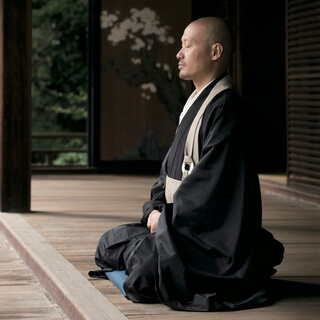
Hello and welcome to How Meditation Can Help with the Grieving Process.
I appreciate your time and I'm glad that you're here.
My name is Adam Kutz.
I've been sitting daily mindfulness meditation for over 35 years.
I've been teaching for 22 years and when I was younger I lived an aggregate of four years in monasteries in America and Asia,
Often meditating up to 10 hours a day.
So an overview about this course.
This course is about how meditation can help us move through grief and find the blessings on the other side of it.
I'll talk a bit about the different kinds of grief,
The universality of grieving,
The different emotions that can come up when we grieve,
How we avoid grieving,
The value of facing moving through our mourning,
Our pain,
Our loss,
Some techniques that can help,
Taking time and care,
How the process is unique for each person,
How healing happens and some of the gifts of grieving process,
Letting others support us and supporting others if we get to that.
We will do some meditation practice in this class but it's mostly me talking.
If you have any emotions arise for you,
If this touches something for you,
If you're in an active grieving process or this stirs something up about a long period grieving process,
That's totally fine and that's totally welcome.
I invite you feel that in your body,
Give it space,
Let the flow happen.
An overview of grief and meditation.
Grief is a natural healing process.
We could say it's our innate cleansing emotional response to loss and it's a healthy thing.
It's healthy for a human psyche to go through some period of pain when it has lost someone or something that it cares about.
We could say that grief is a powerful motion of the heart,
A working out of something deep inside,
A washing away of what was to make space for something new.
Meditation and mindfulness can be a great help with the grieving process.
Mindfulness practice can be a powerful tool and support for some of the most challenging issues of human life.
You could say that mindfulness practice is designed for the deepest existential challenges of human life.
When deep emotional challenges like a big loss hit,
Meditators have the skill.
It's the kind of thing that meditators have been training for.
I think a big part of meditation is paying attention and perhaps noticing things that most of the time we wouldn't if we didn't have a meditative mind.
And so one thing that we notice as meditators is there's all sorts of different kinds of loss in life.
There's many big kinds of loss,
But we might also start to notice a lot of the little losses of life.
Anything that loses or ends or even just changes can be a grief.
We could say that grief is part of our life without us even being aware of it.
We're not always aware of a grieving process while it's happening.
It's important to recognize our losses and our grieving process.
It's sometimes just helpful to orient ourselves to name and recognize that that's what we're going through,
A process of grief that can help us to handle it so it's not amorphous and confusing.
The most common kinds of grieving obviously are the loss of a person,
Whether that's from passing away,
Adults,
Children,
Miscarriages,
Pets,
But also end of a relationship,
A breakup,
A divorce,
Or a transition from maybe just a love phase to the more difficult I'm actually getting to know you phase.
That's also a grieving process.
There's also other big ones,
Moving,
Changing homes,
Loss of a home.
There's loss of a job.
People are laid off or retire,
Even if it's by choice.
Maybe you've heard of the phenomena where some people,
When they retire,
They pass away kind of quickly because so much of their identity and their sense of their day was wrapped up in their work.
But I think if a person's able to grieve that transition and let some emotions happen,
Then there might be more of a reason to live.
There's all sorts of other grieving.
There's getting older,
The loss of our youth and vitality,
Realizing that we have less time remaining,
That some of the dreams we had when we were younger might not come to fruition.
That's all sad,
And it's all something for us to grieve.
Sometimes when we get sick,
If we lose a friendship,
If there's loss of money or financial security or possessions that we valued,
I think sometimes if the political world seems less stable,
That can feel like grieving.
Like,
Hey,
I learned a certain thing about America in civics class and that doesn't seem to be the America I live in.
That's sad.
That's a loss that we have and something to grieve.
There's loss in hopes and dreams,
Loss of meaning,
Loss of safety and security.
I think it can sometimes just get as trivial as,
Like,
I was enjoying my lunch and now I have to get back to writing that difficult email.
And there's a let and go,
There's a little moment of grief.
I think grief is anytime we reconcile the difference between what I thought it would be,
Think it should be,
Wanted,
Hoped and wished it would be,
Tried to make it,
Relied on it being,
Versus how things now are.
That's the moment of grief.
I think you could say that grieving is baked into existing.
All people experience grief.
Grief and loss are inevitable.
Grief and sorrow are one of the primal inescapable conditions of human life.
Sooner or later,
Loss will come and visit all of us in one form or another.
I think it can be a great insight to realize just how ordinary it is that grieving is just what the human heart does at times.
You could say,
In a way,
Life is a string of losses.
The more years you live,
The more losses are inevitable.
If you haven't lost important things yet,
Our life will eventually come to an end.
And that's just the truth of it,
Right?
We're going to lose all of our loved ones in some fashion,
If at our moment of death,
If no other way,
And we'll be separated from the things we like and love.
So,
That's all an experience of mourning.
That's all an experience of the pain of loss.
I think you could say there's some sort of core grief that everyone carries inside,
And some of it has to do with our life experience,
But you could also say that some of it just has to do with the existential truths of life.
I remember I was listening to a lecture a long time ago,
And I heard that all psychotherapy is grief work.
What you're really doing is realizing that the past is the past,
That you can't negotiate a better past for yourself,
That there's painful things in the past,
And if we really feel our feelings about that,
Then we in the moment,
We get free,
We get more energy for our life today.
And I think you could say that all meditation is grief work.
That came to me once when I was on a long meditation retreat.
I don't know if that's strictly true,
But I think meditation is reconciling our beliefs about reality with reality as it is.
I think one difference between meditation and psychotherapy is that oftentimes psychotherapy,
The way that we get attuned to reality and we do our grieving,
Is verbal.
It's something we can understand,
Whereas if you're sitting on a meditation cushion,
A lot of the purification happens in a non-verbal way.
Also,
I think the grieving that we do when we meditate,
We might start with getting complete with the argument that we had last week,
Then move on to that time in second grade when that weird thing happened,
And then finally,
The thing we finally grieve is that infinity fell asleep and got lost in time and space and is dreaming that it's an individual suffering human with my name on it.
That might be a little far out there,
But I think that's the ultimate grief.
I got a question.
Can grief be seen as resistance to the present moment?
Yeah,
I think it can be.
But I also think that that's grief when it's stuck.
Grieving as a healthy process is getting right with the present moment.
It's our body,
Our mind,
Our soul,
Our emotions readjusting to how things now are,
Or seem to us at least.
So,
It's that resistance working its way out.
I think in the Marines,
They say pain is weakness leaving the body.
Maybe that's a little hardcore,
But I don't know.
I guess that inspires some people when they work out.
We could say that grief is the way things were,
Leaving the body,
The pain of it.
When I lived in monasteries,
One word that was constantly emphasized to us was the word impermanence,
That things are constantly changing,
That everything eventually comes to an end or the very least changes.
That's one thing that's a central truth of existence.
Everything that we think is permanent isn't.
And that permanence is just an illusion of looking at things at one snapshot at a time.
You might look at your body day after day and be like,
Well,
I'm pretty much the same person I was yesterday.
But if you looked at a picture from 10 years ago or 30 years ago,
Obviously you're not.
We could say that change and disintegration and endings are a natural part of life as much as birth and growth are.
And anything that comes into existence will change and eventually end.
When we meditate,
We notice this.
We notice that I have a pain in my leg and it arises and it's there for a while and then it fades away.
One of the great learnings of meditation sometimes is if you don't respond to an itch or some sort of ache that you feel like you need to do something about,
Eventually it just goes away on its own.
Even after screaming at you,
I need to scratch this itch.
Thoughts come and go.
External sounds come and go.
It all comes.
It all is there for a while and then it goes away.
We recognize that when we meditate.
And I think ideally we can use our meditative mind to say that's true about all of reality.
I have a car right now,
But I've had past cars also,
And I don't know where they are right now.
I think that the molecules that made up those cars are all over the world.
The metal and the plastic,
Etc.
I think that's what they do with cars.
They scrap them and then the metal gets moved into something else.
Speaking bluntly,
I had a sister and I thought she was an object.
I thought that she existed and I'd see her,
And it turns out she was an event in time.
I can think of friends' marriages that seemed like,
Oh,
Where's your spouse?
But the marriage ended up being a moment in time and was an event,
Not an object.
The Austrian-Hungarian Empire existed for hundreds of years,
And I'm sure people thought the Habsburgs would always be around,
But they existed for a moment of time.
It's not around anymore.
The United States might be on the same path,
To be blunt.
Planet Earth is an event in time.
It's not going to last forever,
According to this.
So that might seem macabre or negative,
Kind of a pessimistic way to look at things,
But I think there's a traditional Turkish saying,
If you sleep on the ground,
You'll never fall out of bed.
So I think sometimes it's helpful to realize that endings are inevitable in life.
They come with beginnings.
So obviously there's pain and grief.
I think we can understand impermanence in the abstract and see it clearly and maybe have experiences of impermanence when we meditate.
But still,
When it's time to actually have a big loss in our life,
It hits us personally.
And it's painful,
It's difficult,
It's confusing,
It's heavy,
And it feels like a wound.
So for much of the time,
Grieving feels bad for a while.
I don't need to tell you that.
My guess is many of you are here because you're going through a process of grieving,
Or you have relatively recently.
Most adults at some point have lost something and been there,
And it's devastating.
Some people find with major grieving that they're dysregulated and disoriented for a while,
That their timing is off,
They can't function well,
They have difficulty concentrating,
It can feel like a bottom or a ground has dropped out from underneath us,
There's no place to stand,
We might lose our self-identity.
I remember I went through a breakup of a long-term relationship 22 years ago,
I guess.
And the breakup had just happened the day before,
And I was going to a friend's birthday party in downtown San Francisco,
So I rode the BART train.
And I felt like I was a ghost,
Like the sixth sense or something.
If someone tried to put their hand through me,
They could put it right through me because I didn't exist.
I only existed in the eyes of this person who had been my partner for a long time,
And that's the sense I make of this experience that I had.
It's just,
Yeah,
My sense of my being in the world was gone for a while.
It took me a while to get it back.
So I think living life while mourning can feel like scaling a mountain.
It takes a lot of energy,
It feels draining,
We can feel tired,
We might wear a mask and pretend like everything's okay,
But it might be breaking on the inside.
And I think just recognizing that,
That it is painful,
And there can be overwhelm,
Can make it seem like we're less crazy when that happens.
My main teacher likes to talk about if something's very big and overwhelming,
It can help sometimes to break it into its parts meditatively,
Look at the parts carefully.
And I think it's sometimes helpful with grief to realize that it's an umbrella term for different emotions,
And examine some of the emotions individually.
So obviously,
When we grieve,
There's sadness.
Sadness can be poignant,
A deep experience,
There's beautiful poems written about it,
But when it gets stuck,
It turns into depression.
There's also anger,
Blame and criticism,
You were supposed to make sure I never felt pain or got upset,
Or never leave me,
You should have acted differently.
Why did you do this dumb thing?
Why did you do this dumb thing?
Why this have to happen?
Someone made a mistake.
There can be a feeling of empty space,
A missing abandonment and longing,
And loneliness and emptiness.
There can be shame and guilt and regret,
I didn't measure up,
I wasn't good enough,
I should have done things differently.
There can be fear for the future,
Sometimes getting as bad as hopelessness or despair.
I'll never be happy again,
I'll never find something that will take the place of my favorite dog or the house I loved.
I'll never be loved or have partnership again,
I'll never have any partner again.
There can be positive feelings,
Relief,
I'm glad that they passed away,
They were in a lot of pain,
Or that relationship was really hard at the end.
There can be inspiration,
I'm going to change my life,
Live in a new way.
There can be gratitude,
There can be insight,
There can be love,
There can be joy.
The grieving process is made up of a lot of different constituent elements.
Sometimes what we do though is we avoid it.
It's possible to avoid grief in many unhealthy ways.
I think it's natural for a person to want to move towards what's pleasant and comfortable and seek safety and consistency and familiarity and a place of rest and control and move away from what's unpleasant and uncomfortable.
But to live with emotional health and freedom,
Sometimes we need to be willing to experience something unpleasant that we'd rather not feel.
There are many ways to dampen down grief and suppress it and bury it and resist it and push it away,
Try to do without it,
Get through it quickly.
Sometimes we try to numb out and go into denial,
We get paralyzed and shut down.
Sometimes we dismiss it,
We say it's not important,
This isn't real,
It doesn't really count.
We make it wrong.
This shouldn't be,
I'm being weak,
What's wrong with me?
The superego,
The inner critical parent gets involved,
Comparison to others,
Well they had a divorce and they were fine a few months later.
Self-judgment,
Pretending we're fine when we're not.
I think there's addictive and checkout urges may arise for a while.
It's possible to distract oneself with alcohol and drugs,
With TVs,
Movies,
And social media,
With overeating and undereating too,
Compulsive sexual behavior,
Video games,
What have you.
With overworking.
Don't tell the company I said that that's not a good thing,
But if we're doing it to avoid emotions,
It's definitely a bad thing.
I think one thing people sometimes do to avoid grieving is jump into the next relationship that comes along.
Grab onto one quickly.
I've seen it with people,
I think it happened with me a few decades ago,
If people go from relationship to relationship without a break of just falling into the void of pain,
When that last one ends,
It just kicks a person's butt so hard because they've run away from the grief and it just compounds.
With each relationship as it ends,
If a person's in a new one a couple weeks or a couple months later,
Then they grab onto that relationship really hard because it's a life vest to avoid the pain.
So then when a one-month relationship ends at the end of the string,
They're just devastated.
I think the alternative is I had a friend who went through that a few times,
And his final relationship that he's still married to 20 years later,
And I think what he had to do is just go through a process of grieving while in that relationship,
Did eventually catch up with him.
I think people oversleep,
They undersleep in periods of grief.
There's obsessive thinking,
If maybe you've noticed this.
Repetitive stories and thoughts and conversations,
Just the same thing over and over again.
We write out long letters in our head,
How things will be different,
What could have happened different.
You forget about it for a while,
But then something triggers it.
I think it's possible to also collapse into the grief and just be overwhelmed by it and just not get out of bed,
For example.
I have a strong identification to the emotions,
A strong attachment to them.
One thing about grief is that a specific grief can sometimes touch on past losses.
It's not just this grief.
If there's a lack of resolution or completion to a grief in the past,
It can get stuck and locked up in us.
If we push it away,
It can become part of our personality and how we see the world.
We may consciously forget about it,
But it's still in there in our subconscious somewhere,
And it can linger sometimes for decades and poison our experience of being alive.
And sometimes a grief in the present moment can resonate with a past grief and trigger that.
I was just talking about that with my friend who went through a similar experience.
Going from one relationship to another.
Sometimes the central pain of a contemporary loss is not that loss.
It's grief from the past that we didn't resolve.
I think one thing that can be hard for grieving is other people pressuring us to get over it.
Other people want us to get on with it,
Come back to life,
Get rid of this,
What's wrong with you,
This isn't important,
This is a mistake,
Be happy,
Put on a good face.
I think some people are uncomfortable watching other people grieve because they don't know how to grieve themselves,
And another person's mourning triggers some pain inside of them.
They've never done the healing process for themselves.
I think there's things that people sometimes say to a person who is going through a mourning process that's not helpful,
That are a disservice.
I mean,
People have good intentions to try and give condolences but feel better soon.
Well,
That's pressure on a person to not feel the pain they're feeling.
It's a natural experience to go through that pain.
That can be unhealthy.
Look on the bright side,
See the good in the situation.
They're in a better place,
It's all for the good.
You'll find someone better,
Or something better.
Yeah,
I mean,
Maybe a person will come to that eventually,
But when they're in the pain of grieving,
That's not the time to tell a person that.
They'll discover that on their own.
I think it helps to realize that grieving is natural and normal.
I'm going to talk for a bit longer,
And then we'll do a technique.
Meditation and mindfulness can be great supports during times of grief.
They can help us to grieve well in a healthy and skillful and effective way,
And to do the work of mourning,
To find resolution,
Completion,
And space for new beginnings.
One function of mindfulness is to not just look at our experience,
But look at our relationship to our experience.
In life,
There's always what's happening,
And then there's how we're relating to it.
So,
There's our grieving,
And then there's how are you being about the grieving?
Are you letting it happen,
Or are you blocking it?
I think mindfulness practice can help us see that,
And can help us to block it less.
Mindfulness can help us to be present to grief,
To stop and sit still and clearly recognize and be honest about it.
When we're in the midst of unhappiness,
Overwhelm,
And confusion,
We can be like,
Oh,
I'm in the process of grieving.
That's what's happening right now.
We can get present to what's moving through us.
We can notice the thoughts in our mind.
We can notice the emotions that we're experiencing.
We can notice the through us.
We can notice the thoughts in our mind.
We can notice the emotions we're having,
And we can give them some space and stick with them for as long as they need us to.
A helpful paradigm when it comes to grieving is being respectful of our grieving,
Allowing it to be there,
Letting the process happen and move and flow,
Allowing the pain to wash through us,
And allowing our tears to flow when that's appropriate.
When we open to it and give it big space,
We allow it,
Deeply feel it,
We be with it.
When we are able to be in and sink into our grief,
That allows something in us to let go.
When we stop trying to hold on to it all and push it away,
It's finally able to move through us.
I think sometimes the key that we're looking for,
The freedom from suffering,
Is in the heart of our difficult emotions,
Thoughts,
And suffering.
If we can experience and accept them with openness and depth,
The more we can sit with and allow our intense emotions,
The more we're able to see our way through them to some state of relief.
Something that people often say in the meditation world is that the quickest way out is through,
And it's possible that the only way out is through.
We find freedom in grief,
Not freedom from it.
One thing I also sometimes hear in the meditation world is we're looking to learn to dance in the rain,
Not avoid the storm,
And I think a few places that is true is the grieving process.
One of my meditation teachers used to say,
Our job as meditators is to tolerate the intolerability of being human,
And few things can be as intolerable as intense loss.
I think when we meditate,
We can stretch our ability to find some okayness with all of it,
To trust what's happening and let it be there,
To open to and welcome and say yes to the agonizing and demanding requests of grief,
To let mourning have its life,
To make room for it,
To take it in like a stray animal,
To allow it,
Accept it,
Stay with it like a friend.
I think mindful grieving is to trust the grief,
Even when trust seems impossible,
Even when it's painful and difficult and over the top and feels like the whole world is falling apart.
There's some wisdom to it.
I think we can cultivate a place where we can experience we can cultivate a place where we can experience it all without being thrown by or drowned by it,
A place of refuge within ourselves.
If you're a meditator,
I think I said this earlier,
This is what you've been preparing for.
When the first shock arrives of a loss and then the subsequent volcanoes of emotion,
You can think of it as like the times that you meditated when things were pretty chill.
That was an inoculation for when the disease hit of tense emotions.
I think one thing to think about is in meditation,
We take an upright posture.
We try not to lean forward and try not to lean back.
We don't slump.
We don't push our chest forward.
We're just upright.
And I think that that's a metaphor for we don't collapse into or grab onto the pain of grief.
We don't indulge it,
But we don't back away from it or run away from it or try and push it away.
There's a Rumi poem where he says,
Don't touch the blazing fire,
But don't turn away from it.
And I think that's a great attitude to have during times of intense emotions.
It can take determination and effort and courage and willingness to feel pain.
But in the end,
I think this way of facing grief is the most freeing.
Okay,
So the first technique.
Some of you have probably done mindfulness of body sensations.
To me,
This is the most useful technique to do meditatively when it comes to grieving and mourning and loss and healing.
Grief is a somatic bodily experience.
And during periods of loss,
I think it's appropriate to deeply feel all of our difficult emotions in the body.
To mourn well doesn't mean you need to be clever or get the right tools or techniques or some sort of secret formula from a psychotherapist.
I think a lot of it's just getting out of the way and fully feeling things in the body.
To simply feel the grief without a storyline,
Without an analysis.
You know,
Our mind often gets pretty muddled when we're grieving.
It doesn't necessarily think the clearest.
If only they'd come back.
Maybe if we move,
Maybe,
I don't know.
How can I undo this thing?
But our body can hold all of it.
It can let our bodies be the container.
We can compost the grief in our bodies.
We can let our body be the temple of transmutation.
We can let our body be a friendly space around the pain so that the pain is not alone.
No matter how painful it is,
Opening to the body sensations as they are happening right now might be the key to moving through.
I think sometimes when we have the choice whether to open to an emotion in the body,
The emotion says,
If you actually feel me,
It'll last forever and I'll kill you.
I'll overwhelm you.
This will just be your life now.
You'll just be despondent or angry or whatever.
But emotions flow through the body.
They're like a lightning rod.
The lightning doesn't get stuck.
It moves through.
It wants to go to ground.
It doesn't want to stay in the lightning rod.
I think the same thing with our emotions.
They want to move.
They want to be released.
They want to emerge from wherever emotions emerge from and go back to the fertile void that emotions came from if we don't block them.
It can be really hard to let them flow through us like lightning through a lightning rod,
But when we do,
Then they're complete.
It's like a piece of firewood that burns itself completely so that there's not even ash left.
It's a complete experience.
There's nothing left.
The emotion happened.
We didn't block it.
We didn't watch TV or drink too much and try and push it away.
We let ourselves be crucified by the pain and now the pain is in the past and we have completed the experience.
We've done the natural healing process.
I talked a little bit earlier about meditation posture of being upright.
Another thing that's helpful to think about when it comes to meditation posture and grieving is to keep our chin up.
I think sometimes there's a natural tendency when going through intense pain to curl into a ball and I think that's kind of letting the pain defeat us.
I think if we keep our chin up and stay upright no matter how much the pain is hitting us,
I think that that is a way to have a healthier relationship with it where we stay open,
We stay spacious and not compressed no matter how much difficult emotion is moving through us.
So let's do a little bit of body meditation and I'm going to guide this meditation as if you are grieving.
So if you're not grieving right now,
If you're not in an active grieving process,
Maybe remember the last time that you were and see if you can evoke some of that emotion.
So sitting more upright than you usually do,
Lifting up as tall as you can with the crown of your head and we will start.
Sitting quietly.
Bring your attention to your body.
Maybe be taking a few intentionally deep breaths.
Breathing down into whatever pain you might notice,
Loosening it up.
Soothing any tightness or resistance that's there.
And allowing yourself just to feel the moment as it is,
Your body as it is.
Bringing attention to how you feel both emotionally and physically.
If there's any pain there,
Just allowing yourself to fully experience that.
Noticing where it's happening in your body.
Bring your attention there.
Noticing where it's happening in your body.
Bring your attention there.
Letting your attention merge into the pain.
See if you can open up to your sorrow and its completeness.
Welcoming it.
Accepting and allowing it.
Staying with it.
Meeting your grief with love,
Warm-heartedness,
Friendliness.
Relax into the sensations with acceptance.
Seeing if you can let the grief move through you.
Let the feelings happen like a wave.
Letting them well up and wash through.
They might not be as solid and overwhelming as they at first seemed.
You might notice how feelings of sadness and loss come and go.
They arise and pass away.
No friction.
Just let the experience flow.
If you get emotional,
That's totally welcome.
You can let tears emerge.
Give yourself permission to open to your sorrow.
Letting your attention fully absorb into each body sensation of the emotion,
Like water into a fresh,
Clean sponge.
If you notice yourself resisting the pain,
Just giving some space to that.
And great job,
Everyone.
If your eyes are closed,
Slowly opening them.
So that's just a brief taste of it.
If you're going through a period of a lot of pain through grief,
Taking some time,
Stepping away from computer,
Stepping away from phone,
Stepping away from television,
Stepping away from being busy,
And just sitting down if you're able to.
Just feel your body,
Just open to what's happening there,
Making friends with it,
Giving it space,
I think is possibly the quickest way to let the grief move through you.
There's other techniques that a person can do as well.
My main teacher likes to talk about,
There's two ways to deal with anything painful when it comes to meditation.
One is to really experience the heart of it.
And that's what we were doing there with the body meditation.
Another is to bring our full attention somewhere else on purpose.
So one way that you might do that is bring your full attention to your breathing.
That's the classic beginner meditation technique.
And absorbing attention into breathing,
For example,
You know,
Right now maybe feeling the breath in the pit of your belly,
Just bring your attention there.
And inhalation,
Take an exhalation,
Feel the physicality of that breathing.
So that's a classic first technique that people are taught in different meditation lineages or teaching systems.
Now,
If that was the only meditation technique that you did during a time of grieving,
It would probably be emotional suppression.
It wouldn't be very helpful.
There's all sorts of thoughts spinning around in your head.
There's all sorts of emotional energy in your body.
If all you do is you bring your consciousness to the pit of your belly and feel your breathing,
You're probably running away from a lot of your humanity,
A lot of the healing that needs to happen,
A lot of the complexity of your situation.
However,
There might be times where you need to take care of a kid,
You need to go to work,
You need to handle something in life.
And it's really not the time to go into the heart of your pain.
It's not the time to explore everything that's happening for you.
And what you might want to do is just put it on the shelf and completely be able to choose to focus on the spreadsheet you need to work on to get through your day.
So having some ability to choose to completely ignore the grieving process for a while,
And you'll get to it tonight,
You'll get to it over the weekend,
That might be useful at times.
So I think bring your full attention,
Your breathing can be a training for that.
Another way to take a break from the healing process is to do so-called happy place practice,
Which is to visualize some place that has you feel safe and at ease.
Lying on a tropical beach,
Being in a deep verdant forest and seeing a flowing waterfall.
If you've enjoyed the room you grew up in in childhood or at a favorite place to play in childhood,
Imagine yourself there.
I think that using your power of awareness to visualize something like that can also give you a little bit of distance from the grieving process.
And it's not healthy to do ongoingly.
But if in the moment you need to take your full attention off of grieving,
Those can be some trainings for that.
We can do a little bit of breath meditation,
Maybe just a minute of it.
So let's just do a minute of breathing meditation.
Bring your attention to simple,
Natural,
Easy breathing in your belly.
If you notice any thoughts,
Letting those drop away.
If you notice emotions or other energy in the body,
Letting that just drop away.
Making the choice to absorb your attention in a stable and steady way just on your breathing.
Choosing to focus and choosing to let go.
Feeling the physicality of your breathing.
The actual texture of it.
And relaxing into each breath.
Okay,
Great job,
Everyone.
I do think that sometimes if we do a concentration technique like what we just did,
And we try and not dive into the feelings in the body,
But just bring our full attention elsewhere,
Sometimes the subconscious compost things and things get worked out and get resolved without us consciously being aware of it.
I do think sometimes there's a value to that.
I think another great technique to do is to do an affirmation or repeated phrase.
You call it affirmation,
You could call it a mantra.
If there's a phrase that has you feel like healing is happening,
That has you feel empowered,
Or has you feel like you get out of the way of the process of grieving and mourning,
Then just sitting there and saying that phrase to yourself over and over again can be a positive experience.
In 1998,
I went through a breakup and I went and did a 90-day meditation retreat.
It was my first three-month meditation retreat.
I was in pain and my mind was obsessively thinking about this lady that I'd been in a relationship with.
Actually,
Now that I think about it,
I'd been in several relationships in a row,
So it was that chain grieving that I talked about earlier.
You know,
I'd try and meditate.
I was in this monastery in Monterey County,
And I'd think about this woman back in the city and how it could have been different,
Obsessive thoughts,
Right?
And I think what I did is I would just say the phrase over and over again,
Everything changes,
Everything ends.
Like a mantra,
Just over and over again.
Everything changes,
Everything ends.
So I would have a thought.
I'd realize that the thought would change.
It would end eventually.
I would feel a sensation in my knee.
Everything changes,
Everything ends.
Everything changes,
Everything ends.
I realized that that sensation would change.
I looked across the meditation hall to one of the other monks.
Everything changes,
Everything ends.
They'll eventually pass away.
This meditation hall will be no more.
Everything that I could think of,
Everything changes,
Everything ends.
And again,
That might sound macabre,
That might sound negative,
But what it actually did is it loosened something up in me.
I felt like I let the flow happen more and I was able to let go of this relationship.
So that's a repeated phrase,
An affirmation,
A mantra that works for me.
If that works for you and is helpful for you in a grieving process,
That's great.
If there's a different phrase that you find it feels great to say over and over again,
Then that might be useful too.
Sometimes when I've been in grieving processes,
What I do is I walk around an office building or my home or something,
Walk around the block,
And I try and feel my body or ground by tension in the soles of my feet.
Feel my body is great for opening up to the pain.
And the soles of my feet is a great way to ground myself and focus away.
Again,
Like my teacher says,
Give your full attention to or give your full attention away from are two ways to deal with pain.
I think years ago,
I came up with a statement that feels like a great statement to say to people that are grieving.
It feels respectful of people.
And it's what I try and remember to say.
And here's the text of it.
This is what I send to people when they are in an intense mourning process.
I've noticed that in feelings of grief and letting go,
All sorts of unexpected emotions seem to arise for people.
These emotions can sometimes feel embarrassing,
Make no sense and be confusing,
Be uncomfortable,
Come up at weird,
Random times,
And can be subtle but can also be overwhelmingly crushingly intense.
What I wish for you during this time is that you're able to allow all of your full range of feelings to have play,
To let them dance their dance for as long as they want or need to,
And to be a big enough space to let it all happen inside of.
I hold that the feelings of grief,
Like all feelings are meant to move through us.
They are a journey that we take and that takes time to complete.
A highway that travels through different terrains.
I wish you passage along that route as smoothly as possible.
I've noticed that when I say that to people face-to-face,
They seem to relax and the space seems to feel more open.
It feels respectful.
Better than,
Feel better soon,
Or it's all for the best,
Or something like that.
I think one thing that's helpful for meditative mindful grieving is to cultivate friendliness with yourself,
And patience,
And compassion,
And appreciation,
And love for your grieving process and for yourself,
No matter how difficult,
Painful,
Or weird it gets.
It's okay not to be happy all the time.
I think sometimes the okayness that we're looking for,
The home and place of rest and refuge that we're longing for,
It might be ours to create through the spaciousness and acceptance that we can create within ourselves.
We can think of mindfulness as like a friend,
A witness and companion that can accompany and take care of our grief.
It can be a friendly presence to help your grief to feel safe,
That it's allowed to be,
That it's allowed to exist,
And help your grief feel that it's not alone.
Sometimes I think of human life as like a bicycle tire,
And sometimes we get deflated,
And life just compresses in on us.
We get collapsed,
We get tight,
Overwhelmed,
And I think meditation can pump us back up and reinflate us,
And give us spaciousness and openness again,
Help us to feel re-empowered.
I think it's important to take care of ourselves.
Part of self-compassion during a time of grieving is to eat enough and eat healthy,
To exercise,
To get enough sleep,
To meditate,
To spend time with loved ones in an authentic way.
And again,
Not just drink and binge watch movies and do other things that are not self-care.
I think one part of self-compassion when it comes to healing a loss is titrating the amount that we're willing to face.
I talked earlier about facing it all in the body,
And I think that that ultimately is the way out,
But sometimes it's too much to face all at once.
And some of those techniques that I talked about of visualizing a happy place,
Or composing our attention on our breathing,
Or feeling the soles of our feet when we walk are a way of giving ourselves a break,
A healthy way.
Just like weightlifting,
You want to do a little bit more than you're comfortable with.
You don't want to do way more than you're comfortable with,
Or else you'll rip a muscle.
Just doing our grieving process a bit more than we're comfortable with and letting the process take time.
I think another part of self-compassion is realizing that we all do it in a different way.
There's the classic five stages of grief.
Perhaps you're familiar,
Elizabeth Kubler-Ross came up with this decades ago.
There's denial,
There's denial.
This didn't happen,
It's not real.
I haven't really lost this.
There's anger.
Why did this happen?
Why did this person do this?
They should have done something differently.
There's bargaining.
How can I get this thing back?
How can I make this loss not have happened?
There's depression.
I'll never be happy again.
This is the worst.
Everything's lost.
And then there's acceptance,
Right?
That's the model,
And I think that's a helpful model for a lot of people.
And sometimes it does move in more or less that progression.
But I don't think that's most people's experience.
I think people's experience,
It's not really in a predictable course.
There's not really discrete and predictable linear stages.
You might think that you're finished with one stage and then it pops back up again.
You might think you're finished with the whole grieving process and it pops back up again.
I think we each experience grief in our own way.
It's different at different moments.
Our different experiences of grief are different.
So there's no one right way or one size fits all or normal way to have a grieving experience.
I think sometimes giving ourselves that freedom helps us move through it.
I think it helps to realize that grieving reflects that we loved,
That we loved the house we lived in,
We loved our pet,
We loved the relationship,
We loved our job.
If we love something and we lose it,
There's the homeostatic process of recovering from the trauma that loss.
So the way to never grieve is to not love,
Right?
C.
S.
Lewis said,
There's no safe investment to love at all is to be vulnerable.
Love anything and your heart will certainly eventually be wrung and possibly broken.
The musician Nick Cave said,
It seems to me that if we love,
We grieve.
That's the deal.
That's the pact.
Grief and love are forever intertwined.
Grief is the terrible reminder of our love and like love,
Grief is non-negotiable.
I think that's one way to make sense of the value of grieving.
I think grieving takes time.
When we meditate,
We see impermanence in our mind states,
Our thoughts,
And impermanence is the bummer when it comes to grieving because everything that we love and all of our relationships and all of our possessions will eventually leave us and that will lead to a period of mourning.
But impermanence is also the salvation when it comes to grieving in that our painful feelings lie to us and tell us that if we open to them,
They'll last forever,
But they don't last forever.
They're not going to get worse and worse.
They're just the experience of the moment and they will pass.
This is just how I feel right now.
The process of grieving is not a thing it's a journey that we go on.
It's a process.
It's like a journey by train.
If you go on a train,
You might go through cities and mountains and the desert and forests and by the sea and ultimately it takes you to your destination.
Grieving takes us through different landscapes,
But we eventually get to our destination.
And we usually can't power through or hurry up the process.
There's no quick and easy way through.
It doesn't happen on our timeline.
It needs time and it takes its own time.
We don't know how long it'll take.
There's no set period of time.
It has a timing all its own.
And the thing that we can do is just honor its timing and respect the deeper unfolding and cultivate patience.
We respect grief when we give it time.
Sometimes we need to spend time in the chrysalis between being the caterpillar and being the butterfly.
And sometimes it takes longer than we think.
It stays with us for a long time.
There's some grieving that takes a lifetime.
But we can stick with it and give it companionship.
And I can think of a healthy way to speed up the process of grieving,
Which is to meditate a lot.
We can say that mourning and resolution can't be forced,
But we can take an inner stance that makes us most open to its unfolding.
And if we're busy working and taking care of life and being distracted and doing addictions,
The grief will wash through us eventually,
Hopefully,
But it will take more time.
And there'll be more time in the pit.
And simply facing the pain in a raw way,
Sitting still and quiet with our pain,
That can speed it up.
That can help it to unfold and move.
I don't know how to heal a cut.
I don't know anything about hemoglobin or tissue perfusion or fibroblasts or cell walls,
But I do know how to heal a cut.
Keep it clean.
Don't mess with it.
Let the process happen and give it time.
You might not understand your grieving.
You might not know psychologically all the aspects to it,
But if you keep it clean,
Don't mess with it.
Let the process happen and give it time.
That's probably a pretty good rule of thumb.
I think one day we find that it's lifted,
That we're ready to move on.
Time for a new beginning,
But the new beginning can only have happened if we went through the process.
And then there's gifts.
Grief reminds us that we're alive.
And one of my teachers says that if your heart breaks,
When the fissures heal,
Your heart is bigger.
And sometimes if we really vulnerably feel our grief,
We find that there's a depth to our heart,
Our depth to our relationship with life that wasn't there before.
Grief can be a wise teacher.
It can teach us a lot about what we're doing with our life,
Can be a motivator to make positive changes,
To evaluate our life,
To go to therapy,
To want something different for ourselves.
So there's all sorts of gifts that can come with grief.
When we resolve a grief,
We're often resolving not just that grief,
But other griefs in the past.
Maybe the thing that we've lost is a metaphor for everything we've ever hoped for.
It's important to get interpersonal support.
I talked about being pumped back up like a bicycle tire.
Sometimes we just can't do that for ourselves.
We need a friend,
A therapist,
A loved one to listen to us.
Maybe even tell the same story over and over again,
But to share our emotion,
To be witnessed in our crying.
That's a great thing to do for other people too.
There's a visualization of what it's like to be in grief.
It's a visualization of getting complete with a person that we've lost,
Whether that's through passing away or through a breakup,
That I can lead.
It takes a while.
It takes about 10,
15 minutes.
So it's saying what you need to say to the person that you may not have ever said,
Visualizing doing that.
If you're ready for the visualization,
Maybe checking your posture,
Sitting in an upright way.
And what I will do is I will say,
For example,
What I appreciated about you was,
And the idea is to visualize the person in front of you.
And you just complete that and you tell them what there is for you to say,
Especially emphasizing what you might not have already said as a way of getting the energy out of you.
If emotions come up for you,
If you notice any tears,
It's all welcome.
Feel free to feel.
Maybe you're in the middle of your workday and that's not what you want to do,
But I give you permission.
I give you the invitation.
So with your eyes closed,
Sitting comfortably upright,
Bring to mind someone that you have lost,
That you've had to say goodbye to.
Where it hurts that they're no longer in your life.
And feel their presence in front of you and really see them clearly.
Notice details.
Feeling what it feels like to have this person around you.
It could be your last memory with the person or any other time that feels significant.
And imagine that their heart is open,
As open as it ever was.
You can feel an accepting presence.
They're willing to speak honestly to you and to fully listen to you.
You see their face open.
You see a brightness to them,
A relaxed body.
Comfortable presence.
Imagine yourself having a conversation with this person you've lost.
You have a few minutes to say whatever's on your heart.
Deeply feeling your body.
I'll give some sentence stems and feel free to complete the sentence stem and share it with the other person that you've lost.
What I resent is.
.
.
Don't tell them.
They listen to you.
They're hearing you.
They care.
And if you feel like you've lost something,
You can say it to them.
You can say,
I wish you hadn't.
What I want you to apologize for is.
.
.
What I apologize for is.
.
.
I'm envisioning the person in front of you.
I'm really taking this in.
I'm sorry that.
.
.
What I forgive you for is.
.
.
What I want you to forgive me for is.
.
.
Feeling in your body how it feels to say these things.
What I forgive myself for is.
.
.
What I want you to know about me is.
.
.
They're right there with you.
They're listening intently.
What I regret most is.
.
.
What I wanted most was.
.
.
What I was afraid to say to you is.
.
.
What I now understand is that.
.
.
What I trusted in you most was.
.
.
What I learned from you was.
.
.
What I'm grateful for you is.
.
.
What I hope that you're grateful for with me is.
.
.
What I hope that you're grateful for with me is.
.
.
If you lose a connection of feeling them in front of you,
Regenerating that.
.
.
Imagine them receiving all of this,
Really taking it in,
Really hearing it.
What inspired me most about our time together was.
.
.
What inspires me most about you is.
.
.
What I appreciate most about you is.
.
.
What I appreciate about you is.
.
.
What I will miss about our time together is.
.
.
What I want you to be left with from me is.
.
.
What I want for you in the rest of your life is.
.
.
Or what I hope you're experiencing at your passing was.
.
.
What I release you from is.
.
.
What I love about you is.
.
.
If there's anything else that's there for you to share.
.
.
Please feel free to share.
This moment of connection,
Openness,
Trust.
Whatever's authentic for you.
Is there anything they'd like to share with you?
Just hearing that.
Perhaps they just say,
I understand or thank you.
Maybe they've got more to share.
When you feel complete.
.
.
Perhaps just saying goodbye to the person.
Having a hug or whatever feels appropriate.
Seeing them walk off.
Wishing them well.
With a warm heart,
Wishing yourself well.
Noticing any energy that feels alive in your body.
Some friendly attention there.
And great job.
Slowly open your eyes if they're closed.
So hopefully that was useful to you or feels like it moves something positively.
Obviously,
What we just did is something you could do with a therapist or with a friend or a family member.
They could fill in for the person who you've lost.
And you could envision them as hearing you.
With whatever it is you have to share to get complete.
If you have trust in the person still alive,
Then perhaps it's something you could do.
So hopefully that was useful to you or feels like it moves something positively.
Obviously,
What we just did is something you could do with a therapist or with a friend or a family member.
They could fill in for the person who you've lost.
And you could envision them as hearing you.
With whatever it is you have to share to get complete.
If you have trust in the person still alive,
Then perhaps it's something you could do.
So hopefully that was useful to you or feels like it moves something positively.
Obviously,
What we just did is something you could do.
If you have trust in the person still alive,
Then perhaps it's something you could do.
So hopefully that was useful to you or feels like it moves something positively.
So hopefully that was useful to you or feels like it moves something positively.
So hopefully that was useful to you or feels like it moves something positively.
So hopefully that was useful to you or feels like it moves something positively.
So hopefully that was useful to you or feels like it moves something positively.
So hopefully that was useful to you or feels like it moves something positively.
So hopefully that was useful to you or feels like it moves something positively.
So hopefully that was useful to you or feels like it moves something positively.
So hopefully that was useful to you or feels like it moves something positively.
So hopefully that was useful to you or feels like it moves something positively.
So hopefully that was useful to you or feels like it moves something positively.
So the joke is a woman's at her husband's funeral.
So the joke is a woman's at her husband's funeral.
And her late husband's friends approach her and one of them says,
We're so sorry and we're here for you.
Each of us would like to say a word if that's okay.
Each of us would like to say a word if that's okay.
And the woman wipes away a tear and says,
Okay,
Yeah,
Please.
Okay,
Yeah,
Please.
And the first man says,
Bargain.
And she goes,
That means a great deal.
And the second man says,
Plethora.
And the woman says,
Thank you,
That means a lot.
And the third friend says,
Infinity.
And the woman says,
Thank you,
That means so much more than you can possibly imagine.
Thank you,
That means so much more than you can possibly imagine.
So there you go,
A grieving joke.
So there you go,
A grieving joke.
So there you go,
A grieving joke.
All right,
I appreciate you being here today.
All right,
I appreciate you being here today.
Wishing you the best with your experience of grieving.
Hopefully,
You can move through the process with openness Hopefully,
You can move through the process with openness and allowing a sense of movement and flow to the emotion and allowing a sense of movement and flow to the emotion and allowing a sense of movement and flow to the emotion and get through it and get to the open space of new beginnings and get through it and get to the open space of new beginnings where your heart can receive the gifts of the process you've been through.
Where your heart can receive the gifts of the process you've been through.
Again,
Thanks for your time.
I wish you a great rest of your day.