This is S.
D.
Hudson Magic.
Jane Eyre.
Chapter 5 Five o'clock had hardly struck on the morning of the 19th of January,
When Bessie brought a candle into my closet and found me already up and nearly dressed.
I had risen half an hour before her entrance and had washed my face and put on my clothes by the light of a half-moon just setting,
Whose rays streamed through the narrow window near my crib.
I was to leave Gateshead that day by a coach which passed the lodge gates at 6 a.
M.
Bessie was the only person yet risen.
She had lit a fire in the nursery,
Where she now proceeded to make my breakfast.
Few children can eat when excited with the thought of a journey,
Nor could I.
Bessie having pressed me in vain to take a few spoonfuls of the boiled milk and the bread she had prepared for me,
Wrapped up some biscuits in paper and put them into my bag.
Then she helped me on with my police and bonnet,
And wrapping herself in a shawl,
She and I left the nursery.
As we passed Mrs.
Reed's bedroom,
She said,
"'Will you go in and bid Mrs.
Good-bye?
' "'No,
Bessie.
She came to my crib last night when you had gone down to supper,
And said I need not disturb her in the morning,
Or my cousins either,
And she told me to remember she had always been my best friend and to speak of her and be grateful to her accordingly.
' "'What did you say,
Miss?
' "'Nothing.
I covered my face with the bedclothes and turned from her to the wall.
' "'That was wrong,
Miss Jane.
' "'It was quite right,
Bessie.
Your missus has not been my friend,
She's been my foe.
' "'Oh,
Miss Jane,
Don't say so.
' "'Good-bye to Gateshead!
' cried I,
As we passed through the hall and went out at the front door.
The moon was set and it was very dark.
Bessie carried a lantern whose light glanced on wet steps and gravel roads sodden by a recent thaw.
"'Roar and chill' was the winter morning,
My teeth chattered as I hastened down the drive.
There was a light in the porter's lodge.
When we reached it we found the porter's wife just kindling her fire.
My trunk,
Which had been carried down the evening before,
Stood corded at the door.
It wanted but a few minutes of six,
And shortly after that hour had struck.
The distant roll of wheels announced the coming coach.
I went to the door and watched its lamps approach rapidly through the gloom.
"'Is she going by herself?
' asked the porter's wife.
"'Yes.
' "'And how far is it?
' "'Fifty miles.
' "'What a long way!
I wonder Mrs Reed's not afraid to trust her so far alone.
' The coach drew up.
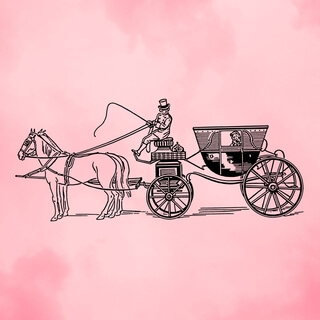
There it was at the gates with its four horses and its top laden with passengers.
The guard and coachman loudly urged haste.
My trunk was hoisted up.
I was taken from Bessie's neck,
To which I clung with kisses.
"'Be sure and take good care of her,
' cried she to the guard as she lifted me into the inside.
"'Aye,
Aye,
' was the answer.
The door was slapped to.
A voice exclaimed,
"'All right,
' and we drove on.
Thus was I severed from Bessie and Gateshead,
Thus whirled away to the unknown,
And,
As I then deemed,
Remote and mysterious regions.
I remember but little of the journey.
I only know but the day seemed to me of preternatural length,
And that we appeared to travel over hundreds of miles of road.
We passed through several towns,
And in one,
A very large one,
The coach stopped.
The horses were taken out,
And the passengers alighted to dine.
I was carried into an inn,
Where the guard wanted me to have some dinner.
But,
As I had no appetite,
He left me in an immense room with a fireplace at each end,
A chandelier pendant from the ceiling,
And a little red gallery high up against the wall,
Filled with musical instruments.
Here I walked about for a long time,
Feeling very strange and immortally apprehensive of someone coming in and kidnapping me,
For I believed in kidnappers,
Their exploits having frequently figured in Bessie's fireside chronicles.
At last the guard returned.
Once more I was stowed away in the coach.
My protector mounted his own seat,
Sounded his hollow horn,
And away we rattled over the stony street.
The afternoon came on wet and somewhat misty.
As it waned into a dusk,
I began to feel we were getting very far indeed from Gateshead.
We seized to pass through towns.
The country changed.
Great grey hills heaved up round the horizon.
As twilight deepened,
We descended a valley,
Dark with wood.
And long after night had overclouded the prospect,
I heard a wild wind rushing amongst trees.
Lulled by the sound,
I at last dropped asleep.
I had not long slumbered when the sudden cessation of motion awoke me.
The coach door was open,
And a person like a servant was standing at it.
I saw her face and dress by the light of the lamps.
Is there a little girl called Jane Eyre here?
She asked.
I answered yes,
And was then lifted out,
My trunk was handed down,
And the coach instantly drove away.
I was stiff with long sitting,
And bewildered with the noise and motion of the coach.
Gathering my faculties,
I looked about me.
Rain,
Wind,
And darkness filled the air.
Nevertheless,
I dimly discerned a wall before me,
And a door open in it.
Through this door I passed with my new guide.
She shut and locked it behind her.
There was now visible a house,
Or houses,
For the building spread far,
With many windows,
And lights burning in some.
We went up a broad pebbly path,
Splashing wet,
And were admitted into a door.
Then the servant led me through a passage into a room with a fire,
Where she left me alone.
I stood and warmed my numbed fingers over the blaze,
Then I looked around.
There was no candle,
But the uncertain light from the hearth showed by intervals,
Papered walls,
Carpet,
Curtains,
Shining mahogany furniture.
It was a parlour,
Not so spacious or splendid as the drawing room at Kate's head,
But comfortable enough.
I was puzzling to make out the subject of a picture on the wall,
When the door opened,
And an individual carrying a light entered.
Another followed close behind.
The first was a tall lady with dark hair,
Dark eyes,
And a pale and large forehead.
Her figure was partly enveloped in a shawl.
Her countenance was grave,
Her bearing erect.
The child is very young to be sent alone,
Said she,
Putting her candle down on the table.
She considered me attentively for a minute or two,
Then further added,
She had better be put to bed soon.
She looks tired.
Are you tired?
She asked,
Placing her hand on my shoulder.
A little,
Ma'am.
And hungry too,
No doubt.
Let her have some supper before she goes to bed,
Miss Miller.
Is this the first time you've left your parents to come to school,
My little girl?
I explained to her that I had no parents.
She inquired how long they had been dead,
Then how old I was,
What was my name,
Whether I could read,
Write,
And sew a little.
Then she touched my cheek gently with her forefinger,
And saying she hoped I should be a good child,
Dismissed me along with Miss Miller.
The lady I had left might be about 29.
The one who went with me appeared some years younger.
The first impressed me by her voice,
Look,
And air.
Miss Miller was more ordinary,
Ruddy in complexion,
Though of a careworn countenance,
Hurried in gait and action like one who had always a multiplicity of tasks on hand.
She looked indeed what I afterwards found she really was,
An underteacher.
Led by her,
I passed from compartment to compartment,
From passage to passage of a large and irregular building,
Till,
Emerging from the total and somewhat dreary silence pervading that portion of the house we had traversed,
We came upon the hum of many voices,
And presently entered a wide,
Long room with great deal tables,
Two at each end,
On each of which burnt a pair of candles,
And seated all round on benches a congregation of girls of every age,
From nine or ten to twenty.
Seen by the dim light of the dips,
Their number to me appeared countless,
Though not in reality exceeding eighty.
They were uniformly dressed in brown stuffed frocks of quaint fashion,
And long holland pinafores.
It was the hour of study,
They were engaged in conning over their tomorrow's task,
And the hum I had heard was the combined result of their whispered repetitions.
Miss Miller signed to me to sit on a bench near the door,
Then walking up to the top of the long room she cried out,
Monitors,
Collect the lesson books and put them away.
Four tall girls arose from different tables,
And going round gathered the books and removed them.
Miss Miller again gave the word of command.
Monitors,
Fetch the supper trays.
The tall girls went out,
And returned presently,
Each bearing a tray with portions of something,
I knew not what,
Arranged thereon,
And a pitcher of water and mug in the middle of each tray.
The portions were handed round,
Those who liked took a draught of the water,
The mug being common to all.
When it came to my turn I drank,
For I was thirsty,
But did not touch the food.
Excitement and fatigue rendering me incapable of eating.
I now saw,
However,
That it was a thin oat and cake,
Shed into fragments.
The meal over,
Prayers were read by Miss Miller,
And the classes filed off,
Two and two upstairs.
Overpowered by this time with weariness,
I scarcely noticed what sort of a place the bedroom was,
Except that,
Like the schoolroom,
I saw it was very long.
Tonight I was to be Miss Miller's bed fellow.
She helped me to undress.
When laid down,
I glanced at the long rows of beds,
Each of which was quickly filled with two occupants.
In ten minutes the single light was extinguished,
Amid silence and complete darkness.
I fell asleep.
The night passed rapidly.
I was too tired even to dream.
I only once awoke to hear the wind rave in furious gusts,
And the rain fall in torrents,
And to be sensible that Miss Miller had taken her place by my side.
When I again unclosed my eyes,
A loud bell was ringing.
The girls were up and dressing.
Day had not yet begun to dawn,
And a rush light or two burnt in the room.
I too rose reluctantly.
It was bitter cold,
And I dressed as well as I could for shivering,
And washed when there was a basin at liberty,
Which did not occur soon,
As there was but one basin to six girls,
On the stands down the middle of the room.
Again the bell rang.
All formed in file two and two,
And in that order descended the stairs and entered the cold and dimly lit schoolroom.
Here prayers were read by Miss Miller.
Afterward she called out,
Form classes.
A great tumult succeeded for some minutes,
During which Miss Miller repeatedly exclaimed,
Silence and order,
When it subsided.
I saw them all drawn up in four semicircles before four chairs,
Placed at the four tables.
All held books in their hands,
And a great book like a bible lay on each table before the vacant seat.
A pause of some second succeeded,
Filled up by the low vague hum of numbers.
Miss Miller walked from class to class,
Hushing this indefinite sound.
A distant bell tinkled.
Immediately three ladies entered the room,
Each walked to a table and took her seat.
Miss Miller assumed the fourth vacant chair,
Which was that nearest the door,
And around which the smallest of the children were assembled,
To this inferior class I was called,
And placed at the bottom of it.
Business now began.
The day's collect was repeated,
Then certain texts of scripture were said,
And to these succeeded a protracted reading of chapters in the bible,
Which lasted an hour.
By the time that exercise was terminated,
Day had fully dawned.
The indefatigable bell now sounded for the fourth time.
The classes were marshalled and marched into another room to breakfast.
How glad I was to behold a prospect of getting something to eat.
I was now nearly sick from indignation,
Having taken so little the day before.
The refractory was a great low-ceilinged gloomy room.
On the two tables smoked basins of something hot,
Which,
However to my dismay,
Sent forth an odour far from inviting.
I saw a universal manifestation of discontent when the fumes of the repast met the nostrils of those destined to swallow it.
From the van of the procession,
The tall girls of the first class rose their whispered words.
Disgusting!
The porridge is burnt again!
Silence!
Ejaculated a voice.
Not that of Miss Miller,
But one of the upper teachers.
A little and dark personage,
Smartly dressed,
But of somewhat morose aspect,
Who installed herself at the top of the table,
Whilst a more buxom lady presided at the other.
I looked in vain for her.
I had first seen the night before.
She was not visible.
Miss Miller occupied the foot of the table where I sat,
And a strange foreign-looking elderly lady,
The French teacher,
As I afterwards found,
Took the corresponding seat at the other board.
A long grace was said and a hymn sung.
Then the servant brought in some tea for the teachers,
And the meal began.
Ravenous and now very faint,
I devoured a spoonful or two of my portion without thinking of its taste.
But the first edge of hunger blunted.
I perceived I had got in hand a nauseous mess.
Burnt porridge is almost as bad as rotten potatoes.
Famine itself soon sickens over it.
The spoons were moved slowly.
I saw each girl taste her food and try to swallow it,
But in most cases the effort was soon relinquished.
Breakfast was over,
And none had breakfasted.
Thanks being returned for what we had not got,
And a second hymn chanted,
The refectory was evacuated for the schoolroom.
I was one of the last to go out,
And in passing the tables,
I saw one teacher take a basin of the porridge and taste it.
She looked at the others.
All their countenances expressed displeasure,
And one of them,
The stout one,
Whispered,
Abominable stuff!
How shameful!
A quarter of an hour passed before lessons again began,
During which the schoolroom was in glorious tumult.
For that space of time it seemed to be permitted to talk loud and more freely,
And they used their privilege.
The whole conversation ran on the breakfast,
Which one and all abused roundly.
Poor things!
It was the sole consolation they had.
Miss Miller was now the only teacher in the room.
A group of great girls standing about her spoke with serious and sullen gestures.
I heard the name of Mr Brocklehurst pronounced by some lips,
At which Miss Miller shook her head disapprovingly.
But she made no great effort to check the General Roth.
Doubtless she shared it.
A clock in the schoolroom struck nine.
Miss Miller left her circle and standing in the middle of the room cried,
Silence!
To your seats!
Discipline prevailed.
In five minutes the confused throng was resolved into order,
And comparative silence quelled the babble clamor of tongues.
The upper teachers now punctually resumed their posts,
But still all seemed to wait.
Ranged on benches down the sides of the room,
The eighty girls sat motionless and erect.
A quaint assemblage they appeared,
All with plain locks combed from their faces,
Not a curl visible,
In brown dresses made high and surrounded by a narrow tucker through the throat,
With little pockets of holland,
Shaped something like a highlander's purse,
Tied about in front of their frocks,
And destined to serve the purpose of a work bag.
All two wearing woolen stockings and country-made shoes,
Fastened with brass buckles.
Above twenty of those clad in this costume were full-grown girls,
Or rather young women.
It suited them all and gave an air of oddity even to the prettiest.
I was still looking at them,
And also at intervals examining the teachers,
None of whom precisely pleased me,
For the stout one was a little coarse,
The dark one not a little fierce,
The foreigner harsh and grotesque,
And Miss Miller,
Poor thing,
Looked purple,
Weather-beaten and overworked.
When my eye wandered from face to face,
And the whole school rose simultaneously as if moved by a common spring.
What was the matter?
I had heard no order given.
I was puzzled.
Ere I had gathered my wits,
The classes were again seated.
But as all eyes were now turned to one point,
Mine followed the general direction,
And encountered the personage who had received me last night.
She stood at the bottom of the long room on the hearth,
For there was a fire at each end.
She surveyed the two rows of girls silently,
And gravely.
Miss Miller,
Approaching,
Seemed to ask her a question,
And having received her answer,
Went back to her place and said aloud,
Monitor of the first class,
Fetch the globes.
While the direction was being executed,
The lady consulted moved slowly up the room.
I suppose I have a considerable organ of veneration,
For I retain yet the sense of admiring awe with which my eyes traced her steps.
Seen now in broad daylight,
She looked tall,
Fair,
And shapely,
Brown eyes with a benign smile in their irides,
And a fine penciling of long lashes round relieved the whiteness of her large front.
On each of her temples,
Her hair of a very dark brown was clustered in round curls,
According to the fashion of those times,
Where neither smooth bands nor long ringlets were in vogue.
Her dress,
Also in the mode of the day,
Was a purple cloth,
Relieved by a sort of Spanish trimming of black velvet.
A gold watch,
Watches were not so common then as now,
Shone at her girdle.
Let the reader add to complete the picture refined features,
A complexion,
If pale,
Clear,
And a stately air and carriage,
And he will have at least,
As clearly as words can have it,
A correct idea of the exterior of Miss Temple.
Maria Temple,
As I afterwards saw the name written in a prayer book,
Entrusted to me to carry to church.
The superintendent of Lowood,
For such was this lady,
Having taken her seat before a pair of globes placed on one of the tables,
Summoned the first class around her,
And commenced giving a lesson in geography.
The lower classes were called by the teachers.
Repetitions in history,
Grammar,
Etc.
,
Went on for an hour.
Writing and arithmetic succeeded,
And music lessons were given by Miss Temple to some of the elder girls.
The duration of each lesson was measured by the clock,
Which at last struck twelve.
The superintendent rose.
I have a word to address to the pupils,
Said she.
The tumult of cessation from lessons was already breaking forth,
But it sank at her voice.
She went on.
You have this morning a breakfast which you could not eat.
You must be hungry.
I have ordered that a lunch of bread and cheese shall be served to all.
The teachers looked at her with a sort of surprise.
This is to be done on my responsibility,
She added in an explanatory note to them,
And immediately afterwards left the room.
The bread and cheese was presently brought in and distributed to the high delight and refreshment of the whole school.
The order was now given to the garden.
Each put on a coarse straw bonnet with strings of coloured calico and a cloak of grey frieze.
I was similarly equipped,
And following the stream I made my way into the open air.
The garden was a wide enclosure surrounded with walls so high as to exclude every glimpse of prospect.
A covered veranda ran down one side and broad walks bordered a middle space divided into scores of little beds.
These beds were assigned as gardens for the pupils to cultivate,
And each bed had an owner.
When full of flowers they would doubtless look pretty,
But now at the latter end of January all was wintry blight and brown decay.
I shuddered as I stood and looked around me.
It was an inclement day for outdoor exercise,
Not positively rainy but darkened by a drizzling yellow fog.
All underfoot was still soaking wet with the floods of yesterday.
The stronger among the girls ran about and engaged in active games,
But sundry pale and thin ones herded together for shelter and warmth in the veranda,
And amongst these as the dense mist penetrated to their shivering frames I heard frequently the sound of a hollow cough.
As yet I had spoken to no one,
Nor did anybody take notice of me.
I stood lonely enough,
But to that feeling of isolation I was accustomed,
It did not oppress me much.
I leant against the pillar of the veranda,
Drew my grey mantle close about me,
And trying to forget the cold which nipped me without,
And the unsatisfied hunger which gnawed me within,
Delivered myself up to the employment of watching and thinking.
My reflections were too undefined and fragmentary to merit record.
I hardly yet knew where I was.
Gateshead and my past life seemed floated away to an immeasurable distance.
The presence was vague and strange,
And of the future I could form no conjecture.
I looked round the convent-like garden,
And then up at the house a large building,
Half of which seemed grey and old,
The other half quite new.
The new part containing the schoolroom and dormitory was lit by mullioned and latticed windows,
Which gave it a church-like aspect.
A stone tablet over the door bore this inscription.
Lowood Institution.
This portion was rebuilt by Naomi Brocklehurst of Brocklehurst Hall in this county.
Let your light so shine before men,
That they may see your good works,
And glorify your Father which is in heaven.
Matthew verse 16.
I read these words over and over again.
I felt that an explanation belonged to them and was unable fully to penetrate their import.
I was still pondering the signification of institution,
And endeavouring to make out a connection between the first words in the verse of scripture,
When the sound of a cough close behind me made me turn my head.
I saw a girl sitting on a stone bench near.
She was bent over a book,
On the perusal of which she seemed intent.
From where I stood I could see the title Vassalus,
A name that struck me as strange and consequently attractive.
In turning a leaf she happened to look up and I said to her directly,
Is your book interesting?
I had already formed the intention of asking her to lend it to me someday.
I like it,
She answered after a pause of a second or two,
During which she examined me.
What is it about?
I continued.
I hardly know where I found the hardy hood thus to open a conversation with a stranger.
The step was contrary to my nature and habits,
But I think her occupation touched a chord of sympathy somewhere,
For I too liked reading,
Though of a frivolous and childish kind.
I could not digest or comprehend this serious or substantial.
You may look at it,
Replied the girl offering me the book.
I did so.
A brief examination convinced me the contents were less taking than the title.
Vassalus looked dull to my trifling taste.
I saw nothing about fairies,
Nothing about genii.
No bright variety seemed spread over the closely printed pages.
I returned it to her,
She received it quietly,
And without saying anything she was about to relapse into her former studious mood.
Again I ventured to disturb her.
Can you tell me what the writing on that stone over the door means?
What is low an institution?
This house where you'll come to live?
And why do they call it an institution?
Is it in any way different from other schools?
It's partly a charity school.
You and I and all the rest of us are charity children.
I suppose you're an orphan.
Are not either your father or your mother dead?
Both died before I can remember.
Well all the girls here have lost either one or both parents and this is called an institution for educating orphans.
Do we pay no money?
Do they keep us for nothing?
We pay,
Or our friends pay,
15 pounds a year for each.
Then why do they call us charity children?
Because 15 pounds is not enough for board and teaching and the deficiency is supplied by subscription.
Who subscribes?
Different benevolent-minded ladies and gentlemen in this neighborhood and in London.
Who was Naomi Brocklehurst?
The lady who built the new part of this house,
As that table records,
And whose son overlooks and directs everything.
Why?
Because he's a treasurer and manager of the establishment.
Then this house does not belong to that tall lady who wears a watch and who said we were to have some bread and cheese.
To Miss Temple?
No,
I wish it did.
She has to answer to Mr Brocklehurst for all she does.
Mr Brocklehurst buys all our food and all our clothes.
Does he live here?
No,
Two miles off at a large hall.
Is he a good man?
He's a clergyman and is said to do a great deal of good.
Did you say that tall lady was called Miss Temple?
Yes.
And what are the other teachers called?
The one with red cheeks is called Miss Smith.
She attends to the work and cuts out,
For we make our own clothes,
Our frocks and pleases and everything.
The little one with black hair is Miss Scatchard.
She teaches history and grammar and hears the second class repetitions.
The one who wears a shawl and has a pocket handkerchief tied to her side with a yellow ribbon is Madame Perrault.
She comes from Lille in France and teaches French.
Do you like the teachers?
Well enough.
Do you like the little black one and the Madame?
Now I cannot pronounce her name as you do.
Miss Scatchard is hasty.
You must take care not to offend her.
Madame Perrault is not a bad sort of person.
But Miss Temple is the best,
Isn't she?
Miss Temple is very good and very clever.
She's above the rest because she knows far more than they do.
Have you been long here?
Two years.
Are you an orphan?
My mother is dead.
Are you happy here?
You ask rather too many questions.
I've given you answers enough for the present.
Now I want to read.
But at that moment the summon sounded for dinner.
All re-entered the house.
The odour which now filled the refectory was scarcely more appetising than that which had regaled our nostrils at breakfast.
The dinner was served in two huge tin-plated vessels whence rose a strong steam redolent of rancid fat.
I found the mess to consist of indifferent potatoes and strange shreds of rusty meat mixed and cooked together.
Of this preparation a tolerably abundant plateful was apportioned to each pupil.
I ate what I could and wondered within myself whether every day's fare would be like this.
After dinner we immediately adjourned to the school room.
Lessons commenced and we continued until five o'clock.
The only marked events of the afternoon was that I saw the girl with whom I had conversed in the veranda.
Dismissed in disgrace by Miss Scatchard from a history class and sent to stand in the middle of the large school room.
The punishment seemed to me in a high degree in nomineus,
Especially for so great a girl.
She looked 13 or upwards.
I expected she would show signs of great distress and shame but to my surprise she neither wept nor blushed.
Composed though grave she stood the central mark of all eyes.
How can she bear it so quietly,
So firmly?
I asked myself.
Were I in her place it seems to me I should wish the earth to open and swallow me up.
She looks as if she were thinking of something beyond her punishment,
Beyond her situation.
Of something not round nor before her.
I have heard of daydreams.
Is she in a daydream now?
Her eyes are fixed on the floor but I'm sure they do not see it.
Her sight seems turned in,
Gone down into her heart.
She's looking at what she can remember I believe,
Not at what is really present.
I wonder what sort of girl she is,
Whether good or naughty.
Soon after 5 p.
M we had another meal consisting of a small mug of coffee and half a slice of brown bread.
I devoured my bread and drank my coffee with relish but I should have been glad of as much more.
I was still hungry.
Half an hour's recreation succeeded,
Then study,
Then the glass of water and the piece of oat cake,
Prayers and bed.
Such was my first day at Lowood.