Hello.
Welcome to Sleep Stories with Steph,
Your go-to romantic podcast that guarantees you a calm and entertaining transition into a great night's sleep.
Come with me as we immerse ourselves in a romantic journey to a time long since forgotten.
But before we begin,
Let's take a moment to focus on where we are now.
Take a deep breath in through your nose and let it out with a long sigh.
That's it.
Now close your eyes and feel yourself sink deeper into the support beneath you.
It is time to relax and fully let go.
There is nothing you need to be doing now and nowhere you need to go.
Happy listening.
Chapter 5.
Oliver mingles with new associates.
Going to a funeral for the first time,
He forms an unfavorable notion of his master's business.
Oliver,
Being left to himself in the undertaker's shop,
Set the lamp down for a while.
He sat down on a workman's bench and gazed timidly about him with a feeling of awe and dread,
Which many people a good deal older than he will be in no loss to understand.
An unfinished coffin on black trestles,
Which stood in the middle of the shop,
Looked so gloomy and death-like that a cold tremble came over him every time his eyes wandered in the direction of the dismal object,
From which he almost expected to see some frightful form slowly rear its head to drive him mad with terror.
Against the wall,
Arranged in regular array,
A long row of elm boards cut in the same shape,
Looking in the dim light like high-shouldered ghosts with their hands in their breeches' pockets.
Coffin plates,
Elm chips,
Bright-headed nails and shreds of black cloth lay scattered on the floor,
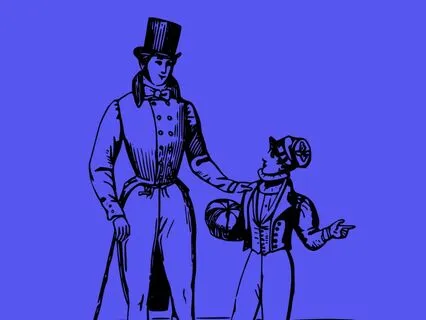
And the wall behind the counter was ornamented with a lively representation of two mutes in very stiff neck cloths,
On duty at a large private door,
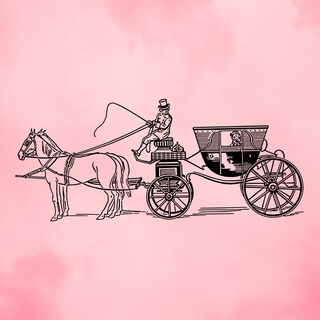
With a hearse drawn by four black steeds approaching in the distance.
The shop was close and hot.
The atmosphere seemed tainted with a smell of coffins.
The recess behind the counter,
In which his flock mattress was thrust,
Looked like a grave.
Not were these the only dismal feelings which depressed Oliver.
He was alone in a strange place,
And we all know how chilled and desolate the best of us will sometimes feel in such a situation.
The boy had no friends to care for,
No one to care for him.
The grit of no recent separation was fresh in his mind.
The absence of no loved and well-remembered face sank heavily into his heart.
But his heart was heavy notwithstanding,
And he wished as he crept into his narrow bed,
That that were his coffin,
And that he could be laying in a calm and lasting sleep in the churchyard ground,
With the tall grass waving gently above his head,
And the sound of the old deep bell to soothe him in his sleep.
Oliver was awakened in the morning by a loud clicking at the outside of the door,
Which before he could huddle on his clothes,
Was repeated in an angry and impetuous manner about twenty-five times.
When he began to undo the chain,
The legs desisted,
And a voice began,
Open the door,
Will you?
Cried the voice,
Which belonged to the legs which had kicked at the door.
I will directly,
Sir,
Replied Oliver,
Undoing the chain and turning the key.
I suppose you're the new boy,
Aren't you?
Said the voice through the keyhole.
Yes,
Sir,
Replied Oliver.
How old are you?
Inquired the voice.
Ten,
Sir,
Replied Oliver.
Then I'll whoop you and I'll get in,
Said the voice.
You just see if I don't,
That's all,
Workhouse brat.
And having made this obliging promise,
The voice began to whistle.
Oliver had been too often subjected to the process,
To which the very expressive monosyllable that recorded bears reference,
To entertain the smallest doubt that the owner of the voice,
Whoever he might be,
Would redeem his pledge most honourably.
He drew back the bolts with a trembling hand and opened the door.
For a second or two,
Oliver glanced up the street and down the street and over the way,
Impressed with the belief that the unknown who had addressed him through the keyhole had walked a few paces off to warm himself,
For nobody did he see but a big charity boy sitting on a post in front of the house,
Eating a slice of bread and butter,
Which he cut into wedges the size of his mouth with a clasp knife,
Then consumed with great dexterity.
I beg your pardon,
Sir,
Said Oliver at length,
Seeing that no other visitor made his appearance.
Did you knock?
No,
I kicked,
Replied the charity boy.
Did you want a coffin,
Sir?
Inquired Oliver innocently.
At this the charity boy looked monstrous fierce and said that Oliver would want one before long if he cut jokes with his superiors in that way.
You don't know who I am,
I suppose,
Workhouse,
Said the charity boy in continuation,
Descending from the top of the post meanwhile with edifying gravity.
No,
Sir,
Rejoined Oliver.
I'm Mr Noah Claypole,
Said the charity boy,
And you're under me.
Take down the shutters,
Your idle young ruffian.
And with this Mr Claypole administered a kick to Oliver and entered the shop with a dignified air,
Which did him great credit.
It is difficult for a large-headed,
Small-eyed youth of lumbering make and heavy countenance to look dignified under any circumstances,
But it is more especially so when superadded to these personal attractions of a red nose and yellow smalls.
Oliver,
Having taken down the shutters and broken a pane of glass in his effort to stagger away,
In his effort to stagger away beneath the weight of the first one,
To a small court at the side of the house in which they were kept during the day,
Was graciously assisted by Noah,
Who,
Having consoled him with the assurance that he'd catch it,
Condescended to help him.
Mr Sowerberry came down soon after.
Shortly afterwards,
Mr Sowerberry appeared.
Oliver,
Having caught it in fulfilment of Noah's prediction,
Followed that young gentleman down the stairs to breakfast.
Come near the fire,
Noah,
Said Charlotte.
I saved a nice little bit of bacon for you from master's breakfast.
Oliver,
Shut that door at Mr Noah's back.
Take them bits I've put on the cover of the breadpan.
There's your tea.
Take it away to that box and drink it there.
And make haste,
For I want you to mind the shop.
Do you hear?
Do you hear,
Workhouse,
Said Noah Claypool.
Lord Noah,
Said Charlotte,
What a run creature you are.
Why don't you let that boy alone?
Let him alone,
Said Noah.
Why,
Everybody lets him alone enough for the matter of that.
Neither his father nor his mother will ever interfere with him.
All his relations have let him have his own way pretty well,
Right,
Charlotte?
Oh,
You queer soul,
Said Charlotte,
Bursting into a hearty laugh.
In which he was joined by Noah,
After which they both looked scornfully at poor Oliver Twist,
As he sat shivering on the box in the coldest corner of the room and ate the stale pieces.
Which had been specially reserved for him.
Noah was a charity boy,
But not a workhouse orphan.
No chance child was he,
For he could trace his genealogy all the way back to his parents,
Who lived hard by.
His mother being a washerwoman and his father a drunken soldier,
Discharged with a wooden leg.
And a pension of tuppence-halfpenny and an unstatable fraction.
The shop boys in the neighborhood had long been in the habit of branding Noah in the public streets,
With the anonymous epithets of leathers,
Charity and the like.
And Noah had borne them without reply.
But now that fortune had cast in his way a nameless orphan,
At whom even the meanest could point the finger of scorn,
He retorted on him with interest.
This affords charming food for contemplation.
It shows us what a beautiful thing human nature may be made to be.
And how impartially the same amiable qualities are developed in the finest lord and the dirtiest charity boy.
Oliver had been sojourning at the undertaker's some three weeks or a month.
Mr.
And Mrs.
Salbery,
The shop being shut up,
Were taking their supper in the little black parlor.
When Mr.
Salbery,
After several deferential glances at his wife,
Said,
My dear?
He was going to say more,
But Mrs.
Salbery,
Looking up with a peculiar,
Unpropitious aspect,
He stopped,
Shocked.
Well,
Said Mrs.
Salbery sharply.
Nothing,
My dear,
Nothing,
Said Mr.
Salbery.
Oh,
You brute,
Said Mrs.
Salbery.
Not at all,
My dear,
Said Mr.
Salbery humbly.
I thought you didn't want to hear,
My dear.
I was only going to say.
.
.
Don't tell me what you were going to say,
Interposed Mrs.
Salbery.
I'm nobody.
Don't console me,
Pray.
I don't want to intrude upon your secrets.
As Mrs.
Salbery said this,
She gave a hysterical laugh,
Which threatened violent consequences.
But,
My dear,
Said Salbery,
I want to ask your advice.
No,
No,
Don't ask mine,
Replied Mrs.
Salbery in an affecting manner.
Ask somebody else's.
Here there was another hysterical laugh,
Which frightened Mr.
Salbery very much.
This is a very common and much-approved matrimonial course of treatment,
Which is obviously very effective.
It at once reduced Mr.
Salbery to begging as a special favour to be allowed to say what Mrs.
Salbery was most curious to hear.
After a long duration,
The permission was most graciously conceded.
It's only about young twists,
My dear.
Said Mrs.
Salbery.
A very good-looking boy,
That,
My dear.
He need be,
For he eats enough,
Observed the lady.
There's an expression of melancholy in his face,
My dear,
Resumed Mrs.
Salbery,
Which is very interesting.
He would make a delightful mute,
My love.
Mrs.
Salbery looked up with an expression of considerable wonderment.
Mr.
Salbery remarked it,
And without allowing time for any observation on the good lady's part,
Proceeded.
I don't mean a regular mute to attend grown-up people,
My dear,
But only for children's practice.
It would be very new to have a mute in proportion,
My dear.
You may depend upon it.
It would have a superb effect.
Mrs.
Salbery,
Who had a good deal of taste in the undertaking,
Weighed.
Was much struck by the novelty of this idea.
But,
As it would have been compromising her dignity to have said so,
Under existing circumstances,
She merely inquired with much sharpness why such an obvious suggestion had not presented itself to her husband's mind before.
Mr.
Salbery rightly construed this as an acquiescence in his proposition.
It was speedily determined,
Therefore,
That Oliver should be at once initiated into the mysteries of the trade,
And with this view,
That he should accompany his master on the very next occasion of his services being required.