Welcome to Sleep Stories with Steph,
Your go-to podcast that offers you a calm and relaxing transition into a great night's sleep.
It is time to relax and fully let go.
There is nothing you need to be doing now and nowhere you need to go.
Close your eyes and feel yourself sink into the support beneath you and let all the worries of the day drift away.
This is your time and your space.
Take a deep breath in through your nose and let it out with a long sigh.
There is nothing you need to be doing now and nowhere you need to go.
Happy listening.
Chapter 20 Mr and Mrs Allen were sorry to lose their young friend whose good humour and cheerfulness had made her a valuable companion and in the promotion of whose enjoyment their own had been greatly increased.
Her happiness in going with Miss Tilney,
However,
Prevented their wishing it otherwise,
And as they were to remain only one more week in Bath themselves,
Her quitting them would not long be felt.
Mr Allen attended her to Milton Street where she was to breakfast and saw her seated with the kindest welcome among her new friends,
But so great was her agitation in finding herself as one of the family,
And so fearful was she of not doing exactly what was right,
And of not being able to preserve their good opinion,
That in the embarrassment of the first five minutes she could almost have wished to return with him to Poultney Street.
Miss Tilney's manner and Henry's smile soon did away some of her unpleasant feelings,
But still she was far from being at ease,
Nor could the incessant attentions of the General himself entirely reassure her,
Nay,
Perverse as it seemed,
She doubted whether she might not have felt less had she been less attended to.
His anxiety for her comfort,
His continual solicitation she would eat,
And his often expressed fears of her seeing nothing to her taste,
Though never in her life before had she beheld half such variety on a breakfast table,
Made it impossible for her to forget for a moment she was a visitor.
She felt utterly unworthy of such respect,
And knew not how to reply to it.
Her tranquillity was not improved by the General's impatience for the appearance of his eldest son,
Nor by the displeasure he expressed at his laziness when Captain Tilney at last came down.
Catherine was quite pained by the severity of his father's reproof,
Which seemed disproportionate to the offence,
And much was her concern increased when she found herself the principal cause of the lecture,
And that his tardiness was chiefly resented from being disrespectful to her.
This was placing her in a very uncomfortable situation,
And she felt great compassion for Captain Tilney without being able to hope for his goodwill.
He listened to his father in silence,
And attempted not any defence,
Which confirmed her in fearing that the inquietitude of his mind on Isabella's account might,
By keeping him long sleepless,
Have been the real cause of his rising late.
It was the first time of her being decidedly in his company,
And she had hoped to be now able to form her opinion of him.
But she scarcely heard his voice while his father remained in the room,
And even afterwards,
So much were his spirits affected,
She could distinguish nothing but these words in a whisper to Eleanor.
How glad I shall be when you are all off!
The bustle of going was not pleasant.
The clock struck ten while the trunks were carrying down,
And the general had fixed to be out of Milsom Street by that hour.
His great coat,
Instead of being brought for him to be put on directly,
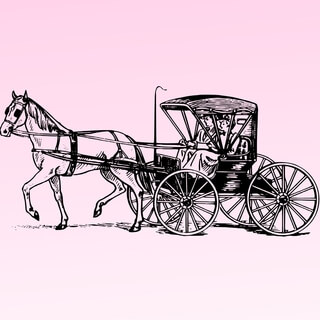
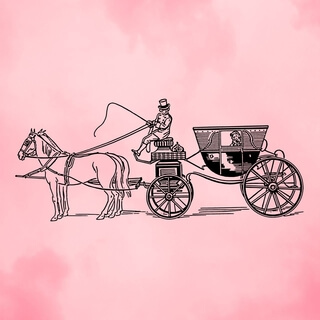
Was spread out in the curricle in which he was to accompany his son.
The middle seat of the chaise was not drawn out,
Though there were three people to go in it,
And his daughter's maid had so crowded it with parcels that Miss Morland would not have room to sit,
And so much was he influenced by this apprehension when he handed her in,
She had some difficulty in saving her own new writing desk for being thrown out into the street.
At last,
However,
The door was closed upon the three females,
And they set off at the sober pace in which the handsome,
Highly fed four horses of a gentleman usually perform a journey of thirty miles.
Such was the distance of Northanger from Bath.
Catherine's spirits revived as they drove from the door,
For with Miss Tilney she felt no restraint,
And with the interest of a road entirely new to her,
Of an abbey before and a curricle behind,
She caught the last view of Bath without any regret,
And met with every milestone before she expected it.
The tediousness of a two-hour's bait at Petit France,
In which there was nothing to be done but to eat without being hungry,
And loiter about without anything to see,
Next followed.
Her admiration of the style in which they travelled,
Of the fashionable chaise en four,
Pastillions handsomely liveried,
Rising so regularly in their stirrups and numerous outriders properly mounted,
Sunk a little under this consequent inconvenience.
Had their party been perfectly agreeable,
The delay would have been nothing,
But General Tilney,
Though so charming a man,
Seemed always to check upon his children's spirits,
And scarcely anything was said but by himself.
The observation of which,
With his discontent at whatever the inn afforded,
And his angry impatience at the waiters,
Made Catherine grow every moment more in awe of him,
And appeared to lengthen the two hours into four.
At last,
However,
The order of release was given,
And much was Catherine then surprised by the General's proposal of her taking his place in his son's curricle for the rest of the journey.
The day was fine,
And he was anxious for her seeing as much of the country as possible,
He said.
The remembrance of Mr Allen's opinion respecting young men's open carriages made Catherine blush at the mention.
Her first thought was to decline it,
But her second was of greater deference for General Tilney's judgment.
He could not propose anything improper for her,
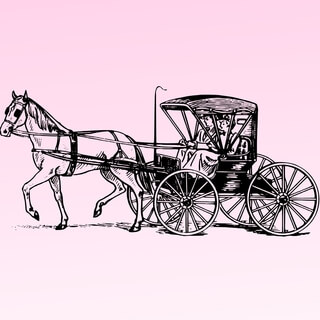
And in the course of a few minutes she found herself with Henry in the curricle,
As happy a being as ever existed.
A very short trial convinced her a curricle was the prettiest equipage in the world.
The chaise en four wheeled off with some grandeur,
To be sure,
But it was a heavy and troublesome business,
Lest she could not easily forget it having stopped two hours at petty France.
Half the time would have been enough for the curricle,
And so nimbly were the light horses disposed to move.
Had not the General chosen to have his own carriage lead the way,
They could have passed it with ease in half a minute.
But the merit of the curricle did not belong to the horses.
Henry drove so well,
So quietly,
Without making any disturbance,
Without parading to her or swearing at them,
So different from the only gentleman coachman whom it was in her power to compare him with.
And then his hat sat so well,
And the innumerable capes of his great coat looked so becoming.
To be driven by him,
Next to dancing with him,
Was certainly the greatest happiness in the world.
In addition to every other delight,
She had now that of listening to her own praise,
Of being thanked at least on his sister's account for her kindness in thus becoming her visitor,
Of hearing it ranked as real friendship,
And described as creating real gratitude.
His sister,
He said,
Was uncomfortably circumstanced.
She had no female companion,
And in the frequent absence of her father was sometimes without any companion at all.
But how can that be?
Said Catherine.
Are you not with her?
Northanger's not more than half my home.
I have an establishment at my own house in Woodstone,
He said.
That's nearly twenty miles from my father's,
Some of my time's necessarily spent there.
How sorry you must be for that.
I'm always sorry to leave Eleanor.
Yes,
But besides your affection for her,
You must be fond of the Abbey.
After being used to such a home as the Abbey,
An ordinary parsonage house must be very disagreeable.
Henry smiled and said,
You've formed a very favourable idea of the Abbey.
To be sure I have.
Is it not a fine old place,
Just like what one reads about?
And are you prepared to encounter all the horrors that such a building as what one reads about may produce?
Have you a stout heart,
Catherine?
Nerves fit for sliding panels and tapestries?
Oh yes,
I do not think I should be easily frightened,
Because there will be so many people in the house.
And besides,
It's never been uninhabited and left deserted for years,
Has it?
And then the family come back to it unawares,
Without giving any notice,
As generally happens.
No,
Certainly,
We shall not have to explore our way into a hall dimly lighted by the expiring embers of a wood fire,
Nor be obliged to spread our beds on the floor of a room with a fireplace without windows,
Doors or furniture.
But you must be aware that when a young lady is,
By whatever means,
Introduced into a dwelling of this kind,
She's always lodged apart from the rest of the family.
While they snugly repair to their own end of the house,
She's formally conducted by Dorothy,
The ancient housekeeper,
Up a different staircase and along many gloomy passages into an apartment never used since some cousin or king died in it about twenty years before.
Can you stand such a ceremony as this,
Catherine?
Will not your mind misgive you when you find yourself in this gloomy chamber,
Too lofty and extensive for you,
With only the feeble rays of a single lamp to take in its size?
Its walls hung with tapestry exhibiting figures as large as life,
And the bed of dark green stuff or purple velvet presenting even a funereal experience.
Will not your heart sink within you then?
Oh,
But this will not happen to me,
I'm sure.
How fearfully will you examine the furniture of your apartment,
And what will you discern?
Not tables,
Toilets,
Wardrobes or drawers,
But on one side perhaps the remains of a broken lute,
Or on the other a ponderous chest which no efforts can open,
And over by the fireplace,
The portrait of some handsome warrior whose features will so incomprehensibly strike you that you will not be able to withdraw your eyes from it.
Dorothy,
Meanwhile,
No less struck by your appearance,
Gazes on you in great agitation and drops a few unintelligible hints.
To raise your spirits,
Moreover,
She gives you reason to suppose that part of the abbey you inhabit is undoubtedly haunted,
And informs you you will have not a single domestic within call.
With this part in cordial,
She curtsies off.
You listen to the sound of her receding footsteps as long as the last echo can reach you,
And when with fainting spirits you attempt to fasten your door,
You discover,
With increased alarm,
It has no lock.
Oh,
Mr Tilney,
How frightful!
This is just like a book,
But it cannot really happen to me.
I am sure your housekeeper is not really Dorothy,
Is she?