The Natural World Series Written and performed by Stephanie Poppins This sleep series has been written to provide an educational transition into deep sleep.
Having taught in high schools for over 20 years,
I have come to understand learning happens in a myriad of ways,
And sometimes when you least expect it.
It is my pleasure to present to you one of those ways.
But before we begin,
Let's take a moment to focus on where we are now.
Take a deep breath in through your nose,
And let it out on a long sigh.
It is time to relax and fully let go.
Feel your shoulders melt away from your ears,
And feel yourself relaxing to the support beneath you,
As you let all the worries of the day seep away.
You are safe here.
We are all safe here.
Happy listening.
Episode 2 Variation Darwin discovered that after 700 years,
One pair of breeding organisms could produce up to 19 million descendants.
For example,
A female elephant is able to have her first calf when she is about 12 years old.
If she had another calf every two years and they all survived,
They could mate and have calves of their own.
And if these calves survived,
They too could produce calves.
So in every generation,
There would certainly be many more breeding elephants,
And the number of elephants would increase more and more rapidly as time went on.
Some species produce even more quickly than elephants.
Cockroaches,
For example,
Could have up to 164,
000 million descendants after only seven months.
And after seven years only,
Two poppy plants could have 820,
000 million trillion descendants.
But of course,
The environment plays a huge part on whether or not that happens.
Let's look at the environment of a rabbit.
A rabbit lives on,
And underneath,
The ground.
It breathes the air and burrows in the soil for shelter.
And in order to produce offspring,
A rabbit must have a mate.
Rabbits are social animals and build burrows near one another to form warrens.
A rabbit is a herbivore and depends on plants for food.
Tall plants also provide a hiding place.
Weather will affect a rabbit in many different ways.
When it's very wet,
A rabbit tends to stay in its burrow.
And when it's fine,
Grass grows well and provides plenty of food.
But some other animals eat the same food.
Foxes and stoats,
For example,
Hunt rabbits to provide food for themselves.
And also fleas and other parasites may live in a rabbit's fur.
These are some of the things that contribute to the environment the rabbit lives in.
And they can affect his chance of survival.
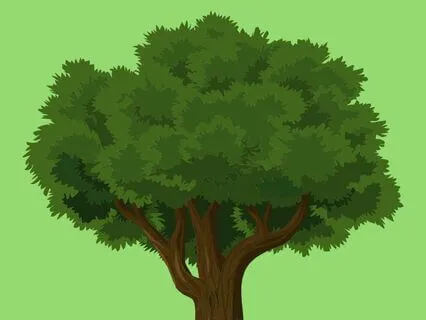
When we look at the environment of an oak tree,
We can see it needs earth and air in order to live and grow.
And light,
Water and nutrients.
Its roots,
Of course,
Absorb the water and nutrients from the soil.
And so grow stronger to anchor the tree firmly in the ground.
Rain provides an oak tree with water.
And sunshine provides the energy it needs to live and grow.
These changes in temperature can affect the rate of growth and time of flowering.
Other plants growing near an oak tree may help to protect it.
But they also need light and space and use water and nutrients.
So they are indeed competing with the oak trees themselves.
Many different animals also feed on an oak tree,
Eating its leaves,
Its bark,
Its sap and its acorns.
And many of them make their homes on or in the tree.
All of these different and non-living things can affect an oak tree's chances of survival.
And so we can see the resources of the environment are limited and competition occurs.
In order to breed,
A male rabbit needs a territory that includes females.
But there are not always enough territories to go around.
So in the breeding season,
Male rabbits compete with each other for the territories.
In the case of new oak trees,
Each one needs light and air.
And as the trees grow bigger,
The environment cannot supply the needs of all of them.
So here there is competition for survival.
But what are the effects of this competition?
Well,
One effect is that some individual species have far more offspring than others.
In the case of the trees,
Where there are too many in an environment,
Some die off naturally.
The smaller trees,
As they grow older and taller,
Need more and more light and space and nutrients.
But in the woodland there is not always enough of them.
Many die before they reach maturity.
In this way,
We can see only a few individuals survive to maturity,
Which is,
Of course,
An effect of natural selection.
We can conclude,
Therefore,
Some living things survive to produce young of their own.
But sometimes survival is a matter of luck.
One thing is for certain,
Some individuals have a better chance of producing young,
And so surviving,
Than others have.
What it is,
Of course,
Important to remember is,
Not all the members of a species are identical.
For example,
Human beings are one species,
But there are so many differences between them.
We have no difficulty in recognising a face in the crowd,
For example.
And if you look closely,
You can see differences in other species too.
And so we come to the word variation.
Variation can be caused by the environment.
For example,
Some flamingos have bright pink feathers.
The colour is caused by a pigment.
But the flamingos cannot make the pigment themselves.
They obtain it from the microscopic algae that they eat.
In captivity,
The flamingos lose their bright pink colour unless they are given this correct diet.
Oxeye daisies are one species,
But individuals vary.
There may be different sizes,
And they may have different numbers of petals.
These variations caused by the environment cannot be passed on from one generation to another.
And this is true for all living things.
Variations which can be passed on,
However,
Occur through inheritance.
Inherited characteristics are controlled by genetic instructions or genes.
They are carried on chromosomes in the nucleus of every cell.
Most cells contain two matching sets of chromosomes,
And so two sets of genes.
One set of genes is passed on from each parent during reproduction.
Some of these genes may be dominant and some recessive.
For example,
In cows.
There are two different genes for coat colour,
One for red and one for white.
A calf with a pair of white genes is called all-white,
And a calf with a pair of red genes is called all-red.
But a calf with a mixed pair of genes has a roan coat.
There are many different variations that a single pair of genes can produce.
But all living things have thousands of pairs of genes controlling their appearance,
Their behaviour and the way their bodies work.
So the potential variation is enormous.
So now we can begin to understand some of the causes of the variation between individuals of the same species.
Some variation is caused by the environment and is not passed on from one generation to the next.
But some variation is controlled by genes and can be passed on from one generation to the next.
Much of the variation we see is a result of both environment and genes.
Darwin himself knew nothing of the genetic mechanisms that control inheritance.
All he knew was that some characteristics could be passed on from one generation to another.
And that knowledge enabled him to formulate his theory of natural selection.
We shall take a deep dive into natural selection in our next episode.
But until then,
Good night.