Welcome to Sleep Stories with Steph,
Your go-to podcast that offers you a calm and relaxing transition into a great night's sleep.
It is time to relax and fully let go.
There is nothing you need to be doing now,
And nowhere you need to go.
Close your eyes and feel yourself sink into the support beneath you and let all the worries of the day drift away.
This is your time and your space.
Take a deep breath in through your nose and let it out with a long sigh.
There is nothing you need to be doing now,
And nowhere you need to go.
Happy listening.
Chapter 6 Continued In less than an hour Mrs Cadwalader had circumvented Mrs Carter and driven to Freshet Hall,
Which was not far from her own parsonage,
Her husband being resident in Freshet and keeping a duet in Tipton.
Sir James Chetham had returned from the short journey which had kept him absent for a couple of days,
And had changed his dress,
Intending to ride over to Tipton Grange.
His horse was standing at the door when Mrs Cadwalader drove up.
He immediately appeared there himself,
Whip in hand.
Lady Chetham had not yet returned,
But Mrs Cadwalader's errand could not be dispatched in the presence of grooms,
So she asked to be taken into the conservatory close by to look at the new plants.
I have a great shop for you,
She began.
I hope you are not so far gone in love as you pretended to be.
It was no use protesting against Mrs Cadwalader's way of putting things,
But Sir James's countenance changed a little.
He felt a vague alarm.
I do believe Brooke is going to expose himself after all.
I accused him of meaning to stand for Middlemarch on the Liberal side,
And he looked silly and never denied it.
Is that all?
Said Sir James,
Much relieved.
Why,
Rejoined Mrs Cadwalader with a sharper note,
You don't mean to say you like him to turn public man in that way,
Making a sort of political cheat-jack of himself?
He might be dissuaded,
I should think,
He would not like the expense.
That is what I told him.
He's vulnerable to reason there,
Always a few grains of common sense in an ounce of miserliness.
Miserliness is a capital quality to run in families,
It's the safe side for madness to dip on,
And there must be a little crack in the Brooke family,
Else we should not see what we are to see.
What,
Brooke standing for Middlemarch?
Worse than that.
I really feel a little responsible.
I always told you Miss Brooke would be such a fine match,
I knew there was a great deal of nonsense in her,
A flighty sort of methodistical stuff,
But these things wear out of girls.
However,
I'm taking by surprise for once.
What do you mean,
Mrs Cadwalader?
Sir James is fearless Miss Brooke should have run away to join the Moravian Brethren or some preposterous sect unknown to good society,
Was a little allayed by the knowledge that Mrs Cadwalader always made the worst of things.
What has happened to Miss Brooke?
Pray speak out.
Very well,
She is engaged to be married.
Mrs Cadwalader paused a few moments,
Observing the deeply hurt expression in her friend's face,
Which he was trying to conceal by a nervous smile.
He whipped his boot and she added,
Engaged to cacabon.
Sir James let his whip fall and stooped to pick it up.
Perhaps his face had never before gathered so much concentrated disgust as when he turned to Mrs Cadwalader and repeated,
Cacabon?
Even so,
You know my errand now.
Good God,
It's horrible.
He's no better than a mummy.
She says he is a great soul,
A great bladder for dried peas to rattle in,
Said Mrs Cadwalader.
What business has an old bachelor like that to marry,
Said Sir James.
He's one foot in the grave.
He means to draw it out again,
I suppose.
Brooke ought not to allow it.
He should insist on it being put off until she's of age.
She would think better of it then.
What is a guardian for?
As if you could ever squeeze a resolution out of Brooke.
Cadwalader might talk to him.
Not he.
Humphrey finds everybody charming.
I can never get him to abuse cacabon.
He will even speak well of the bishop.
What can one do with a husband who attends so little to the decencies?
I hide it as well as I can by abusing everybody myself.
Come,
Come,
Cheer up.
You're well rid of Miss Brooke,
The girl who would have been requiring you to see the stars by daylight.
Between ourselves,
Little Celia's worth two of her,
And likely after all to be the better match.
For this marriage to cacabon is as good as going to a nunnery.
On my own account,
It is for Miss Brooke's sake I think her friend should try to use their influence.
Well,
Humphrey doesn't know yet.
When I tell him you may depend on it,
He'll say,
Why not?
Cacabon is a good fellow and young enough.
These charitable people never know vinegar from wine till they've swallowed it and got the colic.
However,
If I were a man,
I should prefer Celia,
Especially when Dorothea was gone.
The truth is,
You have been courting one and won the other.
I can see she admires you almost as much as a man expects to be admired.
If it were anyone but me who said so,
You might think it exaggeration.
Goodbye.
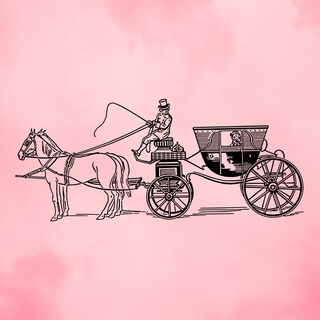
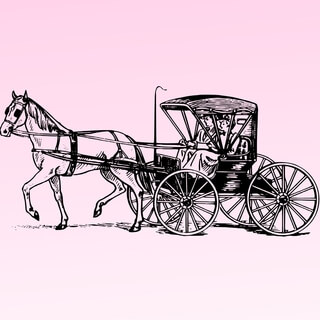
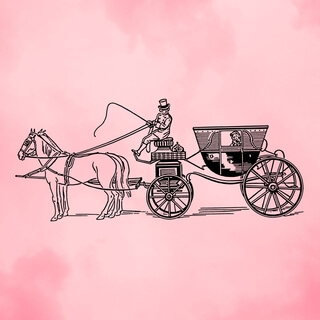
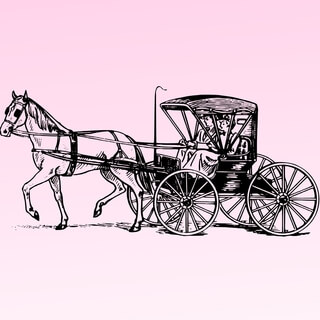
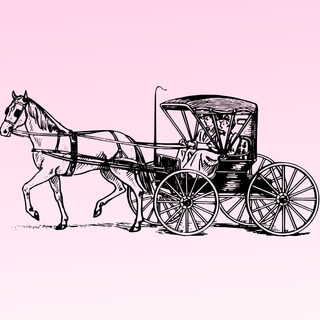
Sir James handed Mrs Cadwalader to the Faton and jumped on his horse.
He was not going to renounce his ride because of his friend's unpleasant news,
Only to ride the faster in some other direction than that of Tipton Grange.
Now why on earth should Mrs Cadwalader have been at all busy about Miss Brooke's marriage?
And why,
When one match she liked to think she had a hand in was frustrated,
Should she have straightaway contrived the preliminaries of another?
Was there any ingenious plot,
Any hide-and-seek course of action,
Which might be detected by a careful telescopic watch?
Not at all.
A telescope might have swept the parishes of Tipton and Freshet,
The whole area visited by Mrs Cadwalader and her Faton,
Without witnessing any interview that could excite suspicion or any scene from which she did not return with the same unperturbed keenness of eye and same high natural colour.
In fact,
If that convenient vehicle had existed in the days of the seven sages,
One of them would doubtless have remarked,
You can know little of women by following them about in their pony Fatons.
But a strong lens applied to Miss Cadwalader's matchmaking would show a play of minute causes producing what may be called thought-and-speech vortices,
To bring her the sort of food she needed.
Her life was rurally simple,
Quite free from secrets either foul,
Dangerous or otherwise important,
And not consciously affected by the great affairs of the world.
All the more did the affairs of the great world interest her when communicated in the letters of high-born relations.
The way in which fascinating younger sons had gone to the dogs by marrying their mistresses,
The fine old-blooded idiocy of Lord Tapir,
And the furious gouty humours of old Lord Megatherium.
These were the topics of which she retained details with the utmost accuracy,
And reproduced them in an excellent pickle of epigrams which she herself enjoyed the more because she believed as unquestioningly in birth and no-birth as she did in game and vermin.
She would never have disowned anyone on the ground of poverty.
A Debracy,
Which used to take his dinner in a basin,
Would have seemed to her an example of pathos worth exaggerating,
And I fear his aristocratic vices would not have horrified her.
But her feeling toward the vulgar rich was a sort of religious hatred.
They had probably made all their money out of high retail prices,
And Miss Cadwallader detested high prices for everything that was not paid in kind at the rectory.
Such people were no part of God's design in making the world,
And their accent was an affliction to the ears.
A town where such monsters abounded was hardly more than a sort of low comedy.
Let any lady who is inclined to be hard on Mrs Cadwallader inquire into the comprehensiveness of her own beautiful views,
And be quite sure they afford accommodation for all the lives which have the honour to co-exist with hers.
With such a mind,
Active as phosphorus,
Biting everything that came near into the form that suited it,
How could Mrs Cadwallader feel that the Miss Brooks and their matrimonial prospects were alien to her,
Especially as it had been the habit of years for her to scold Mr Brooks with a friendliest frankness,
And let him know in confidence she thought him a poor creature.
From the first arrival of the young ladies in Tipton,
She had pre-arranged Dorothy's marriage with Sir James,
And if it had taken place she would have been quite sure it was her doing.
That it should not take place caused her an irritation which every thinker will sympathise with.
She was the diplomatist of Tipton and Freshet,
And for anything to happen in spite of her was an offensive irregularity.
As to freaks like this of Miss Brooks,
Mrs Cadwallader had no patience with them,
And now saw her opinion of this girl had been infected with some of her husband's weak charitableness.
However,
Said Mrs Cadwallader first to herself and afterwards to her husband,
I throw her over.
There was a chance if she had married Sir James of her becoming a sane,
Sensible woman.
He would never have contradicted her,
And when a woman is not contradicted she has no motive for obstinacy in her absurdities,
But now I wish her the joy of her hair shirt.
It followed that Mrs Cadwallader must decide on another match for Sir James,
And having made up her mind it was to be the younger Miss Brooks.
There could not have been a more skilful move toward the success of her plan than her hint to the baronet that he had made an impression on Celia's heart,
For he was not one of those gentlemen who languish after the unattainable.
He had no sonnets to write,
And it could not strike him agreeably that he was not an object of preference to the woman who he preferred.
Already the knowledge Dorothea had chosen Mr Casabon had bruised his attachment and relaxed its hold.
Although he was a sportsman,
He had some other feelings towards women than towards grouse and foxes,
And did not regard his future wife in the light of prey,
Valuable chiefly for the excitements of the chase.
Neither was he so well acquainted with the habits of primitive races as to feel an ideal combat for her,
Tomahawk in hand,
So to speak,
Was necessary to the historical continuity of the marriage tie.
On the contrary,
Having the amiable vanity which knits us to those who are fond of us,
And disciplines us to those who are indifferent,
And also a good grateful nature,
The mere idea that a woman,
At a kindness towards him,
Spun little threads of tenderness from out his heart towards hers.
Thus it happened that after Sir James had ridden rather fast for half an hour in a direction away from Tipton Grange,
He slackened his pace and at last turned into a road which would lead him back by a shorter cut.
He could not help rejoicing he had never made the offer and been rejected.
Mere friendly politeness required he should call to see Dorothea about the cottages,
And now,
Happily,
Miss Cutwallader had prepared him to offer his congratulations,
If necessary,
Without showing too much awkwardness.
He really did not like it.
Giving up Dorothea was very painful,
But there was something in the resolve to make this visit forthwith and conquer all show of feeling.
And without distinctly recognising the impulse,
There certainly was present in him the sense that Senior would be there and that he should pay her more attention than he'd done before.
We mortals,
Men and women,
Devour many a disappointment between breakfast and dinner time,
Keep back the tears and look a little pale about the lips,
And in answer to enquiries say,
Oh nothing.
Pride helps us,
And pride is not a bad thing when it only urges us to hide our own hurts,
Not to hurt others.