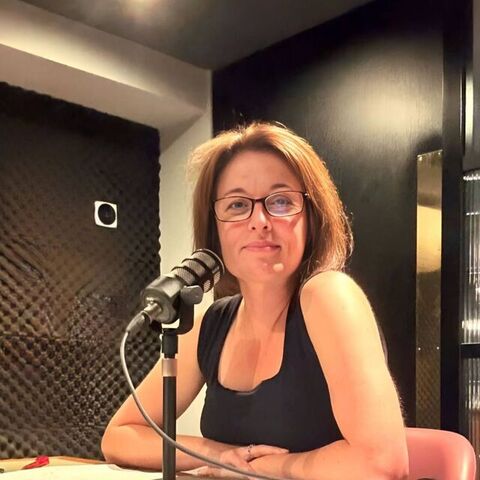
Welcome to Never or Now with Rosie Wyatt.
I'm Zoe Hanson,
The podcast lady.
Rosie is a novelist.
She's also a marketeer.
She has amazing stories and amazing things to talk through with you.
Now,
What's it like to hit rock bottom?
Have you ever got there?
When have you felt at your lowest ebb?
What's the journey like?
And what's the recovery like?
That's what we're going to cover in this episode.
Rosie,
You and I have just sat here and laughed our heads off at something really stupid or the fact that fun is in funeral.
You know,
Like,
We find that really funny.
And but what is that for you?
Is that a coping mechanism?
What is that?
It's partly a coping mechanism,
But it really is just part of me.
It's it's just my reaction to things.
And what comes naturally for me is to literally see funny sides of situations and pick those out.
And and some would call that a coping mechanism.
But I just call that the light and the shade of any given situation,
Be that bereavement,
Be that divorce,
Be that losing your vocation.
It is just inherent in all situations is that there are different shades to it.
And that is one of them.
And it's really part of my personality.
And probably what picks me up the most as I'm moving forwards in life is just laugh at it and share that with other people.
And it connects us again.
I've always found exactly the same.
I used to do a breakfast show on the radio.
And what I found was brilliant about that job was not the half past four starts,
But the fact that anything that went wrong in my life would be a good hour of content.
If I broke down somewhere,
I'd be like,
Yeah,
Well,
I've got to come up with any subjects for tomorrow,
Though,
Have I?
It was rather wonderful having this sort of real positivity come out of so much negativity.
Exactly.
You know,
How would you cope without that?
Being able to,
You know,
No one wants to sit with their dark stuff.
No.
For months on end.
Just that.
Exactly that.
Or finding just the funnies in things.
I've been at funerals where it's just hilarious.
You know,
I remember my grandparents choosing which funeral to go to as to who they thought would have the best buffet because they would have a choice every week.
But look,
This is not about my grandparents.
I want to talk and we're going to get quite dark in here.
So we will probably have a bit of a laugh about it.
Yes.
What's it like to hit rock bottom?
Can you tell us first how,
Why,
Where you were?
Yeah.
And I think the thing with hitting rock bottom is it can happen quickly.
So I think sometimes people think maybe that happened over a period of time,
Which it did.
And at the same time,
It hit me quickly.
So leading up to that,
I had a very close platonic male friend that I'd known for 30 years.
We met at sixth form college and were very,
Very close throughout those two years.
We did,
We didn't do A levels.
We did a national diploma,
Which meant we were together all the time because you're not doing different subjects.
You're doing coursework.
And we had a strong bond and a really strong friendship.
I think,
You know,
And platonic friendships is something else I would talk about at some point,
But it's,
It's a very,
For me,
It's a very different friendship to that I have with female friends.
And it's,
You know,
It can,
It's a little bit lighter in some ways.
And,
And it,
You know,
It,
You're leaning on that person that isn't the same gender as you.
And there's a different type of connection to someone you'd have a romantic relationship with.
It's,
It's kind of very safe.
Anyway,
We,
We have been very good friends and he lived abroad for probably the last 20 years.
And then he became ill in September,
2022.
He hadn't really thought much of it.
He just had some pain in his back and he was just taking paracetamol.
That then progressed quite quickly.
And he went to the doctors in Ibiza where he was living and then got sent home to the UK.
And it turned out that he had prostate cancer,
But that had spread incredibly quickly.
And he was only 50,
I think at the time,
Or 51.
And,
You know,
He basically was given a diagnosis of possibly about two years.
Actually in,
In reality,
That was September and he died in May,
2023.
So it wasn't as long as he'd hoped.
However,
By the time we connected again around Christmas of that year,
He had massively got his head around it.
I know he'd really struggled and he,
And he did continue to struggle.
And there were moments when he was very reflective and could be very sad,
But those last months that we spent a lot time together and a lot of WhatsApp voice notes and messages were so joyful and there was so much pain and so much anguish,
But there was so much laughter and so many different emotions that we both felt.
But the honesty in that relationship was unique and remarkable.
So there was a huge amount of honesty between us and so much just realness between us in that relationship that has just stayed with me.
And,
And it's probably,
It's also part of why I'm talking about this now is because he just was able to just teach me so much about myself and our hearts and souls,
Because he knew that that was going to end for him.
When you talk about honesty and somebody facing that prognosis,
What do you mean by honesty?
You were having conversations about how you felt about what does that look like?
We were having conversations about how we felt in terms of our lives overall and how we felt about each other.
So there was a lot of,
You know,
Expressing what we meant to each other in our lives,
Which I think all of us want with someone that we know is going to leave us.
And we were so lucky to have that time.
Not everyone does,
But there was also honest.
We,
A lot of our conversations were around his death.
So there was a lot,
He wasn't afraid to talk about that and neither was I.
So there was a lot of conversations about what that meant for him,
How he thought that looked,
What he was hoping for,
What he was leaving behind.
As that progressed a few days before the end,
There was a lot of fear very naturally.
Of course there is.
But if you're talking to somebody facing this,
He's fearful.
What do you say?
In that,
That was the penultimate time I saw him was probably the only time he had expressed fear,
But that was very raw.
I didn't actually say very much.
He just needed my presence there and we just sat with it,
Which is what I've learned to do since is we,
There was no,
We couldn't move away from it.
There was nowhere to go apart from the fact we were stuck in Basingstoke hospital,
Which is not the place you want to be.
But yeah,
We sat with it and I just told him he was safe and I just watched him calm and he just said,
Thank you.
And we,
Yeah,
It was very difficult.
I bet.
And even now I feel the need to fill that silence and to feel that,
But I know that this episode is about what's it like to hit rock bottom and how do you make your way through that?
Yeah.
So,
So you get caught up,
I suppose,
At the end of the life,
If that's your journey to hitting rock bottom,
Which isn't for everyone.
So Richard,
Obviously he then died and you go through that process,
Which then blindsides you.
Because even though fairly recently before I'd lost my dad,
A few years before that,
My mum,
Nothing had prepared me for this intensity of feeling because however much I love my parents and were close to them,
There was this different connection with Richard that I hadn't had before.
And there was no judgment.
There was no,
There were no kind of rules in that,
You know,
There was,
There was no,
There aren't any set roles,
I suppose,
You know,
When it's your parents that,
You know,
The roles are set out on.
Yeah.
And it's the word I was trying to think of was unconditional.
It was so unconditional.
He took me for what I was and I could be a raving mess and I took him for what he wasn't.
And that is a lovely thing.
And then that is suddenly gone.
And so that journey then was May.
There's kind of this almost expectation that you shift then through this process and these stages of grief in the immediate next part,
The immediate days following and thereafter.
So you would then,
You know,
Grieve massively,
Cry for a few days or weeks.
You'd then have a funeral.
You'd probably cry at that unless you're super British and keep it in.
And then,
And then thereafter that you drop off the face of the earth and people like,
You're just back at work.
Yeah.
It's,
It's like,
It's,
It's a process that you move through and then it's finished.
Yeah.
I think that's how a lot of people see it.
But so how did you feel about the funeral?
How did you feel about trying to go through this process?
Well,
Richard didn't want a funeral.
That just wasn't how he wanted people to think of him.
He didn't want too much sadness there.
So that in itself was challenging.
And I think probably would have been easier for some of us if there had been some sort of event to,
To kind of say goodbye.
Yeah.
So we did have a memorial in September and that is when I broke down.
Right.
So in the immediate days afterwards,
I did completely have a mini fall apart and I can remember driving to near where he'd lived and there was a woodland opposite his house and I was missing his touch.
Cause you know,
You'd hug and,
And,
And touch.
And literally the last time I saw him,
We were holding hands and he was stroking my hands and I was stroking his,
And then we both went still.
And I can remember looking at him and thinking,
Oh,
Has he gone?
And he just opened one eye and looked at me and went,
Are you dead?
And we absolutely roared at the sort of the ironic situation that,
You know,
He was asking me and he was laughing.
I was laughing.
And it was,
I think the whole of the hospital shook cause we were laughing so much.
And,
And,
And so the day of the days following his death,
I went to this woods and I was really missing that touch and the handholding.
And I do tend to gravitate to nature if I'm struggling.
And I just had this,
I was almost searching for him.
If I look back now,
I was almost looking around this woodlands looking for him,
Which felt a bit unstabilizing at the time.
But now I think,
You know,
There's so much visceral pain that I was just searching for some,
Something.
And I saw a tree and I just want to hold this tree and I've not been a tree hug.
That's not kind of my thing.
I went and hugged this tree and I thought it feels solid.
It feels like him.
It feels,
This is what I need to do.
And I was having this real deep,
Meaningful moment with this tree.
And then I had the most searing pain in my bra and a tree ant crawled in and bit my bra.
And I thought,
There he is.
There he is,
That's exactly what I thought is there he is.
He's bringing me back.
She's having a moment,
But we need to laugh at this.
And that was,
That did form part of my journey and still does is,
You know,
Things will happen now.
And I think there he is.
So we fast forward a bit to the memorial,
Which was held at his lovely cousin's house.
And there was just very close family.
Richard had lost both his parents too.
So it was very close family and very close friends,
Which was just amazing and beautiful.
And he was an artist.
So there was,
His art was around,
But I,
The day before I'd started to drop quite low and I felt concerned about myself.
You know,
I just thought this does not feel good.
My gorgeous daughter came with me and we walked in.
And from the moment I walked in that house,
I was a mess.
I was crying.
No one else cried at the memorial that I saw.
Maybe they did.
There was probably tears shed,
But I was openly,
You know,
Beside myself.
And there was a huge amount of embarrassment with that.
From you or other people?
Me,
I felt embarrassed.
Why?
Because I felt like a misfit and that I was showing this emotion and it was there and I felt on my own that I was different and no one else was having this experience.
And why me?
And there was a bit of self-hatred going on there because I was thinking,
Why can't I just be stronger?
Why can't I just be like that person over there?
Why can't I just remember him with a happy face on?
Why,
Why am I falling apart?
They were so kind and I massively deflected and said,
Oh,
I think it's because I've split up with my partner because I had been in a relationship and that had ended.
And I,
And I really did think it was that and part or partly that,
But it wasn't.
I was deflecting onto something else.
And I,
We got through that day.
I did pull it together,
If that's the expression,
And it was a really wonderful occasion.
But I,
That was a Sunday and I returned home.
I went to the library in Winchester on the Monday to kind of hot desk and not be at home and take my laptop.
And I just,
My body just had so much sadness and unhappiness in it.
I just couldn't sit still.
I went home and I spoke to a really good friend of mine and she said,
You know,
I think maybe see how the next couple of days go,
But go and see your doctor.
And then I was watching a podcast that evening,
I think,
Or the next evening.
And it resonated so much with me,
The words she was saying and,
And the,
It will,
The advice,
It wasn't advice,
The sort of wisdom that she was imparting was,
I think it was more to do with people that had ended a long relationship,
But,
But it was the same for grief.
And it kind of encompassed that was,
If you are feeling something,
If you are struggling with something in your life,
Let yourself hit rock bottom,
Let yourself just go there.
And I,
And at that moment that I just thought I I've never let myself do that through difficult things in life.
I've kept going,
Keep positive,
Keep strong,
Do the next thing,
Try and find something tangible,
Something in life to hold on to,
And then do that and distract,
Distract,
Distract.
And I thought,
I can't do that anymore.
I,
I want to try this.
I want to try letting it all go.
And just,
I've,
I had no alternative.
I thought I've got to just really feel this.
And I felt that that was what Richard wanted too.
I think Richard was there thinking,
Don't be afraid of it.
It feels like a really strange thing to talk about.
And it feels incredibly alien to me to be able to sort of sit with your feelings.
You know,
I'm quite happy sitting when I'm happy,
Right?
But I don't know about the rest of it.
Like you say,
You're always looking for the distraction.
What did you physically do?
Felt like I was going mad.
I,
I find it hard to sit still when I'm like that.
So there's a lot of movement.
Otherwise I'm freezing.
So I'll just sit very still,
Go over it and over it in my head,
Find some way to blame and attack myself.
So,
But you know,
I had Lucy at home who was doing,
You know,
She's at sixth form college just going into her second year.
So there,
You know,
There was that very conscious part of my brain that wanted to,
She knew what was happening,
But I didn't want to halt because of anything that was happening with me.
So,
So physically I would,
I know that I was waking in the night or not even going to sleep.
And it was so visceral and strong that I would almost be on all fours,
Holding onto the bed cover,
Just crying and just hoping to get through the next 20 minutes,
Five minutes,
30 seconds.
It felt like coming off of an addiction that I just had to let it ravage my body and let it go through.
Yeah.
And it was,
It was quite physical and very,
Very draining and very tiring,
But I held onto a hope that there was an end point.
You know,
It's a bit like,
Um,
Childbirth where,
You know,
It's,
There's a sort of end game,
You know,
You know,
There's 12 hours,
24 hours or six hours.
And the same with this,
I thought this isn't the end of a story for me.
This is the beginning of something.
But is it,
Is it,
You know,
I suppose with childbirth,
You know,
That it's going to be 24 hours of pain or,
You know,
Where you don't know your body,
You know,
And you sort of detach from everything.
But when,
When you go through this rock bottom phase,
Is there some,
Are you heading towards some positivity?
Because I suppose in labour,
You're heading towards a baby,
You know,
This is a positive thing.
Whereas in your case,
At this point,
I don't know if there's any positivity to head towards.
And if it is,
Does it become then a distraction?
There wasn't,
I didn't think more than an hour ahead.
So that was kind of what was happening.
So I didn't think that long game of,
Is there any positivity?
And I think along with the pain of grief was the pain of,
Which happens in lots of life situations and not just someone dying,
Was uncertainty.
So I was sitting with massive uncertainty,
Like,
What does life look like?
You know,
I'd lost this person.
I'd also lost the romantic relationship.
So two people had disappeared from life.
And I was thinking,
What,
There's so much uncertainty.
And that for all of us is where so much fear comes from is,
I don't know.
I don't know what next week looks like.
I don't know what next month looks like.
And that can,
If you let that,
That can overtake.
But I was in such a bad place,
I couldn't even let that overtake me.
So there was uncertainty and,
But that now I see that that's okay.
And,
But it's always going to be there with me and that I,
I will always fear uncertainty.
I will always not like that feeling and want to know.
But don't we all?
I think we all.
I think that's human nature.
Instinctively we,
I want to know what's going,
Look,
Otherwise people wouldn't go to fortune tellers,
Right?
They just wouldn't,
There wouldn't be a business there would there?
So I'm trying to build a picture of where you were and what you were doing.
And you were saying that you either sat still or were you going for walks?
What,
You know,
I mean,
You're literally living in your brain at this time,
Feeling all of these emotions and how long did that go on for?
And what were you physically doing?
Because you've got a daughter that's coming home from sick form,
Probably needs feeding and you know,
Like what do you do?
Where's,
Where's your routine life gone?
I think actually my friends are probably a better sort of observers of this than,
Than I can be now.
But I,
I definitely carried on day to day.
I was still doing all the,
I was working.
Okay.
And my,
My people that I work with,
My colleagues were amazing.
I do remember one,
We,
We meet in London once a month and I remember going into the coworking space and one of my colleagues,
I was really crying and she didn't say anything.
She just put her arms around me and just held me.
And that is beautiful to,
For someone not to try and fix.
Just,
You just want a person and presence.
And so I did carry on working.
I don't think I had much time off from that.
I carried on the food shop,
Running the house,
That,
That always quite helpful.
It doesn't matter that I'm not doing it in the way I was before,
But I was doing it.
And while you're doing that,
While you're walking around Sainsbury's,
You know,
Are these feelings still consuming you?
You know,
How does that play out?
It's a heaviness.
It's a,
It's,
It's like all my organs have been soaked in tar and I couldn't lift them up.
It was like watching Marley from,
You know,
A Dickens,
Dickensian novel,
You know,
With the chains on,
Walking around Tesco's thinking,
I just do not care what I eat.
I just do not care.
I had amazing friends.
So we have a WhatsApp group in our village and I knew,
And I still do.
And so do they,
That we can ask for help and it will be there.
And so you,
I think one of the important things with any difficult situation is finding your tribe and turning to the people that hopefully won't try and fix you.
Yeah.
Did you tell your friends this though?
Because I think this is probably one of those times where you've got to be incredibly honest and incredibly straightforward with them to say,
Look,
I'm not in a great way at the moment.
I am going through the motions.
I'm doing the very basic things that I have to do,
But I'm just letting you know,
You know,
What happened with your friends?
Did they sort of step up or did you have to say to them,
Don't try to fix me?
I'm,
I'm getting through this.
I,
I didn't,
I think they instinctively knew and they instinctively know me.
So they know what works,
What doesn't.
And you,
You,
You trust in the ones that you trust in.
So I have a lot of amazing friends and then there'll be different times when I would lean on one more than the other,
You know,
Depending on how I felt that day.
And also what I,
I also went to who I thought was able to cope with it because not,
You know,
It's not fair on everyone to,
To lean on them.
So I know the ones that I felt could listen to me or,
Or just be there.
And it wasn't that I needed to really talk about it all the time.
It was just being a bit scared of being on my own,
You know,
Which is something I want to talk about in the future is,
You know,
Being alone and the difference between being alone and loneliness.
And there is a lot of loneliness in grief.
I felt,
Even with my amazing friends and family,
I felt tragically isolated in my core.
It was like this,
No one could come into that space or,
Or be there.
And I just,
But I just knew I had a tiny little seed of hope that it wasn't always going to be there.
So earlier we were talking about childbirth and,
And knowing it's going to end.
I knew that I just had to push,
Not push through it,
Go through it,
Get through it.
And sometimes,
You know,
People talk about sitting with these feelings.
It feels like it's,
I don't know,
I can't get it in my brain.
I don't think I've ever sat with a feeling like that.
And very often,
Maybe all the time,
I try to look for the good.
I try to look for the positive.
I try to get through something as quick as I can if it's painful.
So,
So how do you do it then?
You don't.
Well,
How do you get through that journey?
How do you get through that sort of tunnel of grief?
And what pulls you out the other side?
What's the bit where you go,
Okay,
Right,
I can see the light again now.
You learn to trust yourself.
Okay.
So you stop outwardly searching and searching for answers,
Being a searcher.
I could,
In the previous years,
If I encountered a painful experience,
I would look for the answers.
I would look,
I did.
I went to Buddhist meditation classes for years,
Which I still meditate and I love those teachings,
But I was searching in previous struggles and challenges.
So that was my go-to.
I would change my diet.
I might exercise.
I would look for the perfect self-help book,
Help me now,
You know,
Boyfriends,
Reassurance.
And then on that journey,
After really hitting rock bottom and from speaking to Richard before he died,
I fast tracked to trusting myself.
I knew it was only me that could get myself on from it,
Not past it,
But I didn't actually need to do anything,
But it's just,
You know,
I had therapy and I'm still seeing a therapist and,
But Richard always said to me,
Which I've come to believe and which I try to impart with other people is,
You know,
You know,
It's such an important thing is,
You know,
We know it's not,
We don't need anyone else to tell us what the path is or what we need to do.
Trusting those instincts,
Trusting ourselves.
And we,
If we actually want to,
And I still will throw things out in a Facebook group or to my friends,
What do you think I should do with this to the smallest little decisions?
Like,
You know,
Which washing,
That's not a small decision,
But which washing machine should I buy?
I will ask a million people,
But actually,
And maybe not with that,
But with things of the mind and the heart,
It's only us.
We are all so different and we're all,
You know,
Like we have our own thumbprint.
We're all,
So no one else's experience can be ours.
They can't say,
Well,
This isn't what helped me.
Well,
You're not me.
No,
But I think we go back to the childbirth thing.
I think,
You know,
No childbirth story is the same.
No,
No upbringing is the same.
No child is the same,
But I think there's a little bit of people give you advice and you,
You take a little pinch of that,
But you take a big pinch of instinct and it's learning to trust yourself to go,
Okay,
We're doing all right here.
I mean,
I talk to myself on the daily,
Just saying,
Right,
You should not eat the fourth ice cream today,
Zoe,
But I've never really thought about these things and allowing yourself to go through that.
What do you think you learned from going to that place?
That it probably won't be the last time that I can do it again,
That I can see vividly other people going through the same thing.
It's quite painful to watch.
What do you,
Because you're saying about don't give people advice and,
You know,
Just be,
When you see people going through it,
Is there sort of something in you that goes,
Oh gosh,
I just want to say to them,
Just,
Just sit with it.
Yeah.
And I sort of do.
And,
You know,
We've talked about advice before and maybe it's an issue I have,
And maybe I need to explore that more,
But advice really can F itself severely up the derriere.
But yeah,
Just that by asking people outwardly,
By asking other people,
You're never going to get your answer from that.
And I don't like to give people advice.
And I will,
I think if I'm seeing someone struggle,
I've got a friend that struggles the way I don't say sit with it or go with it.
I hope I don't,
But I will try to be with them and just practically do it.
So literally sit there with them and just,
And sort of illustrate it rather than say,
Have you thought about just,
You know,
Letting this happen to you and sitting with it?
Cause that's too scary.
Like you're saying,
You know,
And it might be that you never have to have that experience or that you would deal with grief differently to me or a difficult situation differently to me.
And not everyone will feel to the extent that I do.
I'm massive feeler and very sensitive.
So that is part of it,
But I will with people that I know and that trust me,
Just sit there with it,
With them.
I've done that definitely with my daughter one or two times I can think of where instead of saying too many words,
Just literally illustrated it by just having my presence there.
And that is what we all need and is kind of the,
The opposite to sort of addiction or sadness or grief is,
Is feeling a connection with someone or something that it doesn't need to be another person.
It could be,
You know,
Something you're passionate about,
But just finding the thing that means something to you.
It's something meaningful,
But yeah,
Advice just on everything.
I just,
And also I think if you're feeling like you want to give it,
Ask,
Ask if that person wants it,
Just say,
Do you want me to listen or do you want us to discuss it?
And me to say what I'm thinking and just ask for that.
Someone did that with me once when I was pregnant,
She actually said to me,
Do you want my advice or do you want a discussion or do you just want us to sit and with it?
And I,
And I went for the latter.
So you've been doing this for a long time,
Practicing sitting with it.
Yeah,
I have,
But it doesn't,
I don't want anyone to think that that,
That that's easy.
Cause it really isn't.
It's not,
It doesn't,
It goes against everything I feel.
I want it to go.
I would rather it just buggered off and that I could feel perfectly okay.
Now I don't like discomfort.
I don't like it.
I don't want it.
I struggle with it.
Not so much,
But I,
It is a daily thing.
I will have a little,
Oh,
I don't want to feel like this.
And it might,
It's not always Richard.
It might be something else.
Is that not life though?
You know,
There are 50,
000 uncomfortable seconds,
You know,
In a week or whatever,
You know,
Where you think,
Oh,
What?
I don't know anybody here or where am I going?
I'm running late.
I suppose it's,
We try to see the good.
We try and get through all of those things.
When you came through these dark times,
When did you know,
I think I'm coming out of this.
Was there an event or something that happened or was it just almost sort of seeing the sunshine?
I can't remember a specific time.
So I think it was quite gradual.
I think someone else,
I think a couple of friends said to me,
I can hear a bit of a change in your voice.
So I think it was to other people.
I think Lucy did.
I think Lucy said to me,
You seem a bit better.
Your daughter.
Yeah.
So I think it took a little bit of other people noticing for me to then think,
Well,
Maybe I am.
And then I heard myself sounding different.
I heard myself laughing,
Being more humorous,
Being a little bit more interested.
And I think the final bit was a rat.
I mean,
It's ebbs and flows because the anniversary of Richard's death in May was again,
Very difficult.
But I know at Christmas I was able to buy a Christmas tree and I thought,
Well,
That's good because,
You know,
It's something physical that means,
Yeah.
Okay.
There's a celebration.
Yeah.
Okay.
Yeah.
You know,
It has it's left a fear of loss because Lucy goes to university this autumn.
So,
You know,
I have been fearful about what that's going to be another loss.
But actually,
She's just been away for two weeks and I've been okay.
And so that's been quite marking for me.
Oh,
Actually,
You know,
I'm I'm okay.
And and nothing else can really ever feel this bad as it was,
You know,
And it's going to everything is going to be okay.
And I've learned to trust myself and that's been a long process.
But I know that I can then return to that and I'm safe.
So those words I said to Richard in the hospital you're safe is what I wanted to hear.
Yeah.
But I needed to tell myself,
What do you want?
So somebody listening to this?
Yeah.
And if you're if you're listening to this,
And you're going through something similar,
It's not giving advice,
But what would you say to them?
Rosie,
I would say,
Lean on time.
So don't think you need to do it all in the next week.
Just trust time first,
If you can't trust your own feelings,
And they're scary to you,
Because feelings in terms of grief can feel incredibly overwhelming.
So I would just trust time.
And I don't like cliches,
Because I'm a writer.
But it is true.
And time will be there for you,
It will just tick away.
And if we're lucky enough to have more years left in us,
Then just trust that to start with.
And allow yourself a few moments of joy.
So you know,
We were saying earlier about not being too positive.
And you know,
That being a bit of modern thing,
But you know,
You still want to be joyful and have moments of happiness in a day,
Even if you are experiencing extreme sadness,
Let yourself experience some joy,
Don't punish yourself.
You can get lost in a bit of punishment with grief.
And that isn't just people dying,
That's losing yourself in addiction,
Or the loss of a relationship or divorce,
Or whatever that might be,
You know,
Just give yourself some time,
Let yourself feel a bit of joy.
And know that you have the answers,
You know,
The best thing to get you through and don't look too outwardly for what that is,
Because it will come.
An absolutely fascinating topic.
The way that you moved through that journey,
Rosie,
Your recovery as well,
You're just incredible.
And it's a great story.
And I know that you will be connecting with that and thinking,
Okay,
How do I use this in my own life?
Thank you so much for listening.
And don't forget to hit subscribe.
So you don't miss an episode.