This podcast is for anyone with a digestive disorder and it will focus on something called GI psychology.
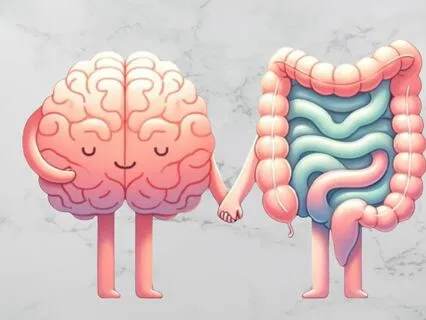
GI psychology is the science of the interaction between the mind,
The nervous system,
And the digestive system.
It's like how feeling anxious can make you want to run to the bathroom or maybe give you a stomach ache.
My name is Dr.
Scott Rauer and I'm a clinical psychologist and I also have a chronic digestive disease called Crohn's disease.
So this is a topic that is near and dear to me both personally and professionally.
So in this first episode we're going to explore what is GI psychology and how can it help you.
First I want to just talk about why I'm creating this podcast to begin with.
So my day job is working as a clinical psychologist and I help people heal through therapy and it's a role that I really love and I'm excited to give access to some of the insights and tools to a larger audience.
And another reason is that having this inflammatory bowel disease called Crohn's disease,
It's really changed the course of my life and I also am creating this in order to attempt to help other people that are struggling with the GI disorder.
In my own journey with Crohn's disease the concepts and tools from GI psychology have been really helpful for me in navigating especially some of the hardest parts of the journey.
Thankfully these days I'm more stable than I have been in the past but it still continues to be a near daily struggle.
Some of the hardest parts for me are fatigue and just the underlying uncertainty and anxiety of when that next flare might be.
So although I'm a clinical psychologist I'm not an expert in GI psychology,
I'm more of a student of GI psychology.
So my plan for this podcast is to start by sharing all the core concepts with you and then once we have all of that covered we'll go on a kind of a learning journey together and we'll dive deeper into the various concepts and the tools and see what works best for you.
So I'm really excited about this part because I'm a geek for psychology and there's just so many cool things to explore.
Things like heart rate variability which is a measure of your body's ability to cope with stress.
If you have like one of those fancy Apple watches or something similar that is tracking your HRV.
So we can kind of dive into that,
Make sense of some of that information.
Concepts of the vagus nerve and polyvagal theory,
Thought distortions,
The tricky subject of acceptance.
There's the aspects of unconscious self-defeating patterns that all of us have that are called schemas.
There's the role of mindfulness meditation and the list goes on and on.
There's just a ton of topics that we could dive into and apply GI psychology to once we get these core concepts down.
So I'm really looking forward to that part.
So for now in this first podcast let's start by just zooming out and taking a bigger picture perspective.
GI disorders are complex and GI psychology is one part of the puzzle for most people.
So the best framework for anyone with a GI disorder is what's called an integrative approach.
I want you to imagine like a Venn diagram with three overlapping circles.
One circle is proper medical care.
So if you have chronic GI issues you need to have a proper diagnosis in order to know what you're dealing with.
The second circle is diet and nutrition.
So depending on your condition changing your diet can really make a huge difference.
And the final circle is GI psychology.
So this includes addressing the mental and emotional aspects as well as the impact that stress has on your GI symptoms.
All chronic health issues are worsened by stress,
That's just a fact,
But GI disorders are particularly sensitive to stress because of the gut-brain connection.
So this is the start of a journey where I'll be guiding you through the concepts and tools of GI psychology that are really based in the gut-brain connection or the gut-brain axis.
So this will be a different kind of a podcast because I'm someone who really prioritizes things being practical.
So my plan is to make this podcast an active tool that you can use.
And the way I'd like to do that is by focusing in on one of the core tools of GI psychology,
Which is breathwork.
In the next episode I'll guide you through how to do a particular type of breathing called diaphragmatic breathing.
And for the rest of this episode I'll guide you through some of the basic thoughts of why you might want to learn and practice this type of breathing.
So there are many reasons why developing a breathwork practice is beneficial if you have a GI disorder,
But I'll just start with one basic idea.
The idea that the brain and the gut are deeply connected.
So as a side note here,
I'll often be using the word gut.
And people often use that word gut when they're referring to their abdomen,
Often in a shameful way,
Like a beer gut or something like that.
But in medicine,
The gut just means the digestive tract.
So the gut-brain connection is the connection between your brain and the entirety of your digestive tract.
We all know there's a connection between our brain and our gut intuitively,
And you can just see that in the language that we use.
There are so many common phrases that link emotions to gut sensations.
Phrases like,
I've got butterflies in my stomach,
Or I just need time to digest what we're talking about.
My stomach is tied up in knots.
That felt like a punch to the gut.
I've got a bad gut feeling that left a bad taste in my mouth.
All these kinds of phrases are just part of our intuitive understanding of that connection.
To extend this further,
One key factor in most GI disorders is that this connection between the brain and the gut,
It becomes dysregulated.
This dysregulation can cause or exacerbate symptoms like pain or bloating or diarrhea or constipation.
And when your gut is in distress,
It sends signals to the brain that can trigger or worsen anxiety and trigger or worsen stress.
And then this stress and anxiety can then further dysregulate the gut which can cause more symptoms and it creates a vicious cycle.
This is called the GI stress cycle.
Symptoms cause stress and that stress can then worsen symptoms.
The good news is we can take steps to break this cycle by understanding and addressing the gut-brain connection.
We can stabilize our digestive system and at the same time we can calm and soothe ourselves mentally and emotionally.
And breathing is a really amazing resource and tool that is both powerful and immediately available.
And so it can really help our bodies come back into a state of regulation by directly activating a part of our nervous system that's called the parasympathetic nervous system.
The parasympathetic nervous system activates our hardwired rest and digest response.
And the rest and digest response is the opposite force of that famous fight-and-flight response.
So it's a really helpful balancing that someone with a GI disorder usually is particularly in need of.
So this particular type of breathing we're going to get into called diaphragmatic breathing is very helpful in this setting.
So it can reduce stress and anxiety.
It can also reduce symptoms for upper GI disorders like reflux.
It can reduce symptoms for lower GI disorders like IBS.
It's also a really helpful tool to just take out into the world and use if you're having a fear of having symptoms and that fear kind of keeps you limited in your life either socially or professionally.
It's just such a common thing with someone who has chronic GI condition symptoms or a condition.
It can really start to limit their life and this is a tool that is very practical and just be taken out into the world and be really helpful in those situations.
So in the next episode I'll guide you through the steps of diaphragmatic breathing and you'll learn how to do it correctly and we'll continue to explore why it's such a powerful tool for managing a GI condition.
So hit the subscribe button and stay tuned.
This is just the beginning of our journey together and so by learning and practicing these techniques and concepts from GI psychology you'll gain tools to really help manage your GI disorder more effectively.