Welcome to the Rest and Digest podcast,
Where we help people with digestive issues to understand their symptoms and explore effective,
Evidence-based tools to feel better.
My name is Dr.
Scott Rauer.
I'm a clinical psychologist and someone who personally knows the challenges of living with a GI condition.
Through this podcast,
I'll share insights from GI psychology to help you make sense of your symptoms and practical tools to calm your system.
Today's episode is a guided breathing practice.
This practice is helpful for all issues with digestion,
But I'll be focusing on talking mostly about the problems of GI pain and also urgency in this episode.
This practice is focused on diaphragmatic breathing,
Also known as belly breathing.
And it will be easiest for you to breathe down low from your belly if you're laying down or maybe with a pillow under your knees,
But if you prefer to sit down,
That can work too.
If you have headphones or earbuds,
Maybe hit pause and go grab those just to make this more immersive for you.
Before we get started,
Let's take a moment to begin to understand why this practice is helpful.
When you experience pain or urgency,
Your body reacts as if there's a threat,
Triggering the fight and flight response in the nervous system.
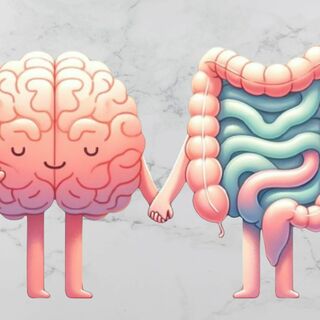
And since our nervous system and our digestive system are highly connected,
This is that famous gut-brain connection you might have heard about.
This can lead to the muscles in your gut tensing and spasms increasing.
And then pain gets worse,
And urgency gets more intense and overwhelming.
So this type of breathing that we'll be doing here helps in many ways to undo this negative cycle inside.
Let's get started by finding a position that feels as comfortable as possible.
Closing the eyes can be helpful to start to allow yourself to tune out the outside world for right now,
Just noticing your breathing without trying to change anything.
Is there more movement in your chest or maybe your belly?
Is it shallow and quick,
Or maybe more slow and deep?
However it is,
Let it be okay.
Now,
Let's start to shift the breathing by slowing it down.
Breathe in through the nose for about a count of four,
And slowly breathe out for about a count of six.
Let's just do this together for a few rounds counting to yourself.
In a moment,
I'll add in a gentle pacing sound for you to follow so you can let go of the counting and sink deeper into the practice.
Here's that tone to follow.
Breathing in.
See if you can just slow things down and match this pace.
There's no need to breathe deeply here or to move a lot of air.
Instead of breathing deeply,
I want you to just see if you can let the breathing slow down and just breathe easily.
On these next few breaths,
See if you can use the full length of that falling tone to breathe out.
Whole time of this sound to let the breath out.
What often helps is breathing out through pursed lips like you're softly blowing on a candle flame to make it flicker but not so hard that it goes out.
Now that we've started to slow down,
Let's shift the focus to letting the breath come more from the belly than the chest.
You can place one hand on the chest and one hand down on the belly.
On the inhale,
Let the lower hand rise up first.
On the exhale,
Letting the bottom hand slowly drop down with a deflating belly.
You can keep your hands there as long as it's helpful.
Again,
Instead of breathing deeply,
We just want to breathe slowly.
Breathe nice and slow and down low from the belly.
On this next in-breath,
Let the breath come from the belly like a balloon that's inflating.
And this breath out from the belly like a deflating balloon.
If you're not used to breathing this way,
It can feel unfamiliar or even a little uncomfortable.
If that is the case for you,
Nothing is wrong.
That can be totally normal.
Many people notice new sensations when they shift over to this way of breathing.
It could be tightness,
It could be a sensation of bloating,
It can also be anxiety.
And so,
That is okay.
Your body is relearning something that is natural.
And you can just trust that with practice,
Your body will shift back to this healthier way of breathing and it can become your new normal again.
As you're settling into this rhythm,
Know that every slow breath in and out is activating a part of your nervous system called the parasympathetic nervous system.
And that part of you is sending a message to your body.
It's a message that says,
You're safe.
You don't have to be in control right now.
You can just let go and let the body digest and repair.
Urgency and pain can be tough to live with.
Not just physically,
But because they create uncertainty and loss of control.
Not knowing when you're going to feel crappy or not knowing when you're going to need to run to the bathroom.
It can feel like your body just isn't cooperating,
Making everyday life a lot more stressful.
Thankfully,
Practices like this one can help.
Not just in the moment,
But over time by building regulation deep down at the level of the nervous system.
The gut and the brain are always communicating.
And when we're stressed or anxious or in pain,
That conversation becomes tense,
It becomes reactive.
Like I said before,
Muscles tighten,
Digestion becomes disrupted,
Symptoms get worse.
Most people,
Even if they don't have digestive issues,
Notice that stress before a big event creates some extra trips to the bathroom.
And most people that do have GI issues notice that stress tends to make symptoms worse.
But with each slow belly breath,
We're reversing this process.
This is how we regain some control,
Calming the nerves and the muscles that contribute to urgency and pain.
Now,
Let's deepen the relaxation.
If your mind wanders,
Let it wander.
There's nothing to force,
We're just allowing relaxation to unfold at its own pace.
Let's bring your attention to your body,
Starting with the face.
See if you can feel into the face and just release any tension in the forehead,
Around the eyes,
And in the jaw.
Letting the jaw just hang loose and easy.
Now,
Feeling your way down to the neck and the shoulders,
This place that we often hold a lot of tightness.
And just with each breath in and breath out,
Letting them soften and melt.
Moving down to the chest,
Allowing it to loosen and just grow heavier with each breath out.
And finally,
The belly.
Often this is a first place that we tighten up when we don't feel safe.
So with each breath,
Just see if you can soften this area even more.
Breathing into a softening belly.
Breathing out from a softening belly.
If you're feeling pain,
Instead of resisting it,
See if you can just soften around it.
Breathing through the pain rather than fighting it.
I'm going to take a little time now while you're breathing to fill you in on how this simple practice can be so helpful and so effective.
This part is for the people that really like to understand the details of how specifically it helps with digestion and digestive symptoms.
Remember though,
The more important thing is to keep a relaxed attitude.
If you tune out or don't follow these thoughts,
That's really not that important.
You don't have to really get it for it to be helpful.
As I said before,
Your digestive system and your brain are constantly communicating with each other.
But GI disorders can disrupt that communication,
Causing dysregulation and making GI symptoms worse.
This dysregulation makes your body more sensitive to pain and urgency through a number of different ways.
Gut-brain dysregulation can cause the brain to lose its ability to filter out pain.
It can impair reflexes,
Like the reflex that helps regulate when you can hold it and when you really need to poop.
And this dysregulation can also make the nerves in the digestive system more sensitive.
It's very helpful to understand these factors so you can have a better grasp of your symptoms and how to manage them better.
So to keep this brief though,
Let's touch on that last factor,
The nerves becoming overly sensitive.
The medical term for this is visceral hypersensitivity.
When the nerves become overly sensitive,
They send pain signals to the brain,
Even when there's no actual damage or threat.
Under normal circumstances,
Mild stretching or movement in the gut wouldn't cause discomfort or pain.
However,
When these nerves are hypersensitive,
Routine digestive processes such as gas or food moving through the intestines,
Or the stomach stretching after a meal,
Can cause or trigger discomfort and pain.
A similar process can happen with urgency,
Because some of these overly sensitive nerves can affect the rectum.
The rectum is the final part of the intestines and helps regulate bowel movements by sensing stool and signaling when it's time to go.
When the nerves in the rectum become overly sensitive,
Even a small amount of stool can feel like an urgent need to use the bathroom.
Diaphragmatic breathing or belly breathing is simple,
But it's very effective for activating that parasympathetic part of the nervous system,
What we call the rest and digest system.
This helps to bring balance back to the nervous system and also that gut-brain connection.
It slows down those gut contractions,
It dampens the hypersensitive nerve signaling,
And it shifts us out of a vigilant,
Anxious state that kind of makes it all amplified and worse.
See if you can picture this shift happening within you right now in this moment.
With each inhale,
You're bringing in calm.
With each exhale,
You're releasing tension and telling your digestive system,
I'm safe,
I can slow down,
I don't have to react so strongly.
This is how we regain control from letting the body regain balance and regulation,
One breath at a time.
As we come closer to the end of our practice,
I'm going to share some final thoughts with you as you continue to breathe and rest.
This practice does not have to be perfect to be effective.
Your mind can wander off for long periods of time,
And even if you don't even feel an immediate relief,
You can just trust that each time that you practice,
You're rewiring old patterns.
You're strengthening your ability to shift your nervous system,
Strengthening the rest and digest response in your body,
And the vagus nerve that's responsible for it.
And the more that you do this,
The easier it becomes.
We're coming to the end of this practice,
And as I fade out our pacing sound,
Take your time to come back.
Maybe staying laying down or seated for just a bit longer,
Gently bringing your awareness to the space around you and to the body by wiggling the fingers and the toes.
Before we end,
I'd like to leave you with some final thoughts about taking this practice out into the world with you as a tool that you can use when you need it.
If you find yourself in the middle of a symptom flare-up,
Whether it's sudden urgency or pain,
You can use this slow belly breathing anytime,
Anywhere.
If you're in an attack of urgency,
Try this.
Place a hand on your belly,
And take a slow inhale through your nose,
And then exhale even slower like you did in this practice.
Just imagine sending that breath downward,
Softening the intensity of that urgency.
It's likely not going to go away,
But it will buy you some time to get to the bathroom,
And it will likely at least take some of the edge off.
And if pain is spiking,
You can try this.
Place a hand where it's most intense,
And just breathe in gently and slowly.
And on the exhale,
Just let your body soften around where that pain is instead of what you'll likely find,
Which is a tensing against it.
The automatic reaction to pain is tensing,
And tensing against it,
And resisting.
But the more that we resist pain,
The tighter the muscles become,
And the more intense that that pain tends to get.
So when pain hits,
What you can do is just help yourself to respond to the pain rather than react,
By imagining this slow breath as a warm wave that's soothing and loosening the grip inside.
Of course,
Breathing this way is not a magic cure,
And it's not going to just take away symptoms instantly,
But it will help.
It'll help shift your body towards a state where regulation and healing is possible.
And it's a direct and effective way to build the strength,
Or what's called the tone,
Of your parasympathetic nervous system,
Your body's rest and digest response.