Here's a surprising fact.
Some of the most effective treatments for the most common GI disorders are psychological treatments.
That might be hard to believe but it's true,
It's a fact.
In today's episode we're going to dive into a claim that's really important to understand.
Most GI disorders are mind-body disorders.
Once we unpack what that means it becomes clear why psychological treatments are some of the most effective tools that we have for effectively managing GI conditions.
In science we work with data,
What is proven true,
And then we work backwards to figure out why things work the way they do.
And when it comes to GI disorders what we've learned through research and experts in the field is that people with GI conditions tend to do best when they get care that addresses both the body and the mind.
Why is this the case?
Well because most GI disorders are not just physical conditions,
They're mind-body disorders,
Meaning they are influenced by both physical and psychological factors.
Welcome to the Rest and Digest podcast.
This podcast is for anyone with a digestive disorder and it focuses on something called GI psychology.
GI psychology is based on the science of the gut-brain connection and it helps us to explain why stress and GI symptoms are linked.
My name is Dr.
Scott Rauer.
I'm a clinical psychologist and I also personally have a chronic digestive disease called Crohn's disease.
I'll be guiding you through the concepts and tools of GI psychology to help you understand the bigger picture of what's happening in your digestive system and tools to help you calm your symptoms.
In this episode we're going to explore why GI disorders are mind-body disorders and how psychological tools can help play a key role in healing.
Finally the information in this podcast is just for educational purposes only.
This is not a substitute for medical or mental health treatment.
Let's start by breaking down the idea of a mind-body disorder.
What exactly does that mean?
Simply put,
A mind-body disorder is one where the physical symptoms like pain,
Bloating,
Diarrhea,
Constipation,
Nausea,
Reflux,
Any of those are strongly influenced by mental or emotional factors such as stress,
Depression,
Anxiety,
Or even past trauma.
And most GI disorders are clearly in this category.
So when we say that many GI disorders are mind-body disorders,
What we're saying is they're not just physical conditions.
They're heavily influenced by emotional and psychological factors.
And that's why psychological tools can be so effective in helping to manage them best.
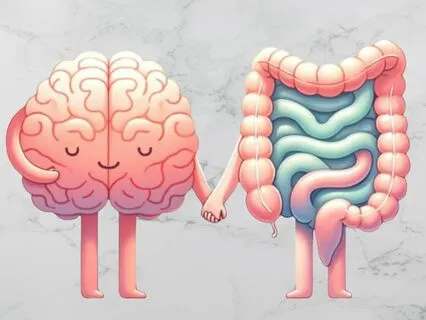
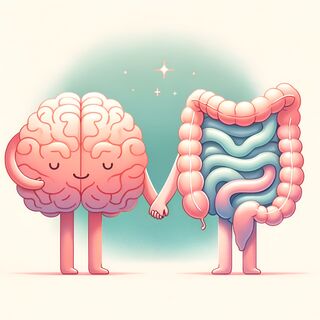
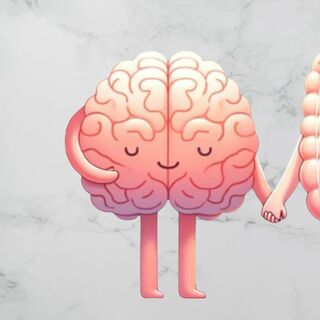
The reason why this mind-body connection is particularly strong in GI disorders is because of something called the gut-brain connection.
These two parts of your body,
Your brain and your digestive system,
Are not just connected by a few nerves.
They're connected by a massive network of connections that's like a superhighway of information that runs in both directions.
The brain sends messages down to the gut and the gut sends signals back up to the brain.
This means that what happens in your brain affects your gut and what happens in your gut affects your brain.
So one system,
If that gets dysregulated,
It can easily dysregulate the other.
And this is why when you're stressed or anxious you can often feel it in your abdomen and why stress and flares of GI symptoms can often go together.
If you haven't listened to episode 1 of this podcast which is called Understanding the Gut-Brain Connection,
That would likely be useful to listen to so you can get some more understanding of this key concept we're talking about here.
For now we'll keep it simple and just say that the gut and the brain are connected in a much deeper way than other systems are connected in the body,
Which can often make GI disorders complex and tricky to treat as well.
So if you leave this part out,
This understanding,
If you leave it out and only focus on the organs,
The physical aspect of your digestive disorder,
You're likely leaving out an important piece of the puzzle.
Understanding GI disorders as mind-body disorders gives us a much better roadmap to healing.
When you understand that emotional,
Psychological,
And physical health are all connected,
You can address the root cause of your symptoms and develop more effective and holistic treatments.
Now let's talk about stress.
Stress is one of the biggest triggers for GI symptoms and how well someone handles stress can be one of the best predictors of how severe their GI problems will be over time.
Just a side note here,
Just by the nature of this podcast I need to talk about things in generalities.
Of course there are times when this isn't strictly true of every single diagnosis,
But for the most part this pattern holds for most GI disorders.
And so chronic stress and dysregulation don't just affect how we feel,
They can actually change our brain and our digestive organs themselves.
Research has shown that stress can lead to long-term changes in both the brain and digestive organs that make them both more sensitive to future stress and also more reactive to physical symptoms.
So it's common that people can fall into what's called the GI stress cycle.
One part of the cycle is that stress can trigger or worsen GI symptoms like nausea,
Diarrhea,
Abdominal pain,
Reflux,
Any of these.
And the other part of the cycle is that getting these types of symptoms can create more stress themselves,
Which then creates more symptoms,
Which creates more stress,
And on and on it goes.
It's a vicious cycle that feeds on itself spiraling downward.
Before we move on to solutions and tools,
I'd like to make a side note here about the role of trauma in GI disorders.
There's a popular book on trauma called The Body Keeps the Score.
What's detailed in this book and in lots of research is that there's a strong correlation between trauma and health conditions.
And GI disorders are some of the most common of the health issues that are linked to trauma.
So if this applies to you,
This is likely a topic that's worth doing some digging or exploring on,
And I'll plan to revisit this in a future episode.
Turning now to options for healing.
If the unfortunate fact is that stress and emotional dysregulation can negatively affect your digestive system,
Well then the positive opportunity here is that you can actively use psychological tools to calm and regulate your mind,
And in turn calm and regulate your digestive system.
There are three main treatments that research has identified so far as being effective.
So in order to keep this episode brief,
I'm just going to note them here,
And in future episodes I can explain them more in depth.
The first treatment is called GI-focused cognitive behavioral therapy,
Or as a mouthful isn't it,
Or just for short you can say GI-focused CBT.
And the gist of this therapy is that it helps you to become aware of your automatic thoughts about stress and your automatic thinking about GI symptoms.
And this is helpful because when you do this,
You start to see this in your own experience,
You can start to see just how those thoughts influence your emotions,
And you also,
Interestingly,
Start to realize and see firsthand how those thoughts change the way you experience your symptoms,
The physical symptoms of your GI disorder themselves.
And this approach is especially helpful for managing stress,
Anxiety,
And even the pain that is associated with many GI disorders.
By shifting the way you think about your symptoms,
You can learn how to reduce the stress and also the emotional dysregulation that can make them worse.
The second treatment is called gut- directed hypnotherapy.
If hypnotherapy sounds a little too wacky to be true,
Well,
I can say that for myself I was skeptical when I first read about this,
But I can confirm this is a legit form of medical hypnotherapy that's research supported and accepted by mainstream medicine as being effective.
Gut-directed hypnotherapy helps you enter into a relaxed,
Focused state where you can work directly with your gut-brain connection.
And it's been shown to be significantly helpful in reducing the symptoms of IBS and other GI disorders by calming the gut's nervous system and to be able to be helpful in reducing sensitivity to pain.
The final treatment is mindfulness meditation.
Mindfulness practices teach you how to be present in the moment-to-moment experience of your life and how to get less caught up in all the anxious thoughts about the stress of life or anxious thoughts about your symptoms.
Research has shown that when people learn and practice mindfulness meditation at a high enough dose,
Meaning frequently enough or in a long enough period of time,
They can benefit significantly.
So lastly,
Let's talk about relaxation techniques,
Especially something called diaphragmatic breathing.
All of the three mind-body treatments and tools I just noted have something in common.
They all include guiding people to relax and stay in that relaxed place for a long enough period of time so that their body has a chance to activate what's called the rest and digest response.
This is where the body can heal and regulate.
Diaphragmatic breathing is both one of the most simple and effective ways that we know of how to do this.
When you slow down your breathing and you breathe from your diaphragm or your belly,
You're signaling to your body that it's safe to relax.
This supports digestion and it helps you to regulate both your brain and your gut.
So that's why previous episodes of this podcast have been so focused on breathing and while continue to offer guided breathing practices for you so you can put this to use in your own life.
To wrap things up,
Since most GI disorders are mind-body disorders,
Then it's only logical that they need mind-body solutions.
Focusing on just the physical symptoms through dietary changes or through medication can be essential,
But often it's not enough.
For many of us to truly heal,
We need to address the emotional and psychological side as well.
By integrating treatments that focus on calming the mind,
Reducing stress,
And supporting the gut-brain connection,
You're giving your body the best chance to recover,
To manage,
To find balance.
The fact is that the mind and the body are deeply intertwined and the more that you attend to both sides,
The better your overall health will be.
We know from research that people with GI disorders who heal the best are those that are treating both the body and also the mind.
And we also have well-researched effective treatments to do this,
To help people to do this.
The biggest problem we have is that people just don't know that this exists or they've never had this type of understanding explained to them.
So if you've been focusing on only one part of the equation,
Whether it's diets or medication or supplements or lifestyle changes,
These are great.
And maybe it could be time to think about how attending to your mind,
Your emotions,
Your stress,
Could be influencing your symptoms.
Because for a lot of us it is.
And there are tools out there and I hope you take the time to explore more of what might be helpful for you in that area.
Thank you for joining me on this episode of the Rest and Digest podcast.
I hope this has been helpful for you to understand why most GI disorders are mind-body disorders and why treating both the body and the mind is so important.
See you next time.