Welcome to the Rest and Digest podcast,
Where we help people with digestive issues to understand their symptoms and explore effective science-based tools to feel better.
I'm Dr.
Scott Rauer.
I'm a clinical psychologist and someone who personally knows the challenges of living with a GI condition.
Through this podcast,
I'll share insights to help you make sense of your symptoms and also practical tools to help calm your system.
Today's episode is a guided breathing practice to help soothe digestive symptoms by calming the gut-brain connection.
If you struggle with digestive issues,
You know how disruptive they can be,
And it's natural to want to make these symptoms go away.
But what if they're not just problems to fix?
Symptoms are signals from our body calling for attention.
And while there are many paths to addressing root causes,
Including medications when needed,
Attending to the gut-brain connection is a powerful,
Foundational way to support healing.
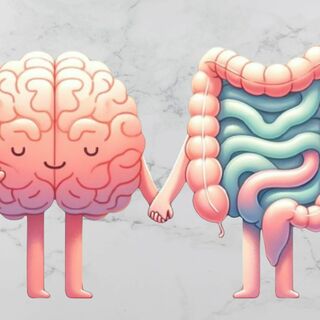
One common root cause of GI symptoms is something called gut-brain dysregulation,
When the nervous system becomes overactive and amplifies digestive symptoms.
This breathing practice we'll get into in a moment is an effective way to address this imbalance,
This dysregulation at its source.
By slowing down the breath,
We activate the parasympathetic rest and digest mode in the nervous system,
Which signals safety to the brain,
Signals safety to the guts,
And allows the digestive system to function better.
Before we begin,
This practice is easier for you to do if you're laying down,
Ideally with a pillow under your knees,
But if you just would rather sit,
That works too.
And if you have headphones or earbuds,
Grabbing those would be great just to make this more immersive for you.
Let's get started by finding a position that feels as comfortable as possible for you.
Closing the eyes can be helpful if that feels okay,
And just start by simply noticing your breathing.
No need to change it in any way.
Just observing the natural rhythm of the inhale and the exhale.
Now let's start to shift the breath by slowing it down,
Breathing in through the nose for about a count of four,
And slowly out for about a count of six.
And let's just do this together for a few rounds,
Just counting to yourself.
In a moment I'll add in a gentle pacing sound for you to follow,
So you can let go of the counting and just sink deeper into the practice.
Here's that tone to follow.
Breathing in,
Breathing out,
And breathing in.
See if you can just slow things down and match this pace.
There's no need to breathe deeply or to move a lot of air.
Instead of breathing deeply,
We just let the breath slow down and breathe easily.
Double check your podcast player and just make sure it's not too sped up,
It's not a faster speed of playback.
And for some people you likely could go slower than this pace,
But slower isn't necessarily better.
There's a reason why I'm having you go at this specific pace,
And it has to do with the vagus nerve and increasing something called heart rate variability,
But that's another topic for another episode.
Now that we've started to slow down,
Gently bring your awareness to your belly.
You can place a hand there if you'd like,
Just to feel the rise and the fall.
This practice is called diaphragmatic breathing,
Or belly breathing,
Because we're using our diaphragm muscle rather than our chest muscles.
When the belly rises up with the in-breath rather than the chest,
That's a really good sign you're using your diaphragm muscle.
And the same is true when the belly deflates back down with the out-breath.
You're likely using your diaphragm muscle.
The belly softened and inflate on this next in-breath,
And letting it deflate back down on this out-breath.
As I said before,
This is not about breathing deeply.
You do not need to move a lot of air in or out.
Instead,
It's just slowing the breath down and breathing down low from the belly.
As comfortably as possible.
Breathing in with this tone coming up.
Breathing out even longer with this longer tone coming down.
With each breath out,
You can just see if you can allow more of the tension or gripping or tightness of the body to loosen up.
On this next breath out,
See if you can use the full length of the tone,
That falling tone,
To breathe out.
Take the whole time of this sound to let the breath out.
What often helps to slow down and take the full length of the tone to breathe out is breathing out through pursed lips,
Like you're gently cooling a spoonful of hot soup.
As you settle into this rhythm,
Know that every slow breath in and out from the belly is activating a part of your nervous system called the parasympathetic nervous system,
And it's sending a message to your body.
It's a message that says you're safe,
You do not need to be in control right now.
You can just let go,
Let the body digest,
Let it repair.
Let's deepen the relaxation some,
Starting by taking as much of a relaxed attitude as you can.
There is no need to try to effort or try or force anything.
If your mind wanders away from my voice and into thoughts,
Just let it.
Let it one.
You can slip further into relaxation by letting the body get heavier,
Letting whatever is holding you,
A couch,
The floor,
A chair,
To take more of the weight.
You can notice how it feels in the face and releasing any tension you can find in the forehead,
Feeling it to the muscles around the eyes,
And with this next out breath,
Loosening up around the eyes,
Finding your way into the jaw,
And on this next breath out,
Letting the jaw relax,
Letting it unclench,
Just allowing it to hang loose and easy.
Now feel your way down into the neck and the shoulders.
With each breath in,
Feel into this area,
And on each breath out,
Letting that tension soften and melt.
And finally,
Let's come down to the belly.
It's very common to have tightness and guarding here,
Even if we're not aware of it,
And so is the belly.
With each breath,
Just see if you can soften this area,
Breathing into a softening belly and breathing out from a softening belly.
We're coming to the end of this practice,
And as I fade out our pacing sound,
Just take a pause,
Letting go of breathing in any particular way,
And just notice how your body feels,
How it feels compared to when you started.
Nice job taking the time to nurture your digestive system,
Your nervous system.
The more severe your GI symptoms are,
The more helpful it will be to make this a regular practice for you,
And it's especially helpful whenever you get a flare of symptoms to help calm down your digestive system.
See you next episode.