Aloha,
This is Diane and I am a registered nurse,
Nursing professor and hypnotist and I created this audio by special request during my live streams.
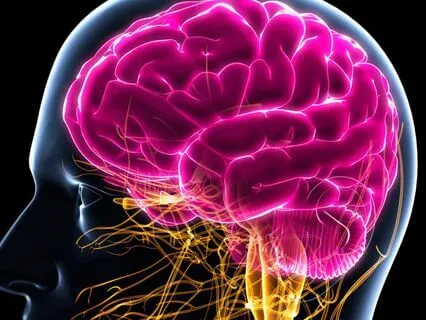
During my live streams I always do multiple stress relief techniques but the topic of cranial nerves comes up very often because our cranial nerves control our entire nervous system.
For that reason I always give several stress and relaxation techniques because we all experience stress every single day and if we learn tools to build our toolbox we can begin to tackle that stress in the moment as opposed to letting it build inside our bodies.
We always begin with breathing,
It is the easiest thing that we can shift and typically I'll do several breaths gauging the audience stress levels and measuring it as we go through.
The first cranial nerve is the olfactory so I invite you the next time you do a breathing technique is to incorporate a sense of smell that is soothing to you.
For example if you like essential oils grab a bottle and do your deep breathing as you smell the oils.
This technique will stimulate the olfactory nerve,
Soothe your nervous system and infuse a soothing scent in your body as you focus on breathing and relaxation.
A very simple breath that you can do that I do often in live streams is the 5-5-5 breath where you inhale deeply for a count of five,
Hold your breath briefly for a count of five and then exhale slowly for a count of five and doing this for several minutes will help you relieve your stress.
One of the most important things that I teach is awareness so before you begin any stress relief technique become aware of how you're feeling,
How much stress or tension do you have in your body and measure each thing that you feel from 0 to 10.
For example if you're feeling anxious give it a number from 0 to 10.
So if you have any physical pain as well measure that from 0 to 10 and if you notice you're feeling a particular emotion also measure that from 0 to 10.
This will help you gauge if each technique works for you and how well it is in reducing your stress and symptoms.
The next nerves all innervate our eyes.
We have several nerves that impact our eyes and our nervous system.
There's the optic nerve,
The ocular motor,
Trochlear and abducens.
For these nerves we use eye movements and deep relaxation.
If you've ever seen any of my live streams we usually do breath combined with eye movements or also incorporate EFT or TFT.
EFT is emotional freedom technique that we tap on the face and the body to relieve stress and tension.
TFT incorporates tapping but also eye movements.
Both of them impact the nervous system by targeting the nerves we're going to discuss today.
Let's do a simple relaxation technique that targets the nerves of the eye with simple eye movements.
I call this the butterfly eye and I do have audio meditations for this as well as the 555 breath.
So go ahead if you enjoy it and find those audios to use them.
So let's begin by inhaling deeply,
Holding briefly and exhaling slowly.
And I invite you to sit comfy in a chair or a bed as you focus on your breathing.
Now just close your eyes and I invite you to use the muscles of your eyes and stretch them as I guide you.
The first eye movement is rolling your eyes up as if you're looking at the roof towards the right,
Holding the muscles there.
11,
10,
9,
8,
7,
6,
5,
4,
3,
2 and 1.
Now stretch your eyes as if you're looking over your shoulder to the right.
11,
10,
9,
8,
7,
6,
5,
4,
3,
2,
1.
Now stretch your eyes down as if you're looking over your shoulder to the right.
11,
10,
9,
8,
7,
6,
5,
4,
3,
2,
1.
If you ever feel like you yawn or taking a deep breath that means you targeted your nervous system with these somatic stress relief techniques.
Now we're going to continue the butterfly eye to the left.
So rotate your left eye up and towards the ceiling,
Holding it there.
11,
10,
9,
8,
7,
6,
5,
4,
3,
2,
1.
And now over your shoulder to the left.
11,
10,
9,
8,
7,
6,
5,
4,
3,
2,
1.
And now down and to the left.
11,
10,
9,
8,
7,
6,
5,
4,
3,
2,
1.
This simple exercise has used all your eye muscles by looking at different points in your vicinity.
If you've ever had an eye exam or been examined by a neurologist to check your nerves,
They use six cardinal points of gaze.
Sometimes they make you cover one eye and observe how well you can see or they stimulate your eye pupil with a light.
We just did movements impacting those same nerves.
We're gonna do one more movement.
So I invite you to close your eyes and roll your eyes up to the center of your forehead towards your third eye as if you're looking at your forehead or you can also look at the tip of your nose to get the same effect.
Now just focus on your breathing and we're gonna take in three deep breaths with this eye position.
Inhale deeply.
Hold briefly.
Exhale slowly.
Inhale deeply.
Hold briefly.
Exhale slowly.
Inhale deeply.
Hold briefly.
Exhale slowly.
One more time.
Inhale deeply.
Hold briefly.
Exhale slowly.
The next two nerves we're going to talk about are the trigeminal nerve and the facial nerve.
We're going to use several facial movement techniques as well as touch to stimulate these nerves and this will soothe your nervous system and if you've ever experienced EFT or somatic stress relief techniques that involve touch that is exactly what we're doing here.
These nerves innervate our face.
Typically we would check the jaw area,
The cheeks,
With a sense of touch.
Whenever you do EFT or tapping you do tap over the areas where these nerves all 12 of them innervate your face.
So I invite you to just touch under your nose with your hands.
That's one of the tapping points in EFT.
Just rub that area gently and I invite you to focus on your breathing and now I invite you to do something a little different.
Still as effective as tapping but I've learned as someone with PTSD that this technique can actually help you if you're feeling stress in a particular moment and you need to target that specific nerve.
So I invite you to pinch the top of your lip as you focus on your breathing.
Just holding that piece of your lip as you inhale deeply,
Hold briefly and exhale slowly.
Inhale deeply,
Hold briefly and exhale slowly.
You can also hold the bottom lip.
They both innervate the same nerves and help calm your nervous system just by combining breathing and touch.
Now I invite you to focus on your facial nerve.
For this we're gonna do several facial movements.
This is exactly how a neurologist would check your nerves making you do facial movements.
You're gonna focus on your breathing as you do these movements and notice how you feel after.
It may feel a little silly if you're looking at yourself in the mirror but if you just focus on it you'll notice that it does help calm your nervous system and all you're doing is moving your face.
So I invite you to puff up your cheeks like if you were gonna blow a bubble.
Inhale,
Hold your breath,
Fill your cheeks and blow it out.
Now smile and relax.
Smile and relax.
Smile and relax.
Now lift up your eyebrows and relax.
Lift and relax.
Lift and relax.
Those are some very easy ways to calm your nervous system.
So you can simply look at yourself in the mirror,
Move your face and focus on your breathing and notice how that silly act can actually calm you down.
The facial nerve also incorporates your sense of taste.
If you've ever had a stressful experience I want you to notice if the sense of taste in your mouth changed.
It may be something you've never paid attention to but as someone with PTSD and trauma it is something that I recognized very quickly.
I noticed a sour taste in my mouth whenever I would be stuck in memories and emotions that stressed me.
So I learned to use mouthwash right before I did a relaxation technique to help target this specific nerve as I focused on mindfulness techniques and relax my body and my mind.
So if you notice that you have a sour taste in your mouth I invite you then to incorporate a fresh tasting flavor into your next somatic stress relief technique.
Another great way to target this nerve is to actually slow down when you're eating.
Taste your food.
Notice each flavor.
Allow it to create saliva in your body and just focus on your breathing.
This will help slow down your digestion and it is a great way to soothe your body by focusing on the sense of taste.
Cranial nerve number eight is acoustic.
This is our sense of hearing.
This is a very simple one that I incorporate in most of my meditations by adding binaural beats.
It helps stimulate this nerve as well as when you're listening to a meditation you are stimulating your acoustic nerve by listening to the voices.
So that's a simple way for you to target this nerve is just lay down and relax.
Listen to a meditation that has soothing music.
The next three nerves are 9,
10 and 12.
Glossopharyngeal,
The vagus nerve which is our master nerve that's the one that makes you have fainting episodes or gag and your hypoglossal which involves your tongue.
Let's focus on the glossopharyngeal and the hypoglossal by moving our tongue inside our mouth.
You can also incorporate a sense of taste to amplify the effects.
For example,
I have done this technique eating a fruit where you stimulate the sense of touch and taste in your mouth.
I typically enjoy it with a grape.
It is a solid fruit and it has a nice lining.
So moving the fruit within your mouth,
Touching the different surfaces of your tongue as you focus on your breathing will be very soothing to your nervous system.
But let's just do some tongue movements without anything in our mouth.
So notice where you are right now from 0 to 10 in stress levels as well as physical pain so that you know if this technique works for you.
Swirl your tongue on the roof of your mouth just focusing on your breathing.
Notice the sensations and the taste.
Now swirl your tongue around your teeth,
Moving your lips,
Feeling the sensations of your tongue sliding between your teeth and your lips.
Feeling your gums slowly focusing on your breathing from one side to the other.
Now feel your lower gums and teeth with your tongue,
Focusing on your breathing,
Noticing the sensations and the flavors and the textures.
Taking a deep slow breath,
Feel the inside,
The roof of your mouth against your teeth,
In the top and in the bottom.
Notice the little pocket under your tongue,
Feeling the sensations as your saliva pools and builds in that little spot.
Taking another deep slow breath and reassess.
How are you feeling?
That was a very simple way to target the nerves of your tongue.
The vagus nerve is one that involves your entire nervous system and that is our master nerve.
Years ago I used to faint and I would faint probably about eight times a year until I learned to control this nerve and learn to breathe deeply,
Stimulating the nerve in a very gentle way.
So I'm going to invite you to take in a deep slow breath,
But this time we're going to squeeze our pelvic floor as we inhale,
Moving the air upward,
Looking at your third eye,
Which is the nerves we were looking at with our eyes.
So we're combining the vagus nerve and the eye nerves as we move air upwards.
So inhale deeply,
Squeeze,
Move the air upwards,
Hold,
And exhale.
Again,
Squeeze,
Inhale,
Hold,
Exhale.
One more time,
Squeeze,
Inhale,
Hold,
And exhale.
Now we're going to do a very simple technique to check your spinal accessory nerve,
Which is the nerves that innervate your spine and your neck.
For this one I invite you to shrug your shoulders.
That's how a doctor would typically test those areas of your body.
But now I invite you to actually hug yourself,
Squeezing your shoulders,
Crossing your arms as you shrug your shoulders gently back and forth.
If you notice any tender areas in your shoulders,
I want you to focus on your breathing,
Deep,
Slow,
And holding in the middle as you massage those sore areas.
We hold a lot of weight of stress in our bodies and if you can calm your nervous system by doing any of these techniques that we just did here today,
You will reduce your stress levels,
Reduce symptoms in your body,
And it will help you feel more at peace in your life.
So I hope you enjoyed this short episode which I created by special request since many people wanted to know more about cranial nerves during my live streams.
I invite you to find meditations that help you target these nerves,
Especially if when you were checking your awareness you recognized that one of those nerves or multiple nerves really helped calm you down.
This is Diane Bick,
Aloha!