Hello,
My name is Sean Ramston and welcome to this short lecture on how to eat with the seasons according to Chinese medicine.
Just a quick background of myself.
I got a Bachelor and Masters of Commerce from the University of Western Australia,
After which I went to the Australian College of Natural Medicine and did a remedial massage program,
After which I went to the Perth Academy of Natural Therapies to do a Diploma of Chinese Medicine.
Then I went to the Beijing University of Chinese Medicine in China and did a five-year Bachelor course,
And recently I just completed a graduate Diploma of Buddhist Studies.
So when we say according to Chinese medicine,
We have to understand that there is no real thing as Chinese medicine.
What we mean by this is that Chinese medicine has no generic system.
This may come as a surprise to many people,
But most people's systems are based on their teachers or based on the university system that they're taught.
So the university system,
Let's say,
Is a mainstream system,
But once you start studying with other practitioners or doctors,
You will end up learning,
Let's say,
Dr.
Huang's method.
So when we're talking about Chinese medicine,
We always need to think this is Chinese medicine according to the individual person that may be teaching it.
So eating with the seasons.
Eating with the seasons is a very important part of Chinese medicine.
The reason why is for no choice of a better word,
Let's say old school Chinese medicine,
Or the more traditional one,
Or the one that was done in ancient times,
Solely revolved around the seasons.
This means that diagnosis was done according to the seasons,
Food was eaten according to the seasons,
Different herbs and herbal formulas were given according to each individual season,
The seasons regulated everything.
This is why when we look at the yin yang symbol as such,
What we see with the yin yang symbol is basically the wax and the wane of yin and yang according to the seasons.
There is,
Though,
A secret that is not described within the yin yang symbol,
Not something that you can see.
It's not really a secret,
Though,
Because the Huang di nei jing,
Which is the most popular,
And let's say the Bible of Chinese medicine,
It explains very clearly the secret.
This is that yin is passive and yang is active.
In Chinese they say yin jing yang dong.
What this means is that the wax and the wane of yin and yang is a little bit different to what one may expect.
Let's use the seasons as an example.
So we've got four seasons,
Spring,
Summer,
Autumn,
Winter.
We can say there's a fifth season,
Which is the late summer,
But that makes things a little complex,
So we'll discuss that in a bit later.
As you're well aware,
Each season is also represented by four different symbols.
Spring would summer fire,
Autumn is gold,
And winter is water.
In the middle,
The pivot from which all of them move around is earth.
These symbols are very important because they are not elements.
In Indian philosophy and in Indian medicine,
Ayurvedic medicine,
They are actually elements.
In Chinese medicine,
They are movements.
They're called wuxing.
They're not an element.
The reason why that is is that wood represents the movement of the yang chi up.
Fire represents the movement of the yang chi up and out.
Autumn represents the movement of the yang chi down,
And water represents the movement of the yang chi down and inwards.
The pivot in the middle of this movement is called earth.
As you can see here through the four seasons,
That thing which expands outwards and then contracts inwards is the yang chi.
Yang is active,
While yin is passive.
This is a fundamental part of all Chinese theory,
And this is why it was said in the Huang Di Nei Jing very clearly.
Chun Xia Yang Yang Qiu Dong Yang Yin.
What this means in English is that you nourish the yang in spring and summer,
And in autumn and winter,
You nourish the yin.
Why do you do this?
You do this for numerous reasons,
But the particular and most important reason to understand here is that when the yang chi is outwards,
You have a relative state of coolness on the inside.
So outside is hot,
Inside is cool.
Inside the body is hot,
Outside the body is cool.
Therefore,
In summer,
You must eat warming foods,
And in winter,
You eat cooling foods.
Now if we were to take this one step further,
We can begin to see that each season has a slight shift in the direction of the movement of yang chi.
So,
As we spoke before,
Spring and summer it's moving up and then out,
And in autumn down and in winter in.
We need to follow the movement of the seasons.
This is the core philosophy of all ancient Chinese thought and practices.
You must follow the movements of the seasons in order to live healthily.
Therefore,
In spring,
We need to eat warming and pungent foods,
A little bit like how the flower or the bud needs to break out of the earth.
So the primary food to eat there would be spring onion,
Coriander,
Light greens,
Such as many of the different Chinese greens.
All this is slightly pungent,
Light,
And then help to open the body.
In summer,
It's a little bit different because now we want to go outwards because of the fire.
Therefore,
This is the correct time of the year to eat chili.
The reason why you eat chili or turmeric or more spices is that when the yang chi is on the outside,
Your digestive system tends to get sluggish.
So this protects our digestive system.
Come to autumn,
We now need to contract the yang chi back downwards.
To contract the yang chi back downwards,
We tend to eat foods that are more sour,
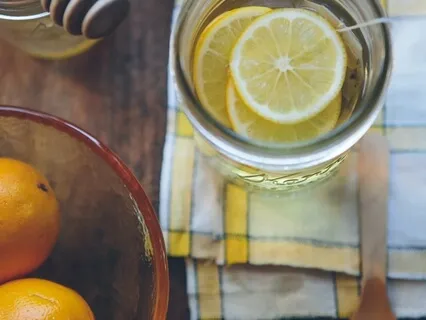
Such as yogurt and lemon.
In winter,
We now want it to go down and out,
And this is where bitter tastes and salty tastes help us.
So bitter foods such as bitter melon,
For example,
In particular the most common food that should be eaten is turnip.
Now,
Each season also has its own pathogenic factors and pathogenic issues.
For example,
In summer,
We need to be careful of the heat.
In late summer,
We need to be careful of dampness and heat.
In autumn,
We need to be careful of dryness.
In winter,
The cold,
And in spring,
Wind.
Wind can mean internal winds,
Such as muscular twitches,
But it can also mean external winds,
Such as bacterial infections.
Or it can be internally generated heat,
Which makes wind,
Such as things like hay fever.
In this case,
We need to therefore be on guard for each of the season's pathogenic factor.
So in spring,
For example,
When we know that hay fever is common and we need to guard against it,
Again you eat pungent foods.
Spring onion is probably the best.
In summer,
You're eating spices,
Lots of spices to keep your digestive system warm,
But they're all hot in nature.
Now,
When you have hot weather and you're easily sweating too much,
You can end up getting the heat within you.
The best foods to guard against the pathogenic heat of summer are mung beans.
In the late summer,
Now we need to add damp and heat to the problem.
In this case,
We can have watermelon,
Because watermelon is cooling and makes you urinate,
Which means that it leaches out any dampness that is inside of you.
Watermelon,
Though,
Can be too cooling for some people,
And they may have a headache or abdominal pain or loose stools after eating it.
In this case,
One needs to not eat watermelon and eat different types of foods,
Such as mung bean,
Or you can also have coconut juice.
But these two don't particularly clean out the damp.
Primary thing here is we need to clean out the damp and the heat.
So if watermelon is too cooling for you,
We can have lotus leaf tea.
This is one of the best things if watermelon is too cooling.
In autumn,
We have to be very aware of the dryness.
To deal with the dryness,
We can have yogurt and honey and pear.
In terms of a Western diet,
These three work the best.
A Chinese diet might use the white fungus,
Bai Mu Er,
And possibly add in rock sugar to that,
Which are also very moist.
Come winter,
We need to be very careful of the cold.
The cold can sneak into us in two ways.
It can sneak into us from the peripheral,
By which you'll have a runny nose and sneezing with goosebumps.
It may also sneak in from the bottom,
Which means that you'll have extremely cold feet.
If you're having extremely cold feet in winter,
You know you can eat more lamb because the cold is coming in from the bottom.
Or if you feel that you're getting a cold,
By which you'll have a version of cold,
A runny nose with sneezing.
This,
It is paramount to as quickly as you can,
Go eat fresh ginger or fresh ginger tea.
If you drink fresh ginger tea while warm and rugged up and possibly with a noodle soup,
It should give you a very slight sweat.
That very slight sweat will release the exterior and those early cold symptoms will disappear before it gets much worse.
So just to recap here,
We've got two variations.
One is eating warm food in spring,
Hotter food in summer,
Cooler food in autumn,
And cold food in winter.
The taste in spring are therefore pungent,
In summer it's spicy,
In autumn it's sour,
And in winter it's bitter and salty.
The best foods therefore in spring are spring onion,
In summer various warming spices such as chili,
In autumn lemon,
Yogurt,
Combined with honey,
And then in winter you can have turnip.
We also need to be careful of the pathogenic factor of each season.
In spring it is wind.
By wind we are talking about wind generated by heat normally,
Therefore plenty of coriander helps release the heat as though you are opening the sunroof of a car.
In summer the pathogenic factor is heat.
This pathogenic factor can sneak into the body by which you can have numerous symptoms,
But the most common ones are excessive sweating and fatigue.
Green young coconut juice is actually the best.
Then we move over to autumn,
The pathogenic factor of dryness.
There is no better food to deal with the dryness than pears.
In winter where the pathogenic factor is cold,
You need to see if it's cold on the bottom with cold feet,
Or you need to eat lamb.
Then if it's on the exterior,
Ginger tea.
The extra season being the late summer season of which there is dampen heat,
The best food for that is watermelon.
Thank you for listening to this lecture and I hope you have gained some insight.