This practice is a practice of beginner's mind.
One of the most important attitudes we can bring to meditation and indeed to our lives.
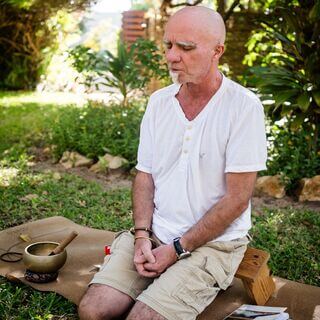
Let's begin by choosing a posture and settling into the posture whether you're lying down,
Sitting,
And just simply feeling into the posture,
Grounding here,
Feeling the weight of the body as you sit or lie here.
And as we settle just listening to a short story about beginner's mind,
It's about a student who comes to a famous Zen master and asks the master to teach him everything about Buddhism that he knows.
And the master says,
Okay,
Let's begin with mindfulness.
And the student says,
I know everything about mindfulness already.
And then the master said,
Well,
I'll teach you about emptiness.
And the student says,
No,
No,
No,
I know everything already about this,
About emptiness.
And the list goes on and on and on,
And the student knows everything about everything.
And so the master pauses and he says,
Let's have a cup of tea,
As Zen masters do.
So he brews the kettle and the pot.
And he starts to pour the tea into the student's cup,
And he pours and he pours,
And the cup starts to overflow.
And the student says,
Stop,
Stop,
My cup is overflowing.
And the master says to him,
Come back to me when your cup is empty.
So this practice is about emptying our cup,
Emptying our minds of any fixed ideas that might be here about this practice.
If you think about it,
You've never done this practice before.
So we can bring this curiosity of a child who is seeing something for the first time to this practice.
As another Zen master said,
Shonryo Suzuki,
In Zen Mind Beginner's Mind,
He said,
In the beginner's mind,
There are many possibilities,
But in the expert's mind,
There are few.
We all think we know everything about something or other.
And if we think this,
We can never leave ourselves open to freshness,
To a new way of seeing things.
As Rumi once said,
Unlearning is the highest form of learning.
So no matter how many years you've been practicing,
How many months,
How many days,
Putting aside everything that you've learned so far and just open up to this mind of having no fixed ideas,
Beginner's mind.
You've never been in this moment before.
Each moment is unique and contains unique and a myriad of possibilities.
What often happens is that our beliefs and expectations,
Our judgments,
Our assumptions about the way something is cloud our judgments and prevent us from experiencing the richness of the present moment right in front of us right now.
So settling into the don't know mind,
Again,
This mind of no fixed ideas,
No expectations,
No preconceptions.
I'm inviting you now just to come to the breath.
It's choosing a location in the body where you're feeling the breath today most strongly,
Most vividly.
This could be,
For example,
In the abdomen or in the chest where you feel the expansion and contraction of the breath.
Or it could be the tip of the nose where you feel the breath entering and exiting the body.
Or it could be a combination of all of these,
The full cycle of the breath.
And just let the breath breathe itself.
Don't think about how it should be because you're meditating.
Just allow the breath to breathe in its own natural rhythm.
No thoughts about it.
No judgments about it.
Can you really come close to each in breath and each out breath?
Each breath is unique.
You've never had this breath before.
Or this one,
Or the next one.
Every breath is fresh and new.
Acknowledging this and also asking yourself the question,
What is this?
What is this breath?
What is this breathing?
Can I bring the curiosity of a child to this process of breathing that's been with us all our lives but maybe we've never explored it with this mind of a beginner,
This mind of not knowing?
And of course,
The mind is maybe getting busy and distracted and thoughts are coming and going.
Maybe you can notice thoughts of,
Yeah,
I know how to do this.
I've done this before.
I know this already.
Thoughts of boredom,
Perhaps.
Thoughts of knowing what meditation is about.
Thoughts of an expert.
But just acknowledging these thoughts,
Noticing that they're here,
Acknowledging that they're here.
And coming back to the breath,
The freshness,
The freshness of the breath.
A newness of each breath.
And if you feel ready,
Just letting go gently,
This attention to the breath and dropping your awareness now into the body,
The posture that you're in.
Bringing this curiosity of a child to your body right now,
Perhaps.
Doing a short scan from head to feet,
Noticing what's here right now.
Noticing the way that you're sitting,
The way that you're laying.
How is it to be here right now in this moment,
This moment that you've never had before?
What is this?
What is this body right now?
This body that you maybe have taken for granted for many years.
So really sensing into the body with this attitude of beginner's mind,
This attitude of not knowing.
What is this posture that I'm sitting in?
How are my hands right now?
How are my feet right now?
Maybe sensing into areas of tension or stiffness,
Maybe areas of ease and openness and asking yourself the question,
What is this?
What is here?
And yes,
The mind may be still busy.
Maybe thoughts and noticing any habitual reactions that might be coming up,
Your to-do lists,
Stories,
Judgments,
Worries.
Just perhaps noticing their comings and goings,
Their arising and passing.
And bringing this curiosity of beginner's mind to these thoughts.
What are these thoughts?
What is this here?
And if it's possible,
Just gently dropping the awareness back into the body and noticing what emotions might be here right now for you.
You might be calm,
Joyful,
Contented.
Or perhaps bored,
Frustrated.
Again,
Bringing a direct curiosity to any emotions that might be here right now.
What is this emotion?
What is it?
Again,
We might have fixed ideas about particular emotions,
But by bringing this curiosity of beginner's mind,
This attitude of beginner's mind to the emotion,
We might be able to begin to see what it actually is.
Is it changing?
Is it moving?
Is it related to a thought or a thought pattern that I'm having right now?
What is this?
And as we move towards the end of this short practice,
Just opening the awareness to all of the senses here right now.
Maybe beginning with the sense of sound.
What am I hearing?
What am I hearing in the room?
What am I hearing outside the room?
What am I feeling with my body?
What am I touching with the contact points of my body on the ground?
Just opening up each sense very slowly in its unique presentness,
Nowness.
What's going on right now?
What is this?
And being aware of the freshness of this moment.
This moment that I've never experienced before.
And now this moment.
And perhaps asking yourself the question,
What is it like to bring this attitude of beginner's mind to my practice?
And maybe asking yourself,
What would it be like to bring this attitude of no fixed ideas,
This attitude of not knowing,
Into the rest of my day?
And now finishing off this practice,
We're just listening to the words of Neil Karpathios in a poem that he wrote called No More Same Old Silly Love Songs,
Where he writes about seeing things as if it was the first time.
When the radio in my car broke,
I started to notice the trees.
I began to stop exaggerating the color of leaves,
How their reds and oranges needed no wordy embellishment.
I started to open the window and smell the wet pavement after morning rain.
Crows on the phone line,
Their blackness and stubborn dignity.
I even noticed my hands gripping the wheel,
The small dark hairs,
The skin,
The knuckles,
And the perfect blue veins.