Welcome.
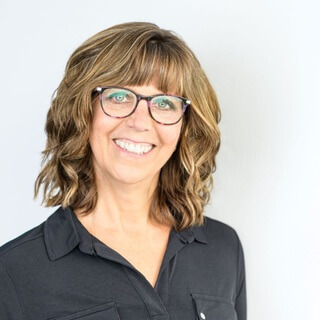
My name is Lynn,
And I'm glad you're here.
It's important to remember that meditation can be anything that heightens your awareness and pulls you into the present moment.
You do not have to sit on a cushion,
Light a candle.
You can do all those things,
But you don't have to.
So today's meditation is going to be focusing on the breath and specifically a breath that will help you either if you're having difficulty falling asleep or perhaps struggling during the day with heightened anxiety and just needing a moment to relax.
Before we begin,
Find a comfortable place to rest your body.
Again,
You don't need to have a formal meditation cushion.
You could be sitting on a chair,
Sitting on the floor,
Even lying in your bed.
Wherever you've chosen,
Really settle in and soften,
Soften the shoulders,
Soften the jaw,
Soften that area between the eyebrows,
Let the belly relax.
Let the glutes relax,
Wiggle the fingers and toes,
Letting them relax.
And maybe if it feels okay,
Close your eyes or find a gentle gaze.
Bring your attention inward,
Letting go of anything that happened before this very moment,
And trying not to think about what might happen after this moment.
And from this place of supported stillness,
Let go of any thoughts that take a deep inhale through the nose,
Following the breath all the way down to the bottom of the lungs.
And then see it filling the middle lungs,
And then the top of the lungs,
Expanding the ribcage,
Maybe even feeling like the collarbones expand.
And then open your mouth and exhale that breath,
Starting at the top and then the middle,
And finally emptying from the very bottom,
Feeling that diaphragm pull in and up.
And then repeat.
Inhale through the nose,
Filling all the way up to the bottom of the lungs,
And then the middle lungs,
And then the top.
Belly has risen,
Ribs have expanded,
And then exhale,
This time through your nose,
Emptying from the top,
And then the middle,
And then the very bottom of the lungs.
This is diaphragmatic breathing,
Fully expanding the lungs,
And fully deflating the lungs,
As we inhale and exhale.
You might notice that as you're doing this type of breathing,
You're really focusing on those lungs.
You can even place a hand on your belly,
And you can feel the belly rising and falling.
This type of breath serves as such an amazing anchor for the mind,
Really bringing awareness to each inhale and each exhale,
Not giving the mind that much opportunity to wander.
Another type of breath that's very similar will also fill the lungs completely,
Use that diaphragm to really push the stale air from the bottom of the lungs out,
Is called 4-7-8 breathing.
So we will inhale for a count of four,
Hold for a count of seven,
And exhale for a count of eight.
Join me as we inhale two,
Three,
Four,
And hold two,
Three,
Four,
Five,
Six,
Seven,
And exhale two,
Three,
Four,
Five,
Six,
Seven,
Eight.
Inhale,
And hold,
And exhale.
Inhale,
Exhale.
Inhale two,
Three,
Four,
Hold two,
Three,
Four,
Five,
Six,
Seven,
Exhale two,
Three,
Four,
Five,
Six,
Seven,
Eight.
And now take a great big inhale through the nose.
Exhale,
Open the mouth and let it go.
And allow your body to begin once again breathing for you,
Letting go of control of the breath.
And noticing how do you feel?
What's different from the beginning of this meditation?
Maybe you feel slightly calmer,
Or maybe even quite a bit calmer.
Maybe you feel energized.
Simply notice,
Create awareness,
Maybe with a gentle smile,
And then begin to bring attention back to your body.
Maybe you wiggle the fingers and toes,
Move the head from side to side,
Lift the eyebrows up and down,
Open and close the jaw.
Welcome back.
Welcome back from a very beautiful journey with your breath that is available to you anytime.
Personally,
I use the four,
Seven,
Eight breathing when I'm having difficulty falling asleep.
Quite often,
I don't even make it through two rounds.
So I hope you find this helpful.
Maybe you return time and time again to this meditation to find that calmness and that peace.
Until we meet again,
I hope you have an amazing day.