Hi,
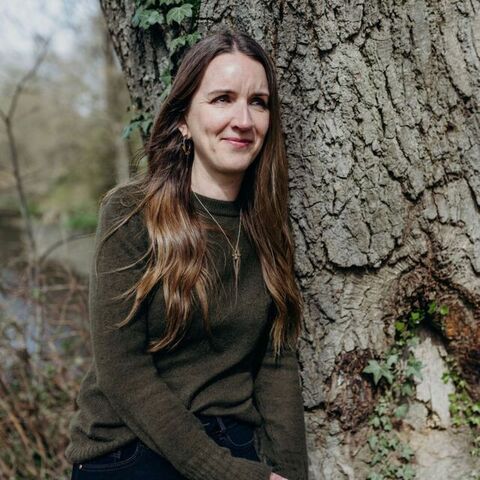
I'm Kate.
If you're listening to this because you're worried about your health,
I want to start by saying something important.
You're not silly.
You're not dramatic and you are not making it up.
Health anxiety feels real because the sensations in your body are real.
The fear is real.
The spiral is real.
What's happening is not that you're imagining symptoms,
It's that your nervous system has become highly attuned to scanning for danger and it's scanning internally.
Health anxiety is essentially a pattern.
It usually follows a loop.
You notice a sensation in your body,
Maybe a twinge,
A flutter,
A headache,
A change.
Your mind immediately tries to interpret it.
What if it's serious?
What if I've missed something?
What if this is the start of something dangerous?
The body responds to that thought with anxiety and anxiety itself produces physical symptoms.
Faster heartbeat,
Tight chest,
Dizziness,
Tingling,
Nausea,
Muscle tension.
And now you have more sensations which confirm your fear and the cycle strengthens.
Health anxiety isn't about attention seeking,
It's about protection.
Your brain is trying to keep you safe,
It just doesn't know when to switch off.
When the brain believes something might be wrong with your health,
It prioritizes it.
Survival is at stake so it zooms in.
This is called hypervigilance.
You begin checking your body more often,
You Google symptoms,
You seek reassurance or sometimes you avoid doctors completely because you're terrified of confirmation.
The problem is that reassurance only works temporarily.
Each time you check and feel relief,
Your brain learns checking reduces danger.
So next time it checks faster and more urgently.
You might notice repeated Googling of symptoms,
Frequent body checking,
Seeking reassurance from others,
Difficulty accepting medical reassurance,
Anxiety that spikes after hearing about someone else's illness,
Fixating on worst-case outcomes.
And underneath it all is usually one core fear.
I won't be safe.
Health anxiety often grows during times of stress,
Loss,
Uncertainty or when we've experienced illness in ourselves or someone close to us.
Sometimes it isn't about the body at all,
It's about control.
The goal isn't to stop caring about your health,
The goal is to change your relationship with uncertainty.
Here there are three gentle starting points.
Number one,
Name the pattern.
When you notice yourself spiraling,
Instead of arguing with a thought,
Try saying,
This is my health anxiety speaking.
Not this is something terrible,
Just this is the pattern.
Naming it separates you from it.
Two,
Delay the compulsion.
If you feel the urge to Google,
Check or ask for reassurance,
Try delaying it by 10 minutes.
Not forever,
Just 10 minutes.
During those 10 minutes,
Breathe slowly.
Notice the anxiety rise and fall.
Remind yourself,
Anxiety creates physical sensations.
You're teaching your brain that you can tolerate uncertainty without immediately solving it.
That's powerful.
Three,
Widen your attention.
Health anxiety narrows your focus to your body,
So deliberately widen it.
Look around the room,
Name five things you can see,
Four things you can hear,
Three things you can feel externally.
You're gently telling your nervous system there is more happening than this sensation.
This work is not about ignoring real symptoms,
It's about noticing when fear becomes disproportionate and repetitive.
If you have a genuine medical concern,
Seek medical advice.
But if you find that even reassurance doesn't settle you for long,
That's often a sign the anxiety,
Not the illness,
Is driving the distress.
And anxiety is treatable,
Very treatable.
Health anxiety often belongs to people who are thoughtful,
Responsible and deeply aware.
Your system is trying to protect something precious.
Instead of fighting it,
You might begin saying,
Thank you for trying to keep me safe,
I've got this.
Because safety doesn't come from constant scanning,
It comes from learning that you can experience uncertainty and still be okay.
If this is something you struggle with regularly,
Working with a therapist trained in anxiety can help you gently unwind the pattern.
You don't have to manage it alone and you are not broken.
You are human and your nervous system can learn something new.