What's the best that could happen?
Hi,
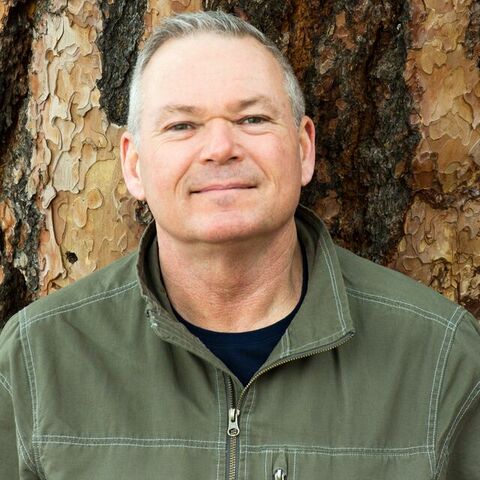
It's John here.
Thank you for joining me for another guided meditation.
I'd like to say a few words before we begin.
I think all of us at one time or another have used the phrase,
What's the worst that could happen?
And it's very useful when we're thinking about whether to proceed or not with any given task or course of direction.
When we can assess an outcome with this concept,
Sometimes it's just what we need to realize that even in the worst-case scenario,
It might be well worth the effort or at least a try.
At the same time,
There's a lot more information now about our negativity bias and how we can tend to fixate on a negative outcome.
Tara Brock,
One of my teachers,
Amongst others,
Often uses the statement that whatever we focus on gets stronger or some might say gets bigger.
I know I've certainly found this to be the case and it's helped me tremendously in changing habits and learning skillful ways of adaptation with intentional focus.
So by only asking ourselves what's the worst that can happen,
We sometimes gravitate to that very outcome just by focusing on it.
I think that we might serve our well-being if we at least occasionally ask ourselves,
What's the best that could happen?
Jeff Warren,
Another one of my favorite meditation teachers,
Has a guided meditation called Hero of Consciousness.
And in it,
He mentions a gentleman named Jerome Frank,
A professor of psychiatry from the 60s,
And his book,
Persuasion and Healing,
Which had a significant impact on the field of psychotherapy.
Jerome wrote that part of our healing that comes from therapy is our confidence that the practice is working.
And Jeff's belief that he mentions at the beginning of that guidance is that the same holds true for meditation.
Again,
For me personally,
I think this is one of the reasons why I sit every day.
I believe that it helps me and that belief helps to feed the growth,
Which in turn draws me back to sit day after day.
Some of the folks I've met in Sangha and mindfulness communities in general say that they prefer guided meditations over silent.
I think this is a result of the busy mind,
Some call the monkey mind.
And as long as there is a trusted voice throughout the meditation,
It helps to keep the mind,
Or those monkeys,
From wandering too much.
I like to do a little of both each day.
I start my mornings with a short guided meditation,
And then I sit in silent meditation for another 20 to 30 minutes,
Sometimes more and sometimes a little more at different times through the day.
Both methods have benefits in my view.
So I thought I would combine a few different things for this meditation.
This is going to be a gentle foray into the world of silent meditation.
I'll give just a short bit of guidance to settle in,
A few words in the middle,
And then a few words at the end to transition back out.
Instead of backing music,
There will be just a bit of gentle nature sounds.
For all of us,
Whether we regularly practice unguided meditation or not,
Let's ask ourselves,
What's the worst that could happen?
And just as importantly,
What's the best that could happen?
Okay,
Here we go.
Or maybe better,
Here we are.
Settling in,
Let's close our eyes and take a few nice,
Slow,
Deep breaths.
The in breath brings energy and composure in our intention,
And the out breath is a settling and letting go.
Our attitude is easygoing,
Equanimity.
This gift of time for our well-being can maybe invite a gentle smile at the corners of the mouth.
We can invite that same sense in the eyes and the heart.
Bring a gentle focus to the breath or anything present that feels good to direct the attention to.
When the mind wanders,
No big deal.
That instant we recognize a wandering thought is an instant of clarity,
And we welcome the opportunity to return to our home.
Okay,
You're doing great.
We're past the halfway point.
We'll check in again near the end.
And now,
Just let everything go.
Take a few moments just to steep in the glow of this practice.
After the bell rings three times,
You can go ahead and open your eyes.
I'd love to hear how this was for you.
Please leave a comment if you're able.
Thank you for sharing this time together,
And thank you for your practice.