Chapter nine,
Accepting our gifts.
Our entire life consists ultimately in accepting ourselves as we are.
John Anul,
What a journey it has been to accept myself.
When I was younger,
I wanted to be a boy because I thought life as a boy would be easier.
In high school,
I wanted to have blue eyes instead of my brown eyes because I thought blue eyes were more beautiful.
So instead of learning to love my brown eyes,
I bought blue contact lenses.
I endured them for two weeks before quite a number of people told me I looked stoned at school.
That was not the reaction I wanted,
So I stopped.
As an adult,
I still struggle with accepting myself.
In one of the previous chapters,
I mentioned how I came to the sad realization that I tended to look at my reflection in the mirror focusing on my flaws,
Never looking deeply into my eyes.
I decided to implement an activity from Jack Canfield's,
The Success Principles,
Looking myself in the eye,
In the bathroom mirror,
And saying out loud all the things that I was proud of for that day.
In high school,
I wanted to be as different from my twin sister as possible and have my own identity.
So I dyed my hair bleach blonde so people could easily tell us apart.
Nowadays,
As I age and find beauty in the aging process,
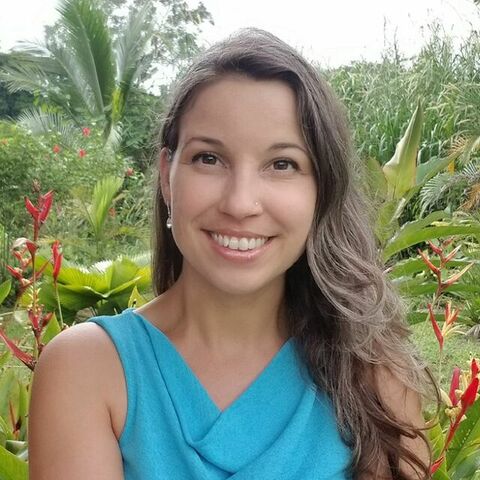
I let my hair go gray.
The funny part is that this is what people compliment me on the most as it relates to my physical appearance.
Most people think the naturally glimmering highlights that streak my hair came from the hairdressers.
I stopped going to hairdressers many years ago after they would always try to upsell me with dyeing my hair to cover my grays.
When I told them that I was proud of my gray hair,
There was always an awkward silence and I would wanna justify why I was proud to be natural.
To me,
Each gray hair signified a new lesson learned and displayed my wisdom gained throughout the years.
I've always looked young and when I first started my company at the age of 26,
I felt too young.
So people at networking events would mirror the belief I had myself by telling me that I was too young to be an entrepreneur.
I was so excited to turn 30 and feel like I was now old enough to be taken seriously.
Only because my perception of myself changed that I think people stopped caring about my age.
After college,
I had a lot of shame that I didn't have any fancy degrees,
But no business professional has ever asked me what degrees I have before they take private English lessons with me.
All they wanna know is that I'm a native speaker and know how to teach English as a second language,
Which I am very confident in.
They want classes to be fun,
Full of dynamic conversation and motivating.
The stories I share with them every week about my world travels,
Backpacking,
Fascinates them way more than my schooling.
One French teacher with a couple master's degrees loved the way I taught because I was so honest and authentic.
When I didn't know a word in English,
I told her.
I was excited to learn a new English word and she herself knew that language teachers are not dictionaries.
She also hired me for private lessons because her spoken English was so advanced and formal that she had a difficult time connecting to others at networking events or interviews.
She wanted to sound professional yet natural,
Which was my specialty.
In only a few short weeks,
She gained so much more confidence in herself speaking common everyday English.
Some of the most successful entrepreneurs I have taught are self-made millionaires who didn't graduate college,
So they understand it takes a different kind of person to be an entrepreneur.
When I was younger,
I wanted to learn from a worldwide college,
Not limited to a specific city or university.
I am forever grateful for investing in real life education and the connections I made to the world have never shaped my perception of life.
I will share more of those experiences in subsequent chapters.
For many years,
I held the shame of my education,
Even though my tourism management diploma and ecotourism certificate never held me back from any job position I wanted.
When I was younger,
Math didn't come easily for me and I had the most difficulty with math problems.
As I grew up,
I chose to hold that belief about myself until I challenged it.
I registered for a project management professional certification.
According to the Project Management Institute,
The PMP is the most important industry-recognized certification for project managers.
The PMP is the gold standard of project management certification.
Recognized and demanded by organizations worldwide,
The PMP validates your competence to perform the role of a project manager,
Leading and directing projects and teams.
I signed up because the designation acknowledged years of experience as a project manager,
Just as much as formal education.
My five years as an entrepreneur leading projects,
I learned daily and I appreciated that this certificate validated these years of experience to be just as important as formal schooling.
The test was a grueling four hours full of problem-solving skills and equations to know by heart.
The PMP is known to be a difficult exam.
The passing rate is low and this is because if the exam were made easy,
Reputation and credibility of the certification would go down.
PMP requires serious study,
Hard work,
Discipline,
And perseverance.
Praveen Malik,
PMP,
Conducted a small survey on LinkedIn about the passing rate and concluded that 50% of those who took the exam didn't pass.
These statistics made me even more focused.
I dedicated months to study and then bought a mock test simulator.
Every day for 10 days,
I would do a mock 200 question test within a four hour timeframe.
It was during the summer when I really wanted to be outside but I was committed to achieving this personal goal for myself.
Finally,
During my first exam,
The time ran out and I didn't even have enough time to complete every question but I still passed on my first try.
This win was huge for me and for my perception of myself.
Maybe I was better at problem solving and math equations than I thought.
Even though I am constantly seeking personal and professional development,
I don't always know what my true gifts are.
During one road trip with my partner,
We completed the 11 hour course on Discover Your Sacred Gifts program by Monique McDonald.
She says,
Sacred gifts are unexplained abilities that we have from birth to death,
That allow us to do ordinary things extraordinarily well.
When you know and understand your gifts,
You'll have the clarity you need to make decisions and choices that align with the spirit of who you are.
This helped us to better understand ourselves and each other.
We naturally laughed when we heard of the 24 sacred gifts that resonated with us.
We heard one of the 24 sacred gifts that resonated with us.
I never understood why I would open my home so freely to people.
I would let strangers live in my home and even drive my new car when I was on vacation once.
And at one time had roommates who needed a safe place to call home while they were in a life transition or healing.
Then at the same time,
Close friends who came over to visit would have to get a glass of water themselves or grab a banana from my fruit bowl because I forgot to offer them anything.
I learned through the program that these are two completely different sets of gifts and I no longer feel ashamed or guilty because of it.
I was able to accept myself more with the natural gifts I possess and understand why even after all of these years,
I was so passionate about teaching.
This is because teaching is one of my sacred gifts.
A good knowledge and acceptance of our individual gifts is crucial to self-acceptance and growth.
Are you curious what your sacred gifts are?