Hello,
Insight Timer Meditators.
Welcome back to another episode of the Energy Matters podcast.
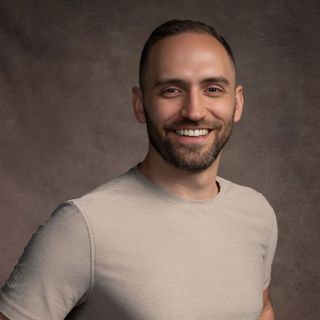
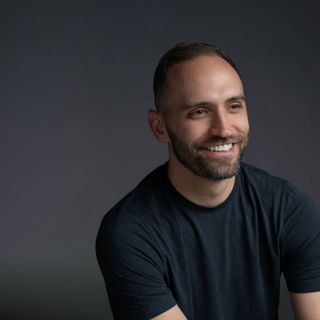
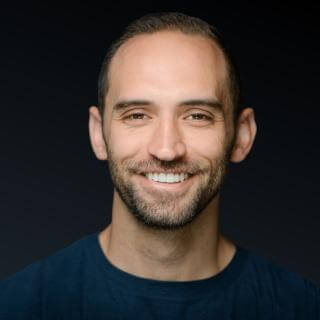
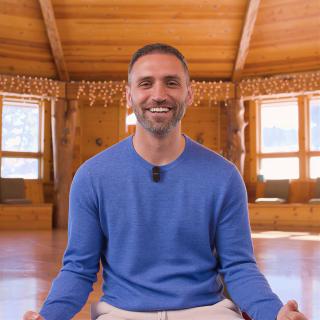
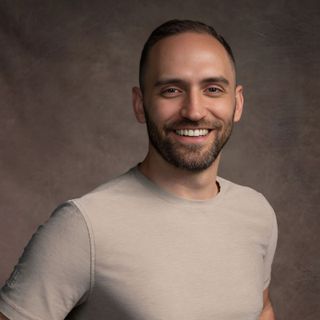
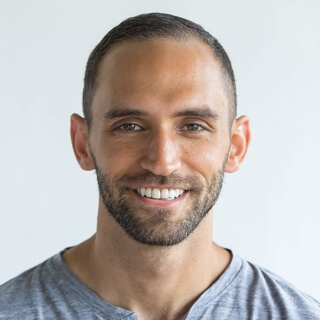
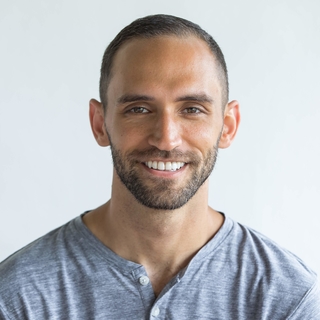
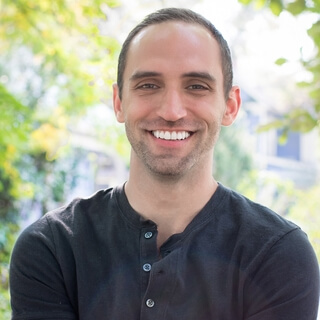
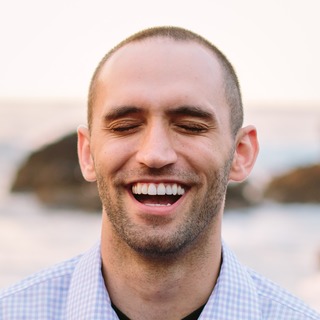
I am David Gandelman and I am here flanked by my co-host,
Cody Edner.
Hello everybody.
And we have a special episode for you today with the author of Mysterious Realities.
He's a legendary teacher of traveling the dream world,
Robert Moss.
We will get to him in a moment.
I just want to mention that if you ever want to watch the episodes,
You can go to our YouTube channel.
It's called Energy Matters.
We've got some of the episodes out there through our video.
And you can find a handful of our episodes here on Insight Timer and all of them on iTunes or at energymatterspodcast.
Com.
We hope that you really enjoy this episode.
Open up to your dream world if you haven't yet and really start to explore all of these incredible dimensions that are out there that you may not have been aware of.
And so we brought Robert Moss on today to help us all become more aware of this incredible reality that he calls the All At Once.
Let's get into it.
Hey Energy Matters listeners.
Welcome to another episode of the podcast.
We have a very,
Very special guest for you today.
The legendary dream teacher,
Robert Moss.
Welcome Robert.
It's a pleasure to have you.
Good to be dreaming with you,
David and Cody.
Hey,
Welcome Robert.
It is a pleasure.
So right before we started,
Robert informed us.
I thought this was your 12th book,
Mysterious Realities,
But it actually is your 25th book.
That's incredible.
Can you just show us the cover real quick?
You were showing it to us.
Oh,
It's amazing,
Yes.
I'll gladly play push the author and hold up the cover.
It's actually a painting by one of my students who's become a teacher of active dreaming and her own right.
It comes from an ancestral journey in search of her own ancestors.
And you look at this and you feel that a hand is beckoning you to enter the mysteries,
Enter the magic,
Mysterious realities.
I'm very proud of this book.
I'm a proud new parent of a new book.
Well,
We are about to enter the mysteries with you here,
Robert.
So I would love to start if you would just tell us a little bit about the book,
What inspired it and what exactly is that you do?
Well,
The title of the book is A Dream Traveler's Tales from the Imaginal Realm.
So maybe this is way into discussing all the places we might go in this conversation.
Dreaming,
Traveling.
This is the ancient indigenous idea.
I mean,
In modern life,
When we think about dreams at all,
We often talk about the stuff going on in the bargain,
The personal subconscious.
Ancient and indigenous people have a way of looking at these things.
They say we go traveling.
Some part of consciousness and part of soul goes traveling,
Goes to different worlds,
Goes to places where the dead are alive.
And I've traveled like this all my life in dreaming and in half dream states and in shamanic journey.
So the book is a collection of tales.
I mean,
Amazing tales,
But it's not fiction.
These are just so stories about traveling in different realms and not just about being out there in terms of traveling to parallel worlds,
For example,
Which is a major theme.
The idea of parallel lines going on in other places and we access them in dreams.
It's also about the magic of synchronicity in everyday life.
And everybody has a sense of what that is when you talk about meaningful coincidence.
You're going down the street,
You're thinking about something and something pops up in front of you,
Which absolutely resembles what is with you.
This can get crazily exact and precise and exciting.
So the book is also about stories of living on a certain kind of mythic edge,
Which means that you're carrying a certain kind of story,
Certain kind of connection with you relating to the larger reality and things pop up in life that resemble that connection.
So it's a book of adventure tales from the life of the frequent flyer in dreaming reality and in synchronicity.
I love that,
A frequent flyer.
And,
You know,
I've been reading the book,
I've been watching your videos,
Robert.
You're such a prolific author and dreamer and teacher and wordsmith.
Sometimes I listen to you talk just to hear which words you're going to use,
In which order.
And you've had some amazing experiences in childhood.
You had three near-death experiences by age 11,
Which went on to shape the rest of your life and I believe is why you teach dreaming.
Can we start by you telling us a little bit about a few of those experiences?
What happened?
Where did you go?
And how did we get from there to here?
Absolutely.
And you're a gentleman and a scholar,
David,
A man of true taste and discernment.
I like to talk about my work.
So let me take you back to my childhood.
I was born in Australia,
Whether I ever grew up as a matter of discussion.
But I was born in Australia.
At three years old,
My mother said,
I'll take you to meet family out on the West Coast.
We were living in Melbourne.
Her family was West Australia.
So we take the long train ride across the Australian continent to meet my great aunt,
My mother's aunt,
The famous opera singer,
Close friend of Nellie Melba,
And a very gifted psychic medium.
She didn't make a lot of fuss about this.
She just did it.
So she's going to read the tea leaves the old fashioned way for three year old mothers.
She turns white leaves,
Won't talk to anyone,
Doesn't tell us until later what she saw.
She saw my death.
She was correct.
I died that winter.
My father was in the army,
He was posted to Tasmania.
I got pneumonia,
Cruel and bitter winter and the doctors pronounced me clinically dead.
Then I came back and the doctor said to my parents,
Oh,
Sorry about that.
The boy died and came back,
Didn't he?
I was tagged at age three as a boy who died and came back.
We didn't have the term near death experience in those days.
Frankly,
I don't remember much of what happened when I was out of my body,
Clinically dead at age three.
I know it was very hard for me to operate in body when I came back.
I felt like an alien life form and I didn't understand.
Six years later,
Age nine,
I died again under emergency surgery for an appendectomy in a Melbourne hospital.
And this time I remembered,
I remember getting out of my body,
Being up under the ceiling,
Typical near death experience so far,
Not wanting to wipe blood and listen to the gossip of the medical staff,
Leaving the place,
Leaving the hospital.
Deciding,
Having left my body,
I'm going to go down the,
I'm going to go to this theme park,
Luna Park,
Just for fun,
This theme park,
Fun park on the Melbourne beach and do what a normal nine year old kid would like to do,
Ride on the rides.
Well,
Look at the girls in their summer dresses.
And I sort of get on the ghost,
Moon face at the gate park and inside there's a ghost train.
I get on the ghost train.
There's traction,
There's a tractor beam kind of deal and suddenly I'm in a different world.
And I'm with beautiful people,
Very pale,
Very tall,
Beautiful.
They raised me as their own and I seem to live a whole life with them,
Become an elder,
Some kind of shaman.
That life is done.
I assume I'm going to go to my home among the stars or somewhere.
Suddenly,
Bang,
I banged the bottle of the body of a nine year old kid in the Melbourne hospital who's been pronounced clinically dead again.
And I'm not sure what I'm doing back in that body.
The first person who could explain this kind of thing to me in a matter of rational way was an Aboriginal kid in the indigenous culture.
He said,
Oh yeah,
We do that.
We get sick.
We go and live with the spirits for a while.
We get well.
We come back.
Sometimes we're the same.
Sometimes we're not.
Well,
Once again,
I wasn't exactly the same.
But you know,
David,
The gift of experiences like this was an ease of shifting consciousness in and out of the body,
In and out of different realities and a certainty of knowing that the dream world is a real place.
There are realities beyond the physical.
They're important.
You can find healing there.
You can find soul there.
You can find connection.
And I discovered,
Of course,
You can travel without the extremity of a near-death experience.
So having had these experiences,
I felt at home in other realities and I've explored them ever since without needing to go through that.
And I help other people to do it without going through that either.
Yeah.
And so you don't need psychedelics.
You don't need to be on the brink of death.
You can consciously decide to leave your body,
Whether in sleep or awake,
And go to this place that you call the imaginal realm.
So that's what the term you use in your book.
Can you tell us a little bit about what that means,
The imaginal realm?
The imaginal realm is actually a word that I borrowed from Sufi mysticism,
Medieval Sufi mysticism.
It's a word that they use,
Their philosophers,
Their masters of dream travel use for a place that is somewhere between time and eternity.
There are palaces and temples and schools and places of initiation and education where humans can meet minds beyond the ordinary human level of consciousness and awareness.
These include places where the dead are alive on a higher level of understanding.
So it's a phrase I borrowed from places of true imagination,
Where there are structures that are built to some degree by human thought,
Human imagination,
Which are as permanent as anything on this earth,
Which are places,
As I say,
Where we can receive profound instruction and profound adventures.
So,
You know,
Mr.
Jung was a case study in finding and using the imaginal plane.
One of my stories is about him.
One of my stories involves what Mr.
Jung is doing now in the afterlife and the kickoff for it in terms of the documentation.
I'll do my research as well,
Is that before he died,
Jung started being of a counterpart version of his famous sanctuary on the lake in Switzerland.
He called his sanctuary,
But when you say sanctuary,
It's known as Bollingen from the nearby village.
He called it the tower.
He built himself a wonderful,
Rather romantic,
Rather medieval kind of sanctuary on the lake.
And before he died,
He dreamed again and again that he had another version of this place on the other side of death.
One of his last dreams shared with his intimates was of the other Bollingen on the other side.
And he told them he had no fear of death now,
He knew exactly where he was going.
He could do his work there.
He could write his new books.
That is an example of a place in the imaginal realm,
Which is also placed in the afterlife,
In the thoughtful,
Scholarly,
Interesting kind of afterlife where you thought he was going,
Where I believe he did in fact succeed in finding his way and writing a book that is more important than the red book.
I write about that in one of the stories in Mysterious Realities.
Wow.
Very interesting.
So you just used an interesting,
Fun phrase,
Where the dead are alive.
So,
In the,
Like in the afterlife.
Do you see it as like very different levels of realities that we continue to experience and that we continue to grow and interact with?
We have that option,
We have that option,
Cody.
That's an excellent question.
I mean,
We don't go to the same place.
We really don't go to the same place.
There's a people of the South Pacific of the island of Pukapuka who said there's many afterlife situations as are human imaginations.
That might be correct.
However,
Many of us don't have much imagination.
We're like those tour groups follow the umbrella around a foreign city.
So many of us have collective environments,
Collective belief systems,
And there are plenty of those.
I mean,
One of the purposes of religion is to give us a collective territory where we think we'll be safe and okay and looked after in the afterlife.
In my experience,
I spent a lot of time talking to the dead in their environments.
I mean,
We find the dead on all sorts of levels of reality and all sorts of levels of evolution or even devolution because some people are bound by the appetites and desires that,
You know,
Drove them in this life.
And you don't change all that much because you're dead.
You continue to follow the path of your ruling passions,
Desires and interests after death.
And that to some extent is going to shape your approach to the afterlife.
So if you followed a path of meditation and austerity and you want to go into the clear light or you want to merge with a divine being on a higher plane,
You might succeed in doing that.
If like Mr.
Jung,
You have appreciated and loved the life of scholarship and teaching and reaching out to other people,
Then you might find yourself in an afterlife locale where you can continue to do that with fewer inhibitions without the restrictions of an aging and failing body.
And you can delight in further study with access to the vast,
Limitless information field that is now open to you and then beaming and sharing something to your followers and your students on Earth.
If you're a guy who's really lived for the next drink or the next fix or something like that,
Probably going to be trawling around close to the living,
Hanging out in bars as one of those dead barflies who's buzzing around in a certain kind of saloon,
Hanging next to somebody who's having a smoke,
Hoping to get another drag or riding on the shoulders of one of your survivors because you're too confused to know what to do.
So,
You know,
We can't generalize about this.
It's fascinating.
The geography of the afterlife is even more teeming with possibility than regular geography.
So,
You know,
How do you know about these things?
Well,
I follow a path of experience.
The stories in the new book,
Mysterious Modities,
Are firsthand tales of these things from my own encounters and travels.
What I encourage people to do is to develop a simple practice of acquiring firsthand experience of these things.
I mean,
If you're interested in the question,
Does something survive physical death?
And maybe you are because it's a very important defective on life and the choices you make.
If you're interested in knowing whether there really is something that survives death,
I can help you to discover that for yourself.
I can help you to open dreams.
Get you open to dreams,
For example,
In which somebody on the other side might be trying to talk to you.
I can help you to journey consciously in the way of the shaman or the lucid dreamer to places where they're dead or alive and check them out for yourself.
I can even show you how to discover how you can build a suitable living environment on the other side of death.
It might be a place you'll live longer than anywhere you live in this world.
So,
I follow a path of direct experiences.
My stories come from that and my teaching involves putting people directly in touch with things they want to know about.
Wow.
Now,
Not to complicate this more,
But you also talk about parallel universes and parallel selves as realms of reality that we can interact with or that affect each other.
How does that all fit in?
Or how does that work?
That's like blowing my mind.
Well,
This is one of my favorite subjects.
Cody,
A lot of my work is now centered on exploring this realm and drawing some power,
Some creativity,
Some healing,
Some understanding.
Let's get it very clear.
This isn't some new age soap bubble we're talking about.
In physics,
It's called the many worlds hypothesis or the many interactive worlds hypothesis.
It is increasingly supported by mainstream physicists.
The idea is that,
You know,
At any moment,
Our universe is splitting into uncountable parallel universes and that they act on each other.
They might converge or collide with each other.
What does this mean in human terms?
Well,
The easiest way to understand it is this.
Made a choice in your life,
Right?
You stayed with that partner or you didn't or you left.
You stayed in that job or you left.
You stayed in that country or you left and your world splits.
Your world splits.
Most of us are aware of this story of what that means.
You made a certain choice.
Part of you would have preferred the other decision has gone the other way.
So your world splits and you're like there's a parallel you and alternate you who's following an event track followed different from the one you're on right now.
You see this in dreams,
Actually.
If you record your dreams long term,
You might notice it again and again.
You're in a situation that you left in your ordinary reality.
You're still with your former partner,
For example,
Or you're still in the former job.
This that we notice that in our dreams.
Well,
The interesting thing is this.
Suppose you have a parallel self who has some gifts and resources in their life that are lacking to you.
Who,
For example,
Is creative in an area that you didn't make the time to get creative in.
Who is the artist or the writer,
Let's say,
Or the musician or the dancer you didn't become because you're too busy earning a living and fitting in with other people's expectations.
Suppose you could reach to that parallel self and bring a little bit of their knowledge,
Their skill,
Their energy,
Your juice,
Their juice into your present life.
Suppose you could do that.
I mean,
That might be really good.
At the very least,
It might be interesting to explore what's going on on the path you did not take.
You may,
For example,
Forever have regretted the fact that you could never be with that girl you knew 30 years ago.
Well,
If you explore the parallel reality into the possible future,
You might discover it wasn't a bad thing you split up.
First of all,
You've got things in your life now you would not have had if you'd stayed with her.
And secondly,
It didn't come out too well.
So sometimes the benefit of looking into a parallel life story is to realize you don't have to go on steeped in regret over the life not lived because in a sense you're doing perfectly fine where you are.
I love exploring that some of my stories are based on experiences of people who've been looking to their parallel lives.
But if I may just give you a quick story of somebody who did something really good in her creative life by going beyond what we discussed so far.
She decided after working with me and doing some of my workshops that she would like to sit down and talk to some of our parallel self well on their different tracks.
One in particular is a writer who she's a writer now,
But her writer alternate self,
The care writer much earlier because she made a different decision back in school.
The teachers and the parents were saying to visit the lady in question major in science.
No one wants another English major no jobs for English majors major in science get together.
So an ordinary reality,
The woman decided to major in science and she put up for many years actually for decades.
The moment when she would devote some time to her writing,
Which she loves in a parallel reality.
She said no to the teachers.
She majored in English.
She did a writing course.
She started publishing books many years ago has good publishing connections is doing just fine.
So what does she do now?
She decides she will sit down.
We're talking about lucid dreaming or shamanic journey.
She sits down in a visionary experience with a parallel self.
They have they have tea together cafe somewhere and they make a deal.
She says to the parallel self,
I'd like you to help me with my writing and slip me a few good pages.
You help me publishing connections and parallel self says,
Well,
What do you have for me?
And she says,
Well,
I'm really good at this lucid dreaming and shamanic journey.
I've so much material for you if you want to borrow it.
So I'll give you material for the books you're writing.
You help me to write the books I haven't written yet deal from this has flowed creative juice,
Creative,
Creative excitement and really writing skills in her life,
Which are fantastic.
So you can regard the whole story as a fantasy.
But if it's a fantasy,
It's a fantasy that works.
It delivers energy.
It delivers juice.
The pages are piling up.
So that's an example that maybe many people can sort of empathize with.
But what might happen for you if you open to the idea?
Hey,
Amongst all the allies and sources of support and creative inspiration I've got available,
My parallel souls who've been doing something I'd like to do for longer than I have.
That's incredible.
Robert,
You must be amazing to get a cup of coffee with.
I'm coming to New York,
My friend.
You know,
As you were saying that I was thinking,
I recently had a brunch with a friend of mine who's a national book,
National was set award you get for the best book of the year,
Whatever it is.
Yes,
Anyway.
Yes,
He won best novel for that one year and he's an incredible writer for the New Yorker.
And I was in my podcast interview mode and I asked him,
Where do you get all your ideas?
You know,
Does it download?
Where does it come from?
Do you meditate?
And he looked at me and he goes,
I have no idea.
And as you were saying all that,
Robert,
I thought,
Is he going to a parallel realm and getting it?
Is he connecting with guides?
Is he stepping into some other universe and bringing it back and he's just not aware?
And are many of us doing that?
Do you think that creators in general are finding their muse,
You know,
By putting their hand through the wall and just pulling something back in and they're not even aware of it?
I think it's impossible.
I can't speak for your friend.
And I would note that many creative people find the source of their creativity quite mysterious,
As he does.
But when we start tracking these things,
We notice that multidimensional beings.
I mean,
This is not a radical statement.
This is sort of agree with this.
For multidimensional beings,
We have access to a field of nonlocal mind,
A quantum information field containing everything we could ever possibly want to know and far more than we can handle.
So the sources are there.
The sources are available.
The question is,
To what extent are we able to have access to these things?
That means are we available?
Are we available for inspiration?
Are we available for that jolt when the stuff starts coming through?
You know,
When it comes to creativity,
I think about a tribe in Morocco of the belief that poetry is the most important human activity.
And they discuss about creativity in the sense of poetic inspiration.
They say all poetry comes from flooding.
In other words,
Something wells up in you and bursts through you.
It cannot be contained.
It's got to come through.
And maybe your friend is one of the fortunate ones for whom the inspiration comes that way.
It comes as flooding.
You can't contain it anymore.
Where is it coming from?
Yes,
I'm going to get this down on the page on the screen and see how it looks.
I'm fascinated by the nature of creativity.
Can I tell you a story about how this new book got published which involves one version of creativity,
A synchronicity story?
Can I tell you that story?
Oh,
Yes.
Absolutely.
Okay.
So here's a picture of my life.
I'm in Berkeley,
California at the time.
We're again leading a workshop.
We finished the workshop.
Good workshop.
It was all about synchronicity,
Navigating by synchronicity.
Noting those special moments when the universe is talking to you.
You know them in your shivers.
Time has stopped or time has moved differently.
So I'm walking towards dinner in Berkeley with my coordinator and talk about three things.
One is Pegasus,
The winged horse.
I'm talking about the Greek myth in which Pegasus opens the spring of the muses,
The spring of creativity under his stamping hooves.
This is the kind of casual conversation I have on the street anywhere.
I'm talking about how Pegasus stamps his hooves and the springs of creative inspiration are flowing and life is good.
And I'm talking about two other things.
I'm thinking about my own literary career and where I might be going.
And I've got a lot of almost complete stories.
That's the key phrase,
Almost complete stories.
I've been piting them up for many years.
The title might be mysterious realities.
Maybe I can get them together and make a book.
And I talk about a third thing.
The theme of a lot of these stories is parallel lives,
That we might be living more than one life right now.
So I'm talking about three things.
Pegasus,
Almost complete stories,
Parallel lives.
I look across the street.
There is Pegasus,
The winged horse on the front of a bookshop in Berkeley.
So I say to my friend,
Bye,
I've got to go now.
I run across the street.
Berkeley drivers are kind of pedestrians.
I'm not run down.
I'm at the Pegasus bookshop.
From the threshold,
Looking inside,
I see the spine of a book,
My surname Moss.
And the title of the book is Almost Complete Poems.
Close to the phrase I was using,
Almost complete stories.
Next to it,
Another volume of poetry entitled I Must Be Living Twice,
The Implication of Parallel Lives.
I've got Pegasus.
I've got almost complete literary works.
I've got parallel lives.
And the next day when I sit down to have lunch with my favorite editor,
And she says to me,
I'd really like to publish a book of stories by you,
Stories of travels in the dimension just told for their own sake.
I say,
I think you're right.
I tell her the story.
We've done the deal before the first class in wine,
Not coffee on that occasion.
Wine,
David.
This is the way I live.
I live by synchronicity.
I live by dreaming.
My life is guided by the things that pop up in that unusual way in the form of meaningful,
Meaningful coincidence and the energy and content of the dreams I manage to catch every morning or every middle of the night.
Very cool.
Wow.
And so,
Robert,
For our listeners who,
You know,
Listen to us to learn about meditation and spirituality and growth,
And they're going,
Damn,
This is a whole nother level.
Robert is traveling across the universe.
He's got synchronicity happening.
There's Pegasus.
There's he's talking to Carl Jung.
How do I start to get into this kind of place or state or step out of the mundane that I find myself caught in and go to one of these alternate realities all at once is as you call it.
How do we start on that path?
You know,
One of the things we need to do is to spend a lot more time in the place between sleep and awake.
I'm quoting Tinkerbell in the old Disney movie of Peter Pan.
Peter's sad because his very friend is going away and Tinkerbell says to him in the Hollywood script,
It's not in the novel,
Look for me in the place between sleep and awake.
There I will always love you.
There you will find me.
This is excellent advice.
You want to become a dreamer,
Lucid dreamer,
High octane meditator,
Let's say,
Everyday shamanic journeyer.
Pay attention the place between sleep and awake.
You know,
You're drifting.
Maybe it's in the middle of the night.
Maybe have to go to the bathroom.
Maybe just back in bed.
Maybe it's in the morning before you get up.
If the alarm clock is not going to rush you out in the world,
Maybe it's when you're first lying down at night that drifty in between state that twilight state is a fantastic place to grow the arts of consciousness.
It's actually a great place to practice everyday dream yoga.
It's a great place to become a lucid dreamer.
You know,
If you're a meditator,
You might be inclined to dismiss the images that rise and fall in that state.
Or you might be the kind of meditator who actually values images and chooses whether or not to give them attention.
That kind of meditator or that kind of experimenter in consciousness,
You'll find that in that in between state,
An image that attracts you might become the portal for lucid dream adventure.
You start out lucid,
You stay lucid.
You might also find that in this in between state,
You are highly psychic,
Highly intuitive,
Highly attuned to what's going on energetically around you.
You might find that there are various voices,
Some you don't want around,
Some you do,
That will speak to you in that place.
It's a place of transpersonal connection quite often with guides for real on a serious level who can help you in your life.
So I recommend people at all levels of practice spend some more time in the place between sleep and awake,
The hypnagogic state.
I also recommend don't throw away whatever you remember from your sleep dreams,
Including the dreams you don't like and did not ask for.
Don't throw it away.
If you have any fragments,
Be kind to them.
Collect them,
Write them down.
They might reveal something important to you and they might be the breadcrumbs that lead you to an interesting situation or realization.
I also say to people,
The world is speaking to you in the manner of a dream through signs and symbols all the time.
Pay attention,
Be available.
Don't be on the headphones all the time.
Give yourself a few minutes a day to notice with all of your senses what the world is saying to you.
If you've got an issue on your mind,
A theme on your mind,
Carry it with you as you go down the street,
As you go out into the world first thing in the day.
Let the traffic speak to you.
Let the overheard cell phone conversation speak.
Let the logo on the truck speak.
If you're in the forest or in the park,
Let the trees speak to you.
Listen to what the talking land is saying to you.
Aborigines,
My native Australia,
Talk about the speaking land,
The mountain is speaking,
The river is speaking,
The lizard is speaking.
Pay attention.
Even our modern urban hustle and bustle,
Everything is speaking to us if we'll listen a little more attentively to the voices around us.
So these are the ways that you grow in consciousness,
That you become a dreamer in my terms,
Which doesn't just mean you pay attention to sleep dreams.
It means you approach everything as life,
As the kind of dream where you can exercise some choice about what your scenario,
What your script is going to be,
Where you can experiment with co-creating the reality that interests you.
That's what it's all about.
Wow,
Beautiful.
We could just turn that into a book,
Robert.
That was very well said.
Thank you.
I'm so inspired.
And actually,
Right now I'm in Bali and it's past midnight,
So I think I'm in that in-between state.
Isn't it great?
Isn't it delicious?
That's maybe why you're operating so well.
You're in this delicious,
Liminal,
Finite state of fluid puzzle of things.
They're not as stuck as they sometimes are.
That's right.
That's right.
So,
Robert,
You like to say that dreaming is about waking up.
What do you mean by that?
Well,
You know,
In regular life,
We're sometimes a bit like sleepwalkers.
I mean,
We're trying to fit in with a schedule,
Fit in with other people's expectations.
Sometimes we're so caught up in the duties and obligations and patterns and habits of the day that we forget what it's all about.
We forget who we are,
Where we come from.
We might have a larger purpose,
That we might have a life beyond this world.
We carry on oblivious to those things,
Trying to get through the day,
To meet the deadlines,
Trying to meet other people's expectations.
Dreaming,
As I use the word,
Is about waking up to a deeper order of reality,
A deeper logic of events,
Maybe the purpose of your life,
Maybe the soul agreed that brought you here in the first place.
In my personal mythology,
I like to think that all of us might have had some chance of making a kind of soul contract before we came here,
Agreeing to the conditions of what we're going to try to do in this earth.
I don't know whether that's absolutely true for everybody,
And I don't know that everybody has all that much free choice about it.
But in my personal mythology,
It's useful to think of things that way.
We might have come here on a mission,
On an assignment,
Humans are forgetful animals.
We tend to forget what our assignments are.
But dreams will wake us up.
And when I say dreams,
I mean sleep dreams,
And I mean dreams,
And I mean moments of meditation,
I mean moments of synchronous in the world around you.
And when you wake up,
You're ready to inhabit a world of real magic.
Let me throw another phrase at you.
Real magic,
In my lexicon,
Is the art of bringing gifts from one world into another world.
We do that when we become active dreamers,
Active with our dreams,
Real active in exploring and applying the healing and guidance of our dreams.
Because you know what?
We get out there in our dreams.
We go beyond the curtain walls of ordinary understanding,
Beyond the veils of our consensual hallucinations.
We go into deeper realms.
We see ourselves with a perspective and objectivity that's often lacking in the hurry of everyday life.
So when you bring knowledge,
Guidance,
Energy from that deeper place you access in your dream travels into the body,
Do something with it,
Learn to talk about your dream content in a meaningful and fun way,
And above all take action.
That is real magic.
So Robert,
Can you just walk us through all the different kinds of dreams that we go through,
From nightmares to eating poorly to flying around to inspiration to another reality.
You must have some kind of dream encyclopedia by now.
But for those listening who are new to this,
Can you kind of walk us through some of the possibilities?
Absolutely.
What a great question.
Well first of all,
Let's get clarity about nightmares because people often are confused.
In my personal vocabulary,
A nightmare is not just a scary dream,
It's an interrupted dream.
This is the hallmark of a nightmare.
You're so scared you want to get out of the dream,
You manage to get out of the dream,
You slam the door and you say something like,
I hope I'll never have a dream like that again.
You turn your back,
You go away,
You don't like it.
So there's a scary dream,
But that's not a nightmare in itself.
If you're pursued by a saber-toothed tiger,
You stay with the dream,
You come out,
Okay,
That's not a nightmare.
Even if you're molded,
It's still not a nightmare if you stayed with it,
You've hung in there.
But nightmares interrupt a dream,
And that's a very serious issue because if you're running away from something in your dream,
You might be running away from something in the rest of your life.
So it's very important to learn to brave up to a situation like that and face it in dream space on its own ground.
And to do that,
I recommend learning one of my core techniques,
Which is dream reentry.
In other words,
You have a dream,
Even a nightmare that you don't like,
You learn to go back into that space consciously.
My workshops,
We use drumming in your own life,
You might not need drumming.
We don't use psychedelics,
We don't need that.
We produce our own chemicals.
You just make it your decision to take the energy of the dream,
Say it's a scary dream,
Step back inside,
Face the challenge on its own ground and resolve it.
My life was changed many years ago when I dreamed again and again of a giant bear who'd come into my house.
And I was scared.
The bear wasn't attacking me.
The bear was a big guy,
Much bigger than me,
And I didn't like it.
Finally,
I said to myself what I would now say to anybody,
Go back into the dream,
Face the bear,
See what's going on.
So I'm sitting in an easy chair,
No music,
No drumming,
Nothing,
Just pull the curtains.
I say to myself,
I'm going to step back into this dream and face the bear.
And I do.
And I'm scared and I have to push myself forward.
It's very real and we're suddenly the same size.
And the bear embraces me and the bear wants me to look at the heart.
And I notice we are joined heart to heart by something like an umbilical pumping life energy back and forth.
The bear makes me understand I'm your friend,
I'm your ally.
I'll show you what you need to heal and what other people need to be healed.
So that's a little bit about nightmares and nightmare resolution.
Now the whole gamut of dreaming,
We can spend 10 hours on this,
But very briefly.
There are dreams that are routine processing.
I mean,
You are flushing through your flushing out things that went on the day before.
There are dreams that are somatic dreams that comment from the body on how you're treating it.
A somatic dream can be quite important because dreams can be diagnostic.
They can give you as body talk a very clear picture of what's going on in terms of your physical health,
Including symptoms you might develop that might not have yet.
So an old fashioned way,
Valued by old fashioned doctors,
Of looking at dreams is what is the body seeing here?
Is the dream a nightly X-ray,
Even an MRI of my physical condition?
Dreams are worth looking at like that.
Dreams hold up a magic mirror to our present day actions and attitudes.
In that sense,
They're a voice of conscience and a way of achieving an observer perspective on our life situation,
Which is vitally important.
Psychologists understand this,
Ordinary people understand this.
In our ordinary life,
We might be blinkered about our actions and attitudes.
We need another voice,
Another perspective,
A witness perspective on our situation,
Our behavior.
We need a voice of conscience.
Dreams are a voice of conscience.
You shout out your dreams,
As many people do,
In places of power today.
You might be shouting out voice of conscience and possibly a course correction.
Then there are dreams for transpersonal.
We receive visitations from people who come around,
Including dead people connected to us,
Including other dreamers,
Including spiritual beings,
Including spiritual teachers.
And we get out there,
We make visitations,
We make visits to other realities,
We meet other people there.
So to ignore the transpersonal dimension of dreams is very,
Very limiting.
I'm not being out at 10 different categories of dreams,
We could say as a general observation,
There are big dreams and there are little dreams.
There are dreams that are more about your personal processing and dreams that are more about larger issues.
But let me just back off for a moment to give you three reasons why most societies that have known what they were doing spiritually in the course of human evolution have valued dreams and dreamers that we sort of lost sight of in modern society.
The third is they've understood that dreams are a way of communicating with a wise source of knowledge than the everyday mind.
That's not to say that every dream is access to God or the gods or the divine or to nature.
But some are,
Dreams are a way of listening to a wiser source,
Whether we call that the higher self or God or goddess or nature or the ancestors.
Most societies of dreams is a possible source of communication,
Direct revelation from a wiser fountain of wisdom than the ordinary mind.
Second,
Cultures have understood that in dreams we're not confined to time.
We travel into the future,
For example,
We see the possible future,
We see of things that will happen,
That's precognition or prophecy if it's great big world event.
But we also see events that may or may not happen depending on our ability to read our dreams and apply the information.
I'm alive today because I have seen my possible death on the road three times in specific road episodes and use the information to avoid the date with death on those three occasions.
So I know this is practical stuff.
And most human societies,
Including ones on the edge of survival,
Going through scary periods of change,
Have known that dreams are a way of checking the future,
Rehearsing for the future,
Scouting out possible future and making better choices.
There are many examples of this.
And thirdly,
Most societies have understood that dreaming has a direct application to healing and medicine.
We talked about diagnostic dreams,
Dreams might show you what's going on inside the body.
Increasingly in medical science,
People are open to the idea that imagery,
Personal imagery is a source of healing.
The body will receive an image if it's the right image,
Strongly held as if it's a physical event.
Where do you get the images that can help to make you well?
Dreams are a factory of personal images,
Including images you might not like to begin with,
But worked with can become a source of healing.
And also in terms of the healing power of dreams,
Dreams show the state of the soul and they show us where soul has gone,
Where we've lost vital energy because of bad stuff in life.
Charmans call that soul loss.
Dreams show us sometimes the effects of soul loss.
And sometimes they lay a road to go and find that beautiful little lost girl or that lost boy who's living like,
You know,
In the island of the lost boys,
As in the story,
And bring them home.
Oh,
Wow.
So lots of information,
Lots of different variations of what you can interact with and do in dreaming.
Can you get in trouble in dreams?
In your book,
You tell a story where a professor tells you you have a talent for getting yourself into mythic trouble and kind of living on the mythic edge.
Can you kind of explain that and talk about where we might get ourselves in trouble in the dream world and what that looks like?
Well,
Let me have a question,
Cody.
Let me note that in that story,
How much episodes have you had?
Story of my misadventures in what is now Turkey and goddess.
I got into mythic trouble not by dreaming it in the night,
But by dreaming it in the day and making a cavalier remark in the presence of ancient gods.
That was my waking.
I know that sometimes hard to discern.
What is my waking reality for your dream because it's all so seamlessly interconnected.
But that was Robert making a wild and cavalier remark in the presence of what the Greeks call a breathing image,
A living statue of a great goddess and getting bitten in the back by a wild boar.
Literally an ordinary reality.
I still have the now rather scar.
I mean,
You probably never talked to another guest who's been actually bitten by a wild boar,
At least not after being thoughtlessly offending a great goddess in a museum.
So that's a story.
That's a story from my everyday life.
And my everyday life is actually rather like this.
I try not to get into mythic trouble quite as deep as in that story.
But this leads to the obvious response to your question,
Cody.
You know,
We can get into trouble in any reality by the choice you make.
I would say probably it is safer in general to get into trouble in dreaming than to get into trouble in regular reality.
The physical consequences are likely to be less.
If you left something unresolved or mixed up in the dreamscape,
You might be able to go back inside to the process of pre-reentry or whatever and set it right.
I think we can get I think there are bad neighborhoods in any reality.
But by and large,
It is probably safer to find yourself in a erroneous zone in the dream than in physical reality.
Wow.
I have a follow up question with that one.
You talk about meeting all these different spirits in your travels and one of them is the astral realm of the moon.
That is incredibly fascinating to me.
Can you tell us a little bit about some of the spirits that you have come across and what the astral realm of the moon is?
Well,
One of the stories is called Conversation with the Daemon of Luna with a spirit.
Daemon doesn't mean demon.
Daemon is a word that the Greeks used for spirits of various kinds,
Good or bad.
The Greeks maintained,
And I started out as a junior professor of ancient history,
The Greeks maintained that the moon is a thickly trafficked environment.
You're talking about the astral realm of the moon,
Not the seemingly dead planet.
Can you tell us the difference?
What?
Can you tell us the difference?
Yeah.
Well,
The astral realm is the realm of energy and consciousness and reality on the physical plane.
And you go there,
If you travel there in your astral body or in your consciousness floating free of the physical body.
I mean,
It's related to a physical environment.
It's not the same.
When you go dreaming,
When you're doing consciously or in your sleep or as a shamanic journey or a meditator,
You might occasionally be aware that you're traveling in a way which resembles your physical body,
But it's made of subtler stuff.
It has pleasure and pain,
Albeit in a sense that they're alive.
But it's not the same as your physical body.
It's a vehicle in which you're traveling beyond the physical body.
And this goes on every night.
And it goes on in other ways,
Whether or not you're aware of it.
In that body,
You are operating in the level of reality,
The dimension of reality,
Which can be called the astral plane.
It's a subtle order of reality.
It's not the dense physical reality.
It has structures.
It has cities.
It has pleasure parks.
It has schools.
And some of them are constructed by the conscious human imagination.
And they have tradition and they have solidity and they have stability.
Well,
You know,
The astral realm of Luna,
The astral realm of the moon,
In ancient belief and in ancient observation,
Ancient experience,
Is a very important transition zone for spirits descending a higher level of reality to take up residence in bodies on this earth.
They travel traditionally for the astral realm of the moon.
And after death,
If you're on the right path,
You might return to the astral realm of the moon and spend some time there.
And maybe eventually,
If you're going to go higher,
Leave your astral body behind in that realm.
That's the body of tradition that informed,
That helped me to understand what the daemon of Luna,
The spirit of the moon,
Was saying to me in that conversation.
The rest comes from him.
But I'm just saying that the conversation about the faith of souls or spirits coming and going through the moon,
Through the realm of the moon,
Is very freshly presented in this story from a conversation I've had with a being who lives in that realm.
But it rides upon and stands upon a huge tradition of understanding of these things.
I'm quoting the Greeks,
But there are many other spiritual traditions which have the same knowledge of what goes on on the astral plane with people coming and going through the realm of the moon.
And I've led group journeys to this environment and the results have been fantastically interesting.
I can imagine.
That is incredible.
That fascinates me to no end,
Robert.
I've taken some of these journeys myself and I absolutely love it.
For a lot of meditators,
They're just getting started like,
You know,
Quieting their minds,
Trying to be present,
Trying to stress less,
Trying to focus more,
Trying to raise their happiness by 10%.
That's like the most popular meditation app now.
It's called 10% App here.
10% wouldn't be enough for me maybe.
But anyway,
And then you come blazing in here on Pegasus going,
Fuck all that,
We're going to the astral realm of the moon.
We are talking to incredible beings.
Were you born this way,
Robert?
How did you put down that rational part,
That skeptical part of the rational brain that it's always saying that's not possible?
How did you do such a good job of putting that down so that your spirit could just travel and have all these experiences?
Well,
We talked about the fact that I was thrown out of my body in what today would be called near-death experiences as a kid in such a way that there's no doubt that there are realities beyond the physical reality.
I'd say that in the course of my life,
I've come to discover that dreaming the way that I dream is a very practical matter.
It not only takes you throughout the world,
It helps you to operate better in this world.
It will get you through.
It's part of your survival mechanism,
Part of your coping plan.
So for me,
Dreaming is about soul and it's about survival.
It's about both.
I mean,
Dreaming will help you avoid that fatal accident on the road,
It will help you avoid that life-threatening illness or deal with it when it comes upon you.
So there are practical benefits from dreaming and I'm very practical about the takeaways from all of this.
If I'm a mystic,
I'm a practical mystic.
But going to the moon is not necessarily that hard.
When I lead group journeys to the moon,
It will start just as it begins in one of the stories about at the moon cafe,
I think it's called in the book.
It's just started like this.
You go to a beach in your mind,
Perhaps a beach that you know at night,
You look at the path of moonlight on water,
Cast by the full moon.
You begin to make it your intention to travel that path of moonlight and water on water to the moon to find a guide,
To find a connection who will show you what goes on there in terms of soul and spirit.
I've led group journeys beginning as quickly as that.
I've led those drumming to fuel and focus the journey,
Shamanic drumming.
And the results have been really remarkable.
Mixed because people are drawn to different things.
If I came to Bali,
I might notice things from you initially.
If you came to New York,
You might talk as if you're in a different state or a different city because we're drawn to different things by our interests,
Our occupations.
But if you've got a sincere interest in these things,
And I can teach you to visualize,
To find pictures in your mind and let them come alive and journey through them,
It ain't necessarily that hard.
So,
Robert,
One of my favorite shows,
I don't know if you've ever watched much of it,
But Star Trek.
Great.
I particularly love the ones with Captain John Luke Picard from the 80s and to the 90s.
And when you told your story about living an entire other life when you were nine years old,
When you had a near-death experience,
There's an entire episode from Star Trek that I'm pretty sure came after your experience years later.
I don't know if you've seen that episode,
But Captain Picard goes to another world.
He spends an entire lifetime,
Lives like 90 years,
Whatever it is,
And then he comes back to the Enterprise and it's been a few hours or moments,
Whatever it happens to be.
But that episode,
I think,
Took place many,
Many years after yours.
Oh,
Sure.
Yeah,
Like 50 years,
Probably.
Somebody else had that experience.
I directly inspired it,
But it certainly did not inspire me,
Although I love hearing about it.
Yeah,
So I just wanted to mention that any of you who want to experience that a little bit,
Just really through Star Trek,
It's out there.
I'll have to learn.
I don't think I've watched that,
But it sounds great.
Oh,
Man.
All right,
We're going to do a live stream one day.
We're all going to watch this episode with Robert together.
Okay.
Hey,
Robert,
I have a question.
When we first started,
You were talking about Carl Jung and the Dream Home,
And you went and visited that and kind of had a conversation with him.
I'd love to hear more about your take on Jung and the conversation that you had with him and what kind of information,
What he's working on in the Dream Home,
And just a little bit about that.
That's really fascinating to me.
Well,
I'm a great admirer of Jung.
I'm not a Jungian.
Jung was not a Jungian himself.
Jung's was a mind that was always in motion.
He was always trying to come up with new models of understanding,
New vocabulary for phenomena,
So it never stopped.
So if you turn his thinking into a kind of theology or catechism,
You've sort of lost it.
Jung is a mind in motion.
I've always loved that Jung.
I've loved his practice of synchronicity.
You know,
When he's seeing a client,
He's watching the wind on the link.
He is alert to the movement of a beetle at the window,
Which a woman dreaming of a scarab accepts as the twist version of a scarab beetle as a breakthrough.
So I love his approach to active imagination,
Which is somewhat similar to what I call dream reentry.
You have an image that belongs to you.
You can work with it in the direction of healing.
I like the fact he had the courage to pay the price that a real shaman pays to his or her knowledge.
He went deep into the underworld.
He cracked up for a while.
He was definitely gone.
You read the Red Book,
You see a broken mind,
A mind that's gone insane,
And he comes back.
He comes back.
He finds his way back to the surface.
He's paid the price for understanding death,
And he's paid the price for understanding soul in the deepest and bravest ways.
So I'm a great admirer of Jung.
I didn't expect to have a conversation with him.
It would seem perfectly straightforward in terms of our mutual interests,
But it happened when I was leading a group journey.
And we had agreed we would go to the other side of death to have helpful and timely communication with someone on the other side of death.
And I set up a scenario.
I gave people a wonderful image.
There's a boat on the water.
You go through the accident a certain way.
You're going to meet someone on the other side of death.
And there in the boat is sitting a man in a straw hat,
Straw boat,
Smoking a pipe.
And my goodness,
It's Jung.
And I can't believe it.
I've got a skeptic in my left brain.
I'm not expecting Jung.
And there he is.
And we go to the other bollingan.
I see it the way that it might be in his afterlife.
It's grown a lot.
There's a fantastic kind of tree of life painting going up a central tower.
And he shows me the book that he's written on the other side.
It's not the red book.
It's the purple book now.
And its title is The Book of Heaven.
And it won't show me more than a few images and pages,
But he does eventually consent to show me the title of the introduction.
And this will enrage some of my Jungian friends and delight others.
The title of the introduction to Jung's book written in the afterlife,
Considered by him his masterwork.
The title of the introduction is Why I am not a Jungian.
And a lot of the conversation was devoted to certain mythic themes and ancient histories and stories of lineages and mystery orders that we are connected to.
I put some of that in the,
Some of that is rather personal stuff from him to me and from me to him.
We're not in the same line exactly,
But we have some things in common.
And when you think about meditation,
Let me note that Jung is a man of the West as I am.
For us,
Imagery is very important.
In the East,
Sometimes it's talked as if imagery is not that important.
We value imagery.
We work a lot with them.
That's one of the great resemblances between Jung's approach and me.
We're going to work with any image in the direction of healing.
We value the play of images.
He talked quite a lot about the noxious effect of collective thought forms in our times.
He's a man who survived Hitler,
Observed Hitler,
Psychoanalyzed Hitler,
Tried to stand out of the depths of his despair and disgust.
As a German,
A Swiss German,
But still a German,
How something like this could possess the mind of a people.
Tan Jung still preoccupied to the extent that he's following things on this earth,
Our thought forms and collective toxins,
Psychic toxins,
Like those of the mid-20th century active again today.
And he talked very directly and very seriously about our need to understand the psychic aspects,
The spiritual aspects of what's going wrong in our modern lives and our modern world.
I didn't write too much about that.
It's scary stuff.
It's scary stuff because we know it's going on.
And maybe it's comforting to know that a mind as great as Jung's,
To the extent that he's still paying attention to what's going on amongst humans,
A mind as great as his is thinking about these things and about ways to deal with them today.
Wow.
I want to be Carl Jung now.
I know.
Incredible.
What a conversation.
And so if you become a prolific dream traveler such as yourself,
You can,
With your intention,
Robert,
It sounds like go and talk to all the great ones and see what kind of wisdom and inspiration that they have to offer.
I think there's probably a line,
A very long line at some of these doors.
I don't know that all the great ones or even the clones of themselves or the holographic forms that they might spin off are available to all of us all the time.
But I must admit,
I've had some deep experiences of talking to interesting dead people.
There's a story in my book about William Butler Yeats,
The Irish poet.
He was my guide when I was writing a book about what happens after death.
He opened up in another of these journeys I was leading and said,
What better guide to the other side than a poet?
And Yeats carried out the implied promise of that statement,
That poetic statement.
So I've had some experience of talking to interesting people,
People whose names are well known,
Who are living on the other side.
And you might well ask,
Well,
Robert,
Is this really Jung or Yeats or Nershe Eliade,
The great Romanian writer and scholar of Chauvinism mythology,
Or is it a part of you that identifies with those people?
Or is it some some entity that's putting you on the mask of a familiar figure?
I'm open to that discussion.
I'm an agnostic about what it really comes down to.
But I'll say I judge by results,
By creative thoughts.
And I'll say that for me personally,
These encounters have been incredibly creative,
Exciting,
And confirming and generative.
And you'll see that in the stories about people like Jung and Yeats and Eliade in the book.
Wow.
Incredibly fascinating.
Wow.
Wow.
Wow.
Thank you for that,
Robert.
We're almost out of time here.
But I was looking at your teaching schedule and travels,
Robert.
And I was thinking to myself,
How the hell does he have so much energy?
You must get it from the astral plane because you are everywhere.
It seems like you're in a different city teaching like every week for a year.
It's incredible.
So anyone who wants to check Robert out,
Go to one of his workshops.
It's mossdreams.
Com.
Is that correct,
Robert?
You can find all of your books there.
And you can find me online.
I do a lot of online courses for the Shift Network.
You can also look for me online.
Great.
Yeah.
And you have lots of great work on YouTube as well.
You've got 25 books.
12 of them are in this realm.
Or actually,
They're not in this realm,
But they're on this relative topic and your newest one.
Mysterious Realities,
Just incredible,
Incredible book.
You are quite the teacher,
Quite the author.
We so,
So appreciate having you here.
And before we go,
Cody,
You're allowed to ask one more question.
Well,
I have one more question,
Robert.
Just in the relative to getting started in dreaming or starting to be able to really validate that other reality is real.
I love how you talk about the dream reality as how real it is.
And of course,
There's many people that think that this is the dream that we're in here now and that the other reality is real.
Right.
And so we're kind of dreaming the dream.
And when we wake up to our true selves,
That's when we're on the Astral or we experience some of these other things.
But what advice would you give to someone to just get started in starting to explore that reality and making it more real for themselves so that they can go deeper and deeper?
Because it seems like you have to just kind of jump in somehow and take that first step repeatedly to start to bring it into our consciousness to where it starts to feel like we're interacting with something real and we can interpret that information and go deeper and deeper.
So where's a good place for most people to start?
I was going to say to piggyback on Cody's question,
Is there like a beginner's course that you teach to help people step into that?
You can find some of my online courses suitable for people at all levels with the Shift Network.
If you go over there,
My active dreaming essential online course,
For example,
Is a good place to begin.
I've done a Sounds True course.
Also,
I've done a video.
I've done a video course called The Way of the Dreamer.
You can look for that online.
Of course,
You can go to one of my books.
You can go to The Only Things or Active Dreaming or Conscious Dreaming.
Or you can just jump into mysterious realities and swim in its deep waters and see how much is looking for you,
Waiting for you once you make the plunge.
Back to Cody's question.
My advice is for basic practice,
Keep a journal.
Keep a journal.
Keep a secret book,
A book of your experiences in whatever reality,
A book of your observations,
A book of your dreams,
A book of thoughts and quotes that come up.
It will be.
I say this as the author of 25 published books.
Your journal will prove to be the most important book you will ever write.
That is true for me.
It will be true for you.
It might be the most important book you ever read.
It will be your journal diary.
It will be a diary of yourself.
It will get you through difficult passages and you will confirm as you go along,
Scientifically,
Through direct evidence,
Things like precognition,
Telepathy,
Etc.
Things you need to know about.
But write anything in it.
Not just dreams.
Write anything down to make a daily practice of writing something in your journal.
And out of that practice,
We're going to find that you are flowering,
Blossoming in your understanding of many worlds.
Keep a journal.
Beautiful.
Thank you,
Robert.
And thank you for spending some time with us today.
We so,
So appreciate your time,
Your knowledge,
Your wisdom.
You're an amazing dream teacher,
Writer,
And overall inspiration.
The words just flow out of you like wine.
It just flowers.
I could listen all day long.
And for all of you listening,
Robert Moss,
Mossdreams.
Com,
His new book,
Mysterious Realities.
Thank you,
Robert.
Appreciate it.
It's been a pleasure.
And to you and all your listeners,
May your best dreams come true.
And may you remember them.
Lovely.
Thank you so much.
All right,
Everyone.
Thanks for listening to Energy Matters.
We will see you next time.
See you soon,
Everybody.