Hey,
Insight Timer listeners,
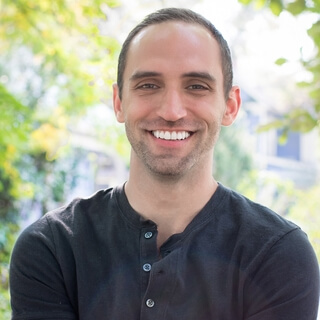
Welcome back to another episode of the Energy Matters podcast and we have a special one for you today.
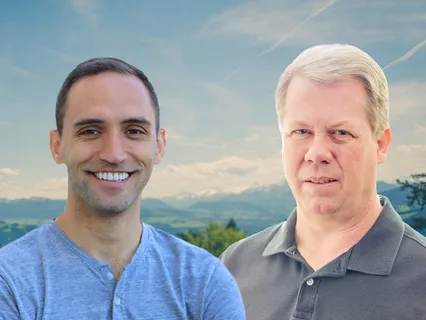
I am flanked by my co-host,
Cody Edner.
Welcome,
Cody.
Hey,
Everybody.
Thank you,
David.
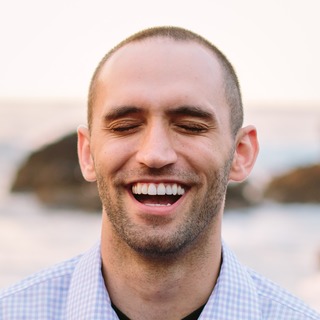
And we have Dr.
Dean Raden on the podcast today.
He's the chief scientist at the Institute of Noetic Sciences,
Which actually was started originally by a NASA astronaut,
Edgar Mitchell.
Actually I have this story right,
He was coming back to Earth from space and he had this incredible feeling of oneness and connectedness to the universe,
This kind of awakening that happened to him just out of nowhere,
Seemingly out of nowhere anyway.
And he came back to Earth and decided he wanted to understand consciousness more,
Which eventually gave birth to this Institute.
And that's where Dr.
Dean Raden comes in and this guy has a bio like no other.
He's got on Wikipedia,
A very short bio,
Short bio and an extended bio.
His short bio is he held appointments at AT&T Bell Labs,
Princeton,
University of Edinburgh,
Stanford Research Institute.
He's written over 250 articles and he has some great books.
And the one we're here to talk about today is his book,
Real Magic.
I just finished it and I absolutely loved it.
Dr.
Raden does some incredible research into intuitive and spiritual abilities,
Psychic abilities,
Some pretty wild stuff that me and Cody are really into.
Put on your psychic seatbelt because we're going for a ride.
Let's do it.
Dr.
Dean Raden.
Everybody welcome to the Energy Matters podcast.
We have a very,
Very special guest for you today.
Dr.
Dean Raden,
The chief scientist of the Institute of Noetic Sciences.
Welcome Dean.
Thank you.
And of course,
Cody Edner,
Co-host here.
Hey everybody.
Dean,
I want to start with a quote from your book from Arthur C.
Clarke.
He says,
The only way of discovering the limits of the possible is to venture a little way past them into the impossible.
And that's,
I think,
What you've been doing your entire career and especially with this new book,
Real Magic.
Can we start by you telling us a bit about the book and why you wrote it?
Well,
The book is called Real Magic because it's about real magic.
A magician would put a K at the end of magic.
I decided not to do that because it unfortunately has connotations that are usually considered negative by many people.
The other reason is that the editor I work with at Penguin Random House has a very good sense of what it is that will attract people.
And so while the book is about magic,
It's really a book about science and philosophy.
So if I use either word science or philosophy anywhere in the title,
No one would look at it.
So the editor is quite smart about what he does.
And he came up with the title Real Magic and I said,
Okay,
Let's go with it.
And you said,
Dean,
I've heard you say that for 39 of the 40 years that you've been doing this research that you did not think of yourself as studying magic and only in the last year,
Right before you started this book,
That you started to think of it as magic.
Can you explain that a little bit more?
Yeah,
It's true that I've been studying psychic phenomena for over 40 years now.
And when you're working in a controversial field like that as a scientist,
You're always on a seesaw balancing your credibility.
So they've learned that while there probably is overlaps between reports of UFOs,
Especially contacts with creatures from UFOs and parapsychology,
We don't talk about UFOs or contact with ETs or anything like that because in the public's mind,
It starts mixing anomalies and it becomes an explosive mixture after a while.
So we don't touch things outside of a very limited band in order to maintain credibility,
Even though these phenomena are everywhere basically in all lots of different contexts.
So if someone had said then,
Well,
You're doing magic,
That would sound crazy to me.
So in fact,
A couple of years ago,
A big book was published called Handbook of Parapsychology for the 21st Century.
It has something like 40 or 50 articles written in the academic style in this big format book,
Which is the state of the art in parapsychology.
The word magic does not appear in the index.
Our anthropologist colleagues have been trying to get us to pay attention to indigenous practices forever,
Because it's an important part of anthropology.
But we've collectively decided,
No.
We'll pay attention to it in an academic sense,
But not seriously.
So that changed for me when my last book was called Supernormal and it was about the Eastern esoteric practice of yoga.
And so the yoga practice from a classical perspective,
The yoga sutras,
Is interesting because the book of classical yoga has an entire section devoted to the cities,
Which is the yogic version of psychic phenomena,
Basically.
So it's not simply that it's talking about the cities,
But it gives recipes for how to do the cities.
And this is part of yoga and meditation.
So the current book,
Real Magic,
Is about the Western esoteric tradition.
And so this was just balancing the Eastern side with the Western lore.
And the moment you begin to do that,
You immediately run up against tales of magic.
So all of the esoteric traditions,
Starting from shamanism to Pythagoras and Hermeticism and Neoplatonism and the whole shebang,
Up to the present day,
It's all about magic.
And so I started looking into what do people mean by magic and then matching it against what we study in parapsychology.
And to my somewhat surprise,
Not too surprised,
Somewhat,
There's an exact one-to-one match.
Magical practices is what parapsychology has been studying by another name.
And you say in your book there are three branches of magic.
So we have divination,
Force of will,
And if I'm pronouncing this right,
Theurgy.
Can you explain these three branches of magic that you go into?
So divination is perception through space or time.
The stereotyped image is looking at a crystal ball or looking at a mirror or tarot cards or you name it,
Lots of things.
So that's one part of it.
That's part of the practice.
The other part is something I call force of will.
It doesn't,
There are lots of different names that are used in magical practice,
But I use force of will because it suggests what's going on.
It's that your intention has a certain force to it and can manipulate the world.
That's the popular way of thinking about magic,
Harry Potter-like magic.
And then the third is theurgy,
Which is a combination of two Greek words,
Theo meaning god-like and urgee meaning work.
So the god work here is communicating with spirits.
So in each category,
Perception through space or time,
Your intention affecting the physical world and communicating with,
Or at least in the case of parapsychology,
Studying the possibility of independent spirits,
That's the match.
It's one to one.
There's actually nothing left out of that match at all.
Oh,
Interesting.
That's incredible.
You know,
You mentioned in your book too,
And we all kind of know this,
That magic is portrayed and exaggerated into these big terms in movies.
And whenever they kind of usurp a word and make it something that's not,
Then it makes it hard to use it.
Like,
You know,
You're saying you can't really use it as a researcher.
And yet magic is also,
As a practitioner of energy awareness,
Meditation,
That kind of thing,
It's a very subtle part of the world,
Right?
It's kind of touching the subtle part of the world.
So why should we care about that?
What is the argument?
I mean,
I have my own,
But what have you discovered about the importance of that level of awareness,
Bringing it to people and how we might use it to better life?
That's several different questions combined.
So why should we be interested in concepts like magic?
One is that it suggests that we have capacities that are associated with consciousness that are either not being talked about or are being dismissed as not being feasible or plausible.
And all of those capacities,
Like any capacity that we have,
It's like we all decide we're going to suddenly stop hearing.
We're all going to just turn our hearing off.
It won't matter.
So that would be stupid.
It restricts our ability to interact with reality.
So magic in a sense can be thought of as another set of senses,
Both a way to perceive the world and a way to interact in the world.
And to simply cut that off because we decided to taboo and we don't want to talk about it,
That restricts who and what we are.
So that's one reason.
Another reason is that from the Western secular viewpoint,
Which is basically everywhere in the world now,
Even people who are very religious actually hold a Western viewpoint because civilization is constructed around it.
There's still some countries out there that are theocracies and they live in a kind of different bubble,
Different way of viewing the world.
But the vast majority of people in the educated West,
Let's say,
Live within a certain worldview.
That worldview,
Which is materialism,
Has been extremely successful,
Which is why we can do this podcast with us all in different locations.
And that's pretty good.
So that we can't deny that materialism is valuable as a way of thinking about reality.
The question is,
Is that all there is?
What is typically taught is,
Yeah,
That's it.
We're in a material universe.
That's all that there is.
And that design of a worldview is nihilistic.
It means that the universe is pointless.
Everything is random.
There's no meaning to anything.
What you do doesn't actually matter.
You're going to die,
You're dead.
And that's the end of it.
That leads to a way that people will live,
Which in a larger sense,
It leads to a model of civilization.
And so in a larger context,
If materialism is completely correct,
Then the best that you can possibly do as an individual is to die with the most toys.
And it gives rise to this crazy inequity that we see where something like 10 people own half of the wealth in the entire world.
That doesn't seem right.
If you look through the cycles within history and that cycle always ends up in disaster.
So we're clearly heading towards that and that's not a good sign.
The other thing is that nihilistic universe also leads to the notion that dying with the most toys means use everything you possibly can as quickly as you can,
Which is not sustainable.
And we're seeing the consequences of that now as well.
So we have pragmatic reasons,
Philosophical reasons,
And then of course there are scientific and scholarly reasons that are related to the big questions.
The big questions of who am I,
Why are we here and all that.
Well those are questions about the nature of reality and our role in it.
And so when magic is saying,
Just like psychic phenomena actually are implying,
Our normal way,
Our everyday way of viewing reality is not complete.
So for a scientist or a scholar,
That's not a surprising thing to say,
But for a lot of people who don't care about science or philosophy or scholarship or whatever,
It might be surprising because most people are fully engaged in the everyday world until something massive happens when they start thinking about mortality and the big questions.
And then knowing the nature of reality and our role in it becomes extremely important.
And you can have a smorgasbord of reality stories that you pick from.
My own version of it is to go through science because it is something that can be checked.
I'm a natural skeptic like most scientists are,
And I prefer to be able to check for myself that the reality story that I'm adopting is actually true.
A long-winded answer to a complex question.
How did you decide at a certain point in your career,
Because I know you were an electrical engineer,
You have a degree in transpersonal psychology.
How did you decide at a certain point that you wanted to study psychic phenomena,
Psych phenomena,
Parapsychology?
Actually my doctorate is in psychology.
It's in psychology,
Wow.
Yeah,
Not transpersonal.
When I graduated,
There was no transpersonal psychology.
How did I decide to do this?
Because if you take the one billion children who have read Harry Potter and became enthralled with it and are now adults,
Some of them are going to think,
I wonder if that stuff is real.
Or you can say take the billion children who read science fiction a lot when they were children or fairy tales.
Some of them are going to think that seems more like than fantasy.
It seems like they're talking about something real here.
For most people who get that sense,
And I was one of them,
That there's something real underneath this.
It's very similar to when Joseph Campbell was talking about mythology.
The reason why mythology works is because it contains a kernel of truth underneath it.
It's presented in the form of allegory and stories and so on,
But there's something real about it.
Well,
The same is true for fairy tales.
Fairy tales are allegories that are very similar to mythology.
They oftentimes capture some element of truth.
Same is true with science fiction.
Same is true with the magical literature.
The only difference that I guess that I did that many did not is I wasn't willing to accept a story without testing it.
I was curious about whether these phenomena are real,
Originally psychic phenomena,
But magical as well.
I started testing it.
You wanted to put Harry Potter in the lab and see what he could do.
Yeah.
I wanted to test it.
Besides primarily being involved in music from age five to 25,
I was on the concert violinist track,
I also had spent a lot of time as a kid with little science kits and with making electronic circuits and all that.
I always liked to make stuff,
Which is again related to this idea of I don't want to just be given something.
I want to know how it works.
I want to build it as well.
So that's the engineering side.
The psychology side was useful in retrospect because it also gives you tools and methods for evaluating whether something is real or not,
Especially things that are related to the mind.
So it kind of all came together,
I suppose.
I've heard you say that even in psychology,
Often what they're studying is behavior and it's still almost not the inner world and that you were really,
Even as a child,
Really interested in the depths of the inner world.
Was there a moment when you were a kid where you had this thought or this idea of like what's really going on on the inside?
Was there an impetus,
An outside impetus like your parents or what happened?
How did that come about?
I don't know.
There wasn't any specific event that I remember.
What I do know is that for the 20 years that I was playing the violin,
My music stand,
Almost from the very beginning,
Was a message that my teacher put up there and it just left it there that said,
Learn to listen.
So that is for a stringed musician or musician using a non-fretted stringed instrument,
Your intonation,
You have to listen otherwise it's not going to work very well.
So for many,
Many years,
I have this message in front of me for hours a day saying,
Learn to listen.
And you do spend a lot of time in a recursive loop learning to listen to whether what you're doing is correct or not.
So my guess is that maybe somewhere along the line after your body learns how to do the mechanics of playing,
That your mind is free to do other things.
And oftentimes I would practice and read at the same time or practice and read and watch TV at the same time.
Because a lot of it is simply making your body like an athlete to do it on its own.
And if you can't get to that level,
You're not going to be a very good musician.
So it took maybe,
I don't know,
Three or four years before I started running on automatic pilot.
And so for many,
Many years,
I was doing what amounts to a kind of movement meditation without thinking of it in those terms.
But in retrospect,
It was probably something like that.
But that said,
I don't recall as a youth any experiences that I would call psychic.
No one in my family ever mentioned anything like that.
It was just not a topic of conversation.
It never came up.
The only place I ever saw it was in fairy tales and science fiction and in the amazing stories of the mystic masters of the East.
That's it.
Isn't it fascinating that the movies that all make the most money,
Marvel,
DC,
Harry Potter,
Matrix,
Lord of the Rings,
The Hobbit,
You name it,
They all have this magical lore to it.
And everyone is so attracted to Star Wars.
They're so attracted to it.
And then you present them with there's a possibility that that's real in your own life.
And they're like,
Whoa,
Whoa,
Whoa,
No way.
Actually no.
So you're right.
A lot of people do believe it.
Yeah,
A lot of people do believe it.
And we know that that's the case because the books on affirmations,
Law of attraction,
That sort of thing,
They're extremely popular.
So we did a survey.
This came out after the book was already in the bag.
So it's not in the book.
We did a survey among the general population and among scientists and engineers to simply ask which of 25 different kinds of psychic experiences have you experienced?
Not that you believe in it or not,
But whether you have experienced it.
So among,
There are actually three groups.
The third group was psychic enthusiasts,
Which were members of ions who are at work.
So we have something like 50,
000 members of ions.
And so they answered the question.
And then for the general population and scientists and engineers,
We hired a company that gives you a broad based listing of emails of people who will respond to questionnaires.
So they've already vetted the demographics.
So among ions members,
99% said that they had experienced at least one of 25 different phenomena,
And on average 13.
Not surprisingly,
They were interested in the psychic phenomena.
The general public said 94% had at least one of the 25 phenomena,
Of which 7.
7% on average,
Or 7.
7 out of the 25 on average.
So what was the one that was most common?
Was there one that stood out?
It probably something like gut feelings.
Gut feelings.
Yeah.
What we might call gut feelings that later came true.
Not just a feeling,
But a feeling that came true.
So then the question is,
Well,
What do scientists and engineers say?
Because typically our stereotype of a scientist or engineer is somebody who says this is nonsense.
But there the answer was 93% said that they have had experienced personally at least one of the 25.
And on average they said eight.
So it was actually slightly more than the general public,
Eight out of 25.
So this basically says that we are told in public to deny any interest in this sort of thing,
But it's absolutely not true.
The vast majority of people,
Including scientists and engineers,
Are very interested in these things.
And actually experience it firsthand.
Have experience.
Crazy.
Why do you think the mind just wants to deny it?
Or do you think it's culture?
I mean,
Is it in the individual that we kind of struggle and deny it?
Is it bigger than that?
Is it cultural?
Where is that coming from?
Some of it is cultural for sure.
When I go to India or Malaysia or anywhere in Southeast Asia,
Everyone accepts this stuff.
In fact,
It's a paradoxical because it's so well accepted that in the academic world nobody wants to study it because why bother?
It's like air.
Why would anyone even want to study this stuff?
In the West,
Meaning primarily the United States or North America,
It is taboo.
It's one of those things you don't talk about in public and that's so people don't.
Part of it is related to fear.
So the United States is one of the most religious countries in the world.
We don't often think of ourselves in that way,
But we're saturated with many,
Many different varieties of religious belief,
Including some of the most fundamentalist beliefs.
So in the most fundamental religions,
Magic,
Psychic phenomena are considered evil or demonic.
You can trace why that is so.
I talk about this in the book,
That it's basically for social control reasons that you simply declare don't do magic because it's demonic.
You'll go blind.
At least you'll go blind.
And everyone you ever know will go blind at the same time.
So part of it is also then not just religious oriented fear,
But fear of loss of sovereignty.
So a lot of people don't like the idea at all that someone can know everything,
Even your secret things that you don't want people to know about.
So who wants that?
Right.
I mean,
We all get flustered by thinking that somebody got a hold of our Facebook page.
We're here talking about much worse than that.
It's not just what you have written down somewhere,
But what's in your head and in your past and in your future and on and on and on.
So it generates fear.
So that's one of the reasons the taboo is sustained.
And the other reason is that our spokespeople for science,
There are a couple of big name scientists who are always the ones who are asked about scientific questions.
Almost all of them will say that ESP and that sort of thing is impossible.
Like it's scientifically impossible,
Therefore it doesn't exist.
Or anybody who talks about it is either delusional or intentionally fraudulent.
And the media echoes that.
And so that becomes a story and nobody wants to push against that story.
So it also sustains the taboo.
And the situation is very different in other countries.
So this is like a U.
S.
Centric thing.
Yeah,
Thing.
Yeah.
Interesting.
Correct me if I'm wrong,
That 75% of Americans believe in some kind of phenomenon,
Like whether it's ghost,
Telepathy,
Clairsentience,
Yet there's only 0.
001% of scientists doing any research on this kind of phenomenon.
That is much easier to get a PhD with a dissertation on Buffy the vampire slayer than it is to get a dissertation on whether telepathy is actually real.
That's right.
And that is because of how taboo this is.
Yeah.
Yeah,
Well,
Because popular culture is fine.
You don't have to talk about whether vampires are real or anything of that,
As you're talking about the way that culture incorporates these things.
Exactly.
Yeah.
And so Dean,
You've written,
I think it's five or six books now,
Over 250 peer-reviewed articles.
You've got so much research out there,
40 years of research out there.
And after all this research and exploring all of this different phenomenon,
Is there something that stands out to you?
Where if you could just say to people,
Look at this one thing,
If you don't believe anything else,
Look at this one study or look at this one ability that people seem to have and study this more and it will change your mind.
And I know that like telepathy tends to stand out as something that's more easily replicatable than a lot of the others.
Is there something that you would point to and go,
To at least look at that?
I've given up on trying to convince anybody of anything.
And realistically,
I don't have to because as we just already said,
90% of people have had these experiences.
Right.
So the only reason why it would be useful to break the taboo is because I know that there are people who are in prominent positions within the major funding agencies,
Both private and public funding agencies who would love to fund this stuff,
But can't because of the social contract that we have.
So to try to convince any random person is a complete waste of time.
So I don't even try to do that.
What I do is if I'm invited to speak to people who are in positions of authority,
Who can make decisions,
Then I'll be happy to try to persuade them that there's something interesting going on.
Oftentimes they are persuaded,
But they fully understand the taboo and they're not willing to go against it.
So this is in many ways a public relations question.
It's the,
You know,
The,
How do you get people to accept same sex marriage?
Well,
The idea of it's been around for a long,
Long time,
And it took decades of work by lots of people in order to bring it to a point in the social construct where suddenly now it's okay.
And another example is the Me Too movement.
Right.
So this has been,
This kind of thing has been going on forever with women.
Now it is suddenly,
It reaches a threshold and then the dam breaks.
Something like that is going to happen with this taboo as well,
Because this taboo is very similar to many others that are sustained for reasons of status quo and that sort of thing.
But if it's a real phenomenon,
If it's something real going on and it's meaningful for people,
The taboo eventually breaks.
Interesting.
I mean,
I play my role in it by writing books and doing podcasts and whatever eventually it makes a difference.
And so one example is that the,
About a week ago,
The end of May of 2018,
A major article came out in a journal called American Psychologist.
So American Psychologist is the flagship journal of the American Psychological Association.
So this is the academic mainstream organization for psychologists,
Academic psychologists.
And if something is published in American Psychologists,
It means it has floated to the top of everything that psychologists should know.
And the mainstream takes,
Watches that.
So there's a major article by a colleague of mine from the University of Lund in Sweden talking about the evidence for psychic phenomena.
So he talks about 10 meta-analyses,
Which together is roughly a thousand different published experiments and concludes that based on the empirical data that these phenomena are as real as any other phenomena that is studied in psychology.
So that's big.
Because the breaking of the taboo means that the editors of these big journals have to become comfortable enough with what is being said so that they could support it themselves.
So we've reached some threshold there.
That's incredible.
Wow.
I'm going to have to look up that article.
Maybe we can put it in the show notes.
Dino,
I would love to talk about something that really caught me in your book that I loved.
You talked a bit about extraterrestrials and if they were looking,
I'm paraphrasing,
But if they were looking down at us at earth,
They would essentially find a species that mostly is sleeping,
Pooping,
And crying.
I highlighted that in my Kindle.
I'm bringing this up to Dean.
And at the same time,
You say that something that you really would love to explore would be other galaxies,
Other universes,
Other places.
And if we were to wait for warp drive to work out,
It would take forever,
Essentially.
I guess the question really is,
If you do have these abilities that I mean,
Cody,
We teach this stuff,
We do experience these abilities.
Do you find yourself in a place where you believe that we can communicate to other beings out there and to traverse the universe with our minds and explore in a way that doesn't involve taking our bodies with us?
Sure.
Right.
The best we can do on earth with clairvoyance tests is one side of the earth to the other.
We know that that works.
So it's a little bit like testing the notion of non-locality in an entanglement sense.
We're limited by the distance on earth,
But we have every reason to believe that entanglement is not limited by space at all.
And I think likewise,
There's no reason to believe that psychic perception is limited by space or time.
In fact,
I think it is actually outside of space and time.
And that's the reason why it works in the first place.
Right.
And to go a little deeper into that,
If you could travel anywhere and experience any kind of civilization,
Is there a certain type that you would want to experience?
Is there a place you'd want to go with a certain kind of civilization that you could explore and be a part of that's different than this one?
What is it?
Because I have the same thing,
Dean.
I've had it since I was a kid.
I was like,
I'm going to go to every corner of the universe.
I want to see everything.
And it drives me crazy that I'm stuck here with these sleeping,
Pooping,
Crying people.
Damn you all.
And I have to do those things as well.
And that's annoying.
And so yeah,
Is there something in particular that you would want to see out there?
Well,
I think the first thing I would do would be to reproduce the powers of ten movie.
I don't know that one.
Oh yeah.
This is a very famous thing where you start with a picture of somebody just like in a park laying down on a towel.
And the first thing that the movie would do is go 10 times closer to the person and end up like in a cell and then 10 times in and 10 times in and keep doing that over and over again until we get down to the smallest that we can imagine.
And of course in the process,
Visually it's very nice because you get to see in greater,
Greater detail,
But what we end up with at the bottom is like quarks or something like that.
And then it reverses and it goes back in the other way.
So in the other way,
You end up eventually at the universe,
Like the whole universe.
So yeah,
Look up powers of ten movie and it's very nice to see visually.
So I would want to do that and experience that,
Not just watch it,
But like be there because there's no reason like you shouldn't be able to do that with clairvoyance either.
In fact,
I have colleagues who have been doing things like using remote viewing to look at viruses like viruses that we're not quite sure what they are yet and trying to clairvoyantly see the virus and describe it.
And then later we can check to see whether or not it's correct.
You actually have colleagues working on that.
Yeah.
And of course then the opposite is true also.
It's just that if you go too far out in the universe,
It's hard to verify whether what you're seeing is correct.
So we're still kind of limited into normal human size scale of space and time in order to verify it.
But I know plenty of remote viewers who were looking at Mars a million years ago and describing all kinds of interesting things.
Maybe it's true,
Maybe it's not true.
That's why we're constrained in terms of the verification.
So at some point,
If we get super good at clairvoyance,
Then in a sense you don't need verification for yourself personally.
You go into a dreamy state,
We're in a state where you go into a dreamy state and you just start exploring Andromeda to see what is there to look at.
So I don't have any particular place in space because I don't know it well enough to be able to say,
Yeah,
I want to go to that vacation spot because that one is really good.
I'm more interested in,
And by the way,
My interest in going to other galaxies is partially as a result of traveling around the earth.
So some people extensively travel and I haven't done that,
But I've been to many places and you learn very quickly what the scope of what it's like to be on earth is.
And that,
Combined with travel logs and nice documentaries and stuff,
I kind of get it.
So I get the earth.
I'm ready for something very different.
Yeah.
I've experienced something more.
Yeah.
And maybe it's more primitive than we are.
Maybe it's way more advanced.
But the reason why I have a bit in one of the chapters about search for extraterrestrial intelligence is that there you have people getting millions,
Sometimes $10 million a year to use what amounts to radio to look for extraterrestrial people.
And I think it's the stupidest thing in the world.
Like if you talk about a waste of money,
Holy smoke.
So the idea of it is great.
We want to know if we're alone in the universe or not.
So the idea is great.
But what I would do if I had that money is say,
Okay,
We're going to get really good clairvoyance and test them a lot and make sure that they're really good,
Figure out a way when they're hot,
And then send their minds off into space to contact the others out there who could be millions of years ahead of us and are very likely to not care a whit about radio,
But hear a lot about consciousness.
And in fact,
As I said in the book,
That they will not even admit us into any kind of organization that there may be out there until we have surpassed the threshold of being the pooping babies.
Right.
You know,
You don't invite babies to join the UN.
That's basically it.
That's right.
Mikio Kaku talks about,
Sorry,
Cody,
Like the zero civilization,
One,
The two.
And we're still at a zero,
Essentially.
We're still consuming the resources of the planet we live on to survive.
Right.
Which I think that is another argument for why to break that taboo,
Because we're never going to get to that place of expanded consciousness until it's okay to really talk about the experiences,
Explore them openly,
Put money into researching them,
All kinds of things like that.
So we're talking about psychic experience on a lot of different levels now,
And awareness and consciousness.
So there's kind of consciousness,
There's the experience of pure awareness,
There's our inner relationship with physical reality.
How do you talk about the difference of consciousness,
Awareness,
Pure awareness,
Psychic perception,
Physical reality,
And the relationship between all of those?
Do you have a kind of a way to talk to that for people?
It depends on who I'm talking to.
So if it's a general population that doesn't think very much about consciousness,
It's not something to think about.
I'll say what I'm talking about is awareness.
It's your internal experience,
The thing that you say me,
The thing that's experiencing something.
We're talking to people who are meditators or spend a lot of time thinking about this,
And you have to be more careful in how you talk about it because awareness is part of it,
Just pure awareness,
But there are many,
Many layers to consciousness.
Like everyday conscious awareness,
Many,
Many altered states,
Deep levels of consciousness.
In the book I talk about consciousness with a little C and a big C to make the distinction there.
So it depends on who I'm talking to and how much they've thought about this issue.
Well,
In our audience it's probably mostly meditators and people who are aware that energy is real,
So you might call it magic,
And they're wanting to learn how to interact more from that level of awareness in the world and to bring that into the world.
I think they're keenly aware that just as important as behavior in the world is where you're coming from energetically in the world,
That energy really matters in not only our perception,
But our interactions and the outcome.
So I think that is our audience,
The people that would really be interested in all those subtle levels of how you describe consciousness and how we relate to it and how we can get to some of those levels even.
Well,
There in the magical traditions you want to get to the state of gnosis,
And the exact same state I think is what the yogis would say is samadhi,
And in English would say it's a mystical or union experience.
So that's where the cities occur in the yogic sense,
And that's where magic happens,
And that's probably where psychic phenomena originate as well.
And so from that level of depth,
And as meditators,
You would know after a while,
You begin to strip away the monkey mind and you are able to maintain awareness down to levels that we would normally be asleep,
And then before sleep,
And deeper and deeper,
And the further quote down you go,
The more you're in contact with what I think is the fabric of reality.
So I guess I often talk about,
Or I talk about in the book certainly about idealism as the philosophical basis for what I think is going on,
More than materialism,
But it's actually not quite idealism,
It would be more like a neutral monism.
So the distinction is that an idealist,
A pure absolute idealist would say that the only thing that exists is mind or consciousness,
And I'll make the distinction there,
Mind is like the cognitive apparatus that we enjoy in our head.
Consciousness is deeper than that.
Like you wouldn't have mind without conscious awareness,
But you could have a computer simulating mind like stuff,
That's what AI is doing.
But if you,
A pure idealist has a problem in that if everything exists only in consciousness,
Then it leads to solipsism in the sense that the only consciousness you can really know about is yours from a conventional perspective,
In which case you're not going to be able to see anything good for it,
But just thought the stuff that you read about what to work.
So you can put yourself under a blanket and make everything go away,
But it doesn't really make everything go away.
So neutral monism is saying that.
It works for a two year old.
It does.
Yes.
And we are two year olds.
So that's why it works.
Neutral monism is saying that there is a reality to the material world.
We can't deny that it works too well.
It has certain laws,
It has regularities and so on.
Maybe it won't be the same way in a billion years,
But at least for now it's pretty stable.
And so it's something we have to contend with,
But consciousness is real too.
So they're both real.
So this sounds like it's like dualist like mind and matter two real things.
And that the problem with dualism is that they,
How do you,
How do they interact if they're really different from each other?
They can't.
So neutral monism is saying that they're arising out of something that the arising out of I'm saying is pure consciousness.
So it's not mind like it's just woven into the fabric of reality is this idea of sentience or awareness or something.
And so things arise out of that.
That turns out to be very similar to the,
The Indian philosophy called Sankhya,
Which is yogic philosophy.
And then all of these things come out of basic,
Out of mystical experience and people try to interpret what their mystical experience meant.
So neutral monism is one way to do it.
And I guess it's something like that is what I'm thinking of in terms of,
Of how to think about why deep states of consciousness can give rise to manipulation of the world,
For example,
Because if the physical world is emerging out of something deep and we are built out of that stuff,
Then we have the capacity to go that deep.
If in the right frame of mind or consciousness,
You are the universe.
Right.
So that sounds crazy from an everyday perspective,
But that is what all of the esoteric traditions say.
And I've had a couple of experiences.
So I started meditating in 1970 when TM was on a lot of college campuses.
So I took my first training course in 1970 and,
And meditated different styles on and off,
But mainly have been using Vipassana.
Which today is of course popularized as mindfulness.
So in roughly 40 or 50 years worth of meditation experience,
I can say I've maybe have experienced something like Samadhi or a Gnostic state,
Maybe about four minutes.
So I'm not talented,
I guess,
Because I've practiced quite a bit,
But I find it very difficult to get in to consciously get into that state.
All of the cases of where I felt like I had reached as far down as I could possibly get were spontaneous.
Whereas if you want to be a magician,
You have to do something to get there or at least to approach it.
Right.
So you can almost imagine that if it's this,
Here's the surface level and there's the bottom,
That the further down that you can get to that bottom state,
The stronger your,
Intentions and magical practices and whatever the stronger it gets.
And if you can reach all the way to the bottom,
If you want it to,
In principle,
You can create a universe.
Fortunately,
It doesn't happen that often.
Otherwise.
And I was also fortunate that there's many,
Any form of sentience has a capacity to do this.
And so you imagine that there's millions of meditators who are kind of floating down here somewhere,
Their ability to do things becomes stronger and stronger.
Fortunately,
Meditation tends to calm people down.
And they're thinking they don't,
They're not going to get into road rage.
But if,
If it did happen,
You had a civilization where people were very easily able to reach these deep States.
One would hope that they would learn very quickly about the golden rule and,
And avoid black magic because it'll come back to the world.
And then it becomes a very popular thing to do.
We would last as a civilization for about a week.
Because every instance of road rage would suddenly blow up highways and people being angry with each other would,
Would just stop everything.
So it's a very,
It's a very popular thing to do.
And so we would have a civilization that would be able to do that.
And then it would become a very popular thing to do.
And then it would become a very popular thing to do.
And then it would become a very popular thing to do.
And then it would become a very popular thing to do.
And so we would last as a civilization for about a week.
And then every instance of road rage would suddenly blow up highways and people being angry with each other would,
Would just stop everything.
So there,
It's fortunate that it is not that easy to get down into these very deep States.
And so,
Because their consciousness is limited,
The amount of power that we have with these cities is also limited.
They'll start to expand with that consciousness.
Right.
We ran another survey with meditators asking about various kinds of psychic abilities and synchronicities and asked them did they think of which of these kinds of things from synchronicities of broad range of psychic phenomena,
Which of these did they feel had been enhanced as a result of the meditative practice?
75% of people said yes.
So that matches the meditation lore as well.
Right.
You start reaching deeper states and these things become front instead of living in the background somewhere.
Yeah.
And it seems in my experience that there is a kind of a safeguard to go into that level and tapping into that power because things like competition or ill will tend to pull you back up into the level of mind or emotion and which pulls you away from that deeper state.
So on your journey down into that deeper state,
You do have to become calmer.
You do have to kind of strip away those ideas of power and control and competitiveness to really get to the deeper states.
So it's kind of interesting.
Yeah.
And yeah,
Me and Cody have been,
Our entire careers are teaching people how to develop their abilities in a safe,
Healthy way,
In a grounded way.
They don't go tripping out.
A lot of people come to us and are already tripping out.
They're like,
Hey,
They're already open.
These visions,
These feelings,
These precognitive dreams.
I have no idea how to manage them or deal with the energy of them.
And it's very rare to find a place where you can create a safe structure for someone to take those experiences and develop them in a way where they feel more sane and more grounded.
Usually it's the opposite.
And I live in Los Angeles where you'll see a lot of the opposite.
It just gets more out there,
More trippy,
More ungrounded.
I think our whole goal of what we teach in the podcast is to create a safe grounded space for these kinds of abilities to begin to really flourish.
And I think the research you're doing,
Dean,
Is amazing in helping people recognize that they can approach this.
Right.
And to apply them in a practical sense,
In a practical way,
To enhance your own inner and outer life,
Really.
Dean,
Have you ever had a precognitive dream of some kind that came true or a sense of gut feeling,
A vision,
And then it came true?
Oh yeah,
Many,
Many cases.
All of my psychic experiences started long after I actually started studying these phenomena in the laboratory.
So I think part of the reason is I just wasn't paying attention when I was younger.
And so when you started learning that there is such a thing as precognition and dreams,
Well then you can pay attention to it and say,
Oh,
Well that's what that was.
Whereas beforehand you might completely dismiss it as like that's meaningless.
So one example is I woke up and I have a peculiar sense of vividness when I know it's a precognitive dream.
Usually these dreams are about experiments that I'm planning to do.
So if I get that particular kind of dream where I have a knowing certainty in the dream that this is going to happen,
I still have to do the experiment because I have to close the causal loop.
But I know it's going to work.
And it always does.
It works exactly the way that the dream said it was going to work.
But one time I woke up from that kind of a dream and the dream was all about a car accident where the airbags inflated and there was the dust in the air and had a very palpable feeling of being in an accident.
And so I was freaked out a little bit and in the morning I decided to drive to work a different way because the usual way I would drive is getting on the highway and you have a very short amount of time to get onto up to speed with the rest of the cars and it's dangerous.
So instead I went to a different entrance that had a stoplight and then you had a long road to get up onto the highway.
So I go to that place,
I'm sitting at the red light and suddenly bang,
Car's rear ended.
Only accident I've ever had but it wasn't my fault.
I was just sitting there.
So I brought the car to the body shop to get it fixed.
I was telling the guy about this because I figured he hears a lot of accident stories.
I said well I had a dream of this but it wasn't anywhere near as bad as the dream and he said well maybe you saved yourself from a much worse condition but something had to happen otherwise you wouldn't have the dream in the first place which makes a lot of sense.
So it's as though you can navigate the future if you're paying close attention to your future that you could have gone in this direction which would have been a very serious accident or slightly deflect it in such a way so that it was basically just a fender bender which it was.
Because the alternative is if you completely avoided it well then where did that dream come from?
It was like a future that never happened and so I suppose it's possible if the future is completely probabilistic.
It seems more likely to me though that when you have a precognition that it's you encountering your future in some way.
The nature of that future is not yet fixed but something about it has to still be there otherwise you wouldn't have had the emotional response to make it one of those particularly vivid dreams.
I had a dream of a plane going down and it didn't crash and I woke up and I was really disturbed by it and I texted Cody.
This is before we were really friends.
I knew him but I just decided to text him about it and he goes man I just got off a plane it was going down.
What happened?
We depressurized and the things came down you had to put them on your face which like very rarely happened and I was like I have to text Cody about this one.
Well that's a good point that sometimes you can get a vivid dream about somebody else's experience.
Yeah absolutely so if you're listening to this and that happens to you you are definitely not alone.
You're a very big club.
That's so fascinating Dean.
I'm sure you have dozens.
I can't imagine the amount of these stories that you've heard from people because I'm sure everyone who sees you is like Dr.
Raden let me tell you about my telepathic experience with me and this ghost.
It's true I hear a lot of stories which unfortunately is that most of the time it is either preceded or followed by the phrase and I've never told anyone about this before.
So that's a pity because the people have been holding on to these things and clearly it's very meaningful to them and they don't feel comfortable talking about it because they'll think that somebody will think they're weird.
Well maybe it is weird so what?
It's funny because they don't feel comfortable talking about it but when someone does share that kind of story too because you know in our work we get it all the time as well they're very excited.
They're animated.
It's like the most exciting thing that's happened to them.
I mean wouldn't life be so much more exciting if we could kind of live in that mystery and that magic and see it every day and interact with it?
It seems to me it would.
Yeah and validate it.
And Dean so in terms of seeing the future I've heard you talk about how maybe there's a possibility that like one neuron I think you were saying a neuron can see the in a quantum level see the probabilistic future and kind of bring information back which can create like a cascade into the body.
So you've done studies where the screen will be black right and then you'll put an emotional picture on but the physical body of the person will react to that picture with that emotion before the image comes on the screen.
I was really fascinated about this one part though.
Can you say a little bit more on the possibility of maybe if it is it a neuron even I'm not sure if I got this right they could maybe see into the probabilistic future.
The thing about the neuron is that a single neuron firing can cascade up to the so it reaches the level of awareness.
So a single neuron especially the synapse the synapses around the neuron are operating at the quantum scale.
So it opens a possibility that there are phenomena which are not locked into the space time around each neuron in the entire brain and the rest of the body as well.
Which if you imagine that there's a degree of perception that is happening at the level of these elementary cells then yeah we're sampling the future constantly like every possible future all the time.
Not much of it ever reaches the level of awareness but it can.
So when I oftentimes people will want to have a hundred percent accurate three-dimensional high-definition movie like experiences and that's not usually what happens.
We hear that from our students a lot.
Why do I get that experience?
Why is it not obvious?
I see it like I do with my eyes and it's like don't.
So what I try to teach people then is to pay more attention to your to what your body is doing because your body is a reflection of deep mind.
You can get there if you're meditating you can you can consciously get what's happening but where if we're walking around like a normal person it's very difficult to sustain that.
But what you can get is your stomach feels funny,
Your heartbeat is faster,
So your eye is twitching.
Something gives away this the term is interiorception.
So an interesting study was done that was published about a year ago now that looked at day traders and to look at the profit of day traders in correlation to their degree of interiorception.
They used a very simple measure which was can you can you feel your heartbeat?
And so the way the test works is every time you feel your heartbeat you press a button and so they of course they're monitoring your heartbeat at the same time.
If it turns out you're accurate you really can't feel your heartbeat you have better interiorception.
Those day traders did significantly better than people who could not detect their heartbeat.
So this then becomes a very simple way of saying you want to really increase your ability to feel what's happening around you learn to pay attention to what your body's trying to tell you.
I love that and so and Dean so learn to pay attention to what your body's trying to tell you is a great way to start to develop some of your abilities and sensitivity.
Would you have any other advice for anyone listening who's like you know I'm starting to meditate I want to open up to my abilities how do I take my next step?
Is there a practice or a meditation that works for you?
What works for me is Vipassana.
Vipassana.
Because it is it feels less demanding than something like the TM method or a mantra approach.
I spend most of my time and in my day job doing analytical work and writing and things like that.
So I'm always doing high concentration and I don't want to do meditation that does high concentration because it's a bus man's holiday basically I don't want to do that.
So I'm trying to do the complete opposite and Vipassana in many ways is the complete opposite of concentration meditation.
It's open field with no thoughts at all.
So for me that's very relaxing.
And it just feels better.
The other thing that I'm finding useful actually is high intensity interval training.
I'm too impatient to go to a gym for an hour and a half.
I can do the equivalent of all of that in 20 minutes.
It's completely exhausting but it's designed to be that.
What exactly do you do?
So high intensity interval training is a very relaxing thing.
It's a very effective way to do it.
It's a very effective way to do it.
So I think that's the thing about high intensity interval training is there are some versions of it are very short like 10 minutes and it's you do something that is either strength training or running in place like crazy or doing as many sit-ups as you possibly can for short periods like 20 or 30 seconds and then you relax.
So if you look up HIIT,
You'll find lots of information on this and the reason why it attracted me is because the health benefits are approximately the same for a 20 minute workout or even less than 20 minutes as it would be for an hour and a half.
Well I'm not going to spend an hour and a half doing this but I want the health benefits.
The secondary effect of doing a 20 minute flat out exercise is that the calm down period afterwards feels to me very much like a meditation because your body is totally flat and your mind calms down immediately afterwards.
So my routine then in the morning is about 40 minutes.
That's about as much as I can spend in the morning to do anything.
It's the high intensity workout followed by about 20 minutes of calming down and letting my mind settle down as well and for me it works because everybody has their own thing that they're going to do.
So I get a physical and mental workout in about 40 minutes every morning.
That's wonderful.
Well we're about out of time Dean but thank you so much for being here,
For sharing all of your incredible wisdom and is there one place where all the listeners can find you?
You could start at DeanRayden.
Org or RealMagicBook.
Com.
They both end up in the same place.
I'm on Facebook and Twitter and LinkedIn and I know there are a couple of other platforms.
I would spend all day long just being on all of them.
I went on all of them so I'm just on those main three.
Great.
Where I watch most of your stuff is YouTube.
You've got so much incredible stuff on YouTube.
Yeah so a lot of the podcasts I do end up on YouTube.
I did a search the other day for my name on YouTube and it's like 10,
000 things.
I did too.
I don't understand how it can be that many because I certainly have not done 10,
000 interviews.
Everyone tags you though.
Every time someone posts something that has the word psychic in it they probably tag you.
And one big ask for you Energy Matters listeners if you read RealMagic,
Do the really hard next step of reviewing it on Amazon.
Yeah even a sentence.
Like once.
Like five words.
That intention will ripple out into the etheric mind of the planet and do us all good.
And also for people who read the book there is a hidden sigil in the book.
There is?
Yes.
There is a chapter when talking about how to do practical magic and talk about sigils but there's a sigil hidden somewhere else in the book.
Now I have to find it.
Okay.
Okay.
Thanks so much for being here Dr.
Dean Raden.
Really appreciate your time.
My pleasure.
Thank you so much.
Hey everybody that was Dr.
Dean Raden and you know the thing that I so enjoyed about that conversation is David and I are both practitioners so we go inward through meditation.
We move into these different states of consciousness.
We don't necessarily study these states of consciousness but we study these states of consciousness and to hear a scientific perspective on these experiences and to hear about some of these different experiments that are going on is really intriguing to me and kind of fun to talk about and listen to.
It's also very validating to the things that we are already kind of practicing having experience with and awareness of and have been sharing as teachers for years.
So this conversation could have gone on way longer.
We did not go as deep as David was hoping we were going to go into extraterrestrials.
He loves that stuff.
Because I am one.
We didn't get a chance to talk that much about the Institute for Noetic Sciences which is something I am going to explore a little bit more online.
What an interesting space to kind of delve a little bit deeper into psychic awareness.
Yeah,
That was a good one.
Yeah and you can find Dr.
Dean Raden at deanraden.
Org.
All of his books are on Amazon and he's got a gazillion videos on YouTube.
One of which will be this episode.
It's also in video if you're listening via audio.
So check it out.
And that was incredible.
For me that was like meeting Captain Kirk or Jean-Luc Picard.
If you don't know what that means,
You better get up to date on your nerd-dom.
My inner Star Trek nerd,
My inner psychic nerd is so fulfilled right now.
I can barely speak.
All I want is ice cream and I'm done for the day.
I'm so happy.
And if you'd like to find out more about working with energy,
Working with magic really,
Now that he's kind of demystified that word,
I am not afraid to use it.
Check out our Awakening to Energy series or our Intuitive Mastery series which are now available through our website,
Energymatterspodcast.
Com.
And as you can imagine,
It was really easy for me and Cody to get that content up on our website.
It took like minutes.
It took like eight months for us to get it together.
We finally did.
So,
You know,
There it is.
Thank you guys so much for listening as always.
That was Dr.
Dean Raden.
Meditate,
Enjoy yourself.
And we'll see you next time.
Bye everybody.