We are going to be learning how to do diaphragmatic or deep belly breathing.
A certain way of breathing that can quickly and effectively settle the nervous system,
Bringing your body into a state of rest and digest.
For the purposes of our learning,
We'll be doing this in three different positions.
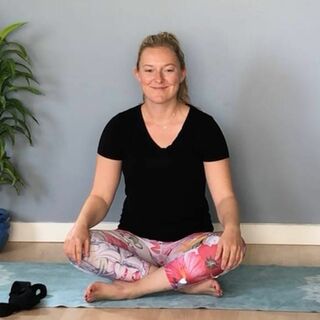
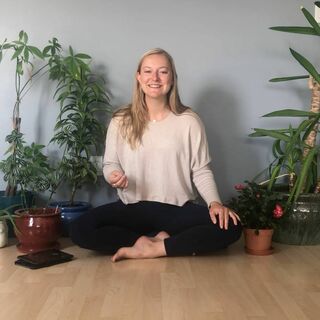
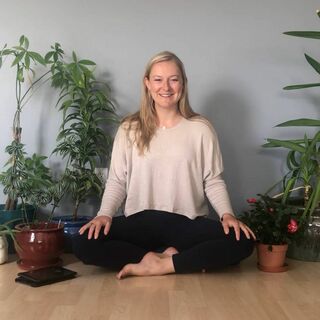
So we will start in sitting,
Then in lying down on your back,
And finally in a child's pose.
So make sure you have a comfortable and quiet area to allow yourself to take those three positions.
Feel free to pause the track and to come back to it when you're ready.
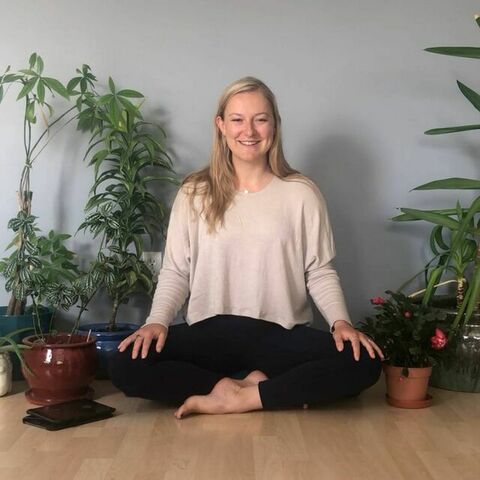
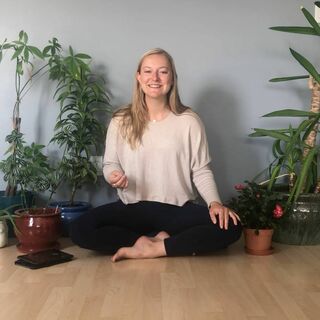
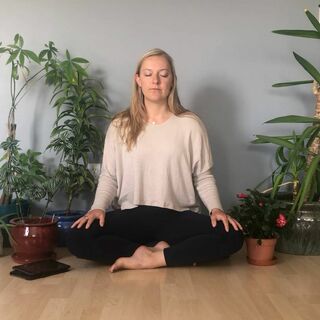
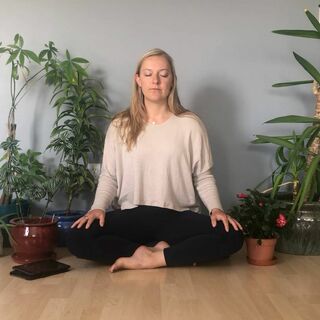
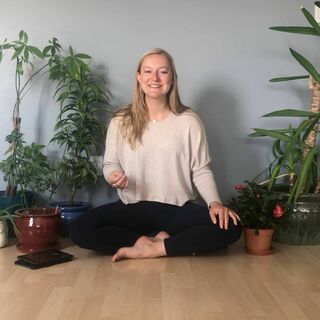
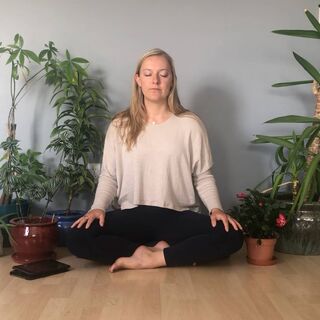
We'll start in seated,
Either on a chair or on a meditation cushion or bolster.
And as you get settled,
Close your eyes or soften your gaze,
Taking a moment to bring your attention to the breath without trying to change anything just yet.
Now place one hand on your chest and the other hand on your abdomen.
As you inhale,
Let your breath travel deeply into your belly,
Allowing it to expand like a balloon.
With every inhale,
Feel your abdomen rise,
Gently pushing against your hand.
As you exhale,
Let the breath release gently,
Feeling your abdomen fall away from your hand.
And over time,
You'll be able to feel little to no movement in the chest,
But if this is your first time,
There might still be a noticeable amount of movement at the chest,
And maybe the movement in the abdomen is still quite subtle.
Don't worry if this is the case,
It's perfectly okay,
And with practice you will find this changes quite quickly.
Continue this mindful breathing,
Focusing on the sensation of your breath in your belly.
Inhaling,
Expanding the abdomen,
And exhaling,
Allowing it to naturally contract.
As much as you can,
Allowing any tension or stress to melt away with each breath.
And take five more diaphragmatic breaths,
Just like this.
Now,
We'll transition into lying on our backs.
I find trying to feel the breath in this position can be a lot easier,
A lot more noticeable,
So I hope this is some encouragement if it felt like a bit of a struggle in sitting.
Again,
Feel free to pause the track if you need a little more time to get settled in this new position.
Once you find yourself lying on your back,
Just like we started in our seat,
First find the natural breath,
So nothing to change or manipulate just yet.
Feel the support of the ground beneath you,
And the breath in the body.
Then go ahead and rest your palms on your abdomen,
Leaving your elbows resting on the ground so your arms and shoulders can be relaxed.
Come into your deep belly breathing now,
Inhaling,
Allowing your belly to rise,
And exhale,
Slowly feeling the abdomen fall.
Noticing the gentle rhythm of your breath,
And if you'd like,
You might even imagine the breath flowing in and out like the tide,
Bringing a sense of calm and relaxation with every cycle.
If your mind starts to wander,
Gently bring your focus back to the rise and fall of your belly once again.
And take three more cycles of deep belly breathing here.
Now we'll move into Child's Pose.
So take a moment to move into this shape,
And if Child's Pose is new to you,
Simply come into a kneeling position with your shins together and your knees and ankles touching.
Then bring the hips towards the heels and walk your hands forward,
Lowering the upper body on top of the legs,
And resting your forehead on the ground,
Hands outstretched in front of you.
Now we try this position because,
Again,
It can really help us to get in touch with the subtle sensation of the abdomen expanding,
Because in this shape we have the resistance of our thighs against our bellies.
And again,
If you need a few extra minutes to get into your Child's Pose,
Simply pausing the track and picking it up when you're ready.
Just like in the previous two positions,
Resting with your natural breath first,
Without having to make any changes to the rate or rhythm of your breath.
And as you're ready,
Coming into that deep belly or diaphragmatic breathing in your Child's Pose.
As you find yourself in your Child's Pose,
Breathing in,
Letting your breath expand into your abdomen like a balloon.
You might even feel a nice stretch or release in the low back as you take these big,
Deep belly breaths in this shape.
As you exhale,
Release any tension,
Allowing your body to surrender to the earth.
Take five more diaphragmatic or deep belly breaths here.
Getting curious about how this same breath is going to affect you in your Child's Pose.
Curious about how this same breath feels so different in this shape.
Bringing your practice to a close,
Slowly making your way out of Child's Pose.
I know when this is new it can feel a little awkward or strained,
But trust me,
If you stick with this every day,
You will feel such a big difference in this practice after just two weeks.
And make it as easy as possible for yourself.
I suggest taking 10 deep belly breaths in bed.
This takes no extra time since you're simply waiting for sleep to come anyways.
And as I mentioned at the beginning of our time together,
This type of breathing brings us into rest and digest or the parasympathetic state.
And this is the nervous system state required to sleep.
So it will help you get some good quality sleep sooner.