Welcome to your digital detox breathwork session.
In our hyper-connected world constant screen time can and does overstimulate the mind and body.
The barrage of notifications and blue light keeps us alert often triggering a mild fight-or-flight response in the nervous system.
It's no surprise that being always on can leave us feeling anxious tense or drained.
A digital detox intentionally taking a break from devices gives your nervous system a chance to rebalance.
Research shows that unplugging for a while can reduce stress and even improve sleep and mood.
It can also lead to sharper focus without constant pings and distractions.
Your brain can concentrate better on whatever you choose to do.
Today we'll use the power of breath to amplify that detox effect.
Nasal breathing is a simple but powerful tool to calm your nervous system and sharpen your focus naturally.
Breathing through your nose filters and warms the air and it encourages you to breathe more deeply with your diaphragm your biggest core and breathing muscle.
This style of slow diaphragmatic breathing activates the parasympathetic nervous system your rest and digest mode helping to downregulate stress and induce calm.
Slower breathing with extended exhales can even stimulate the vagus nerve which tells the body it's safe to relax.
In other words mindful nasal breathing helps switch off the fight-or-flight alarm and brings in a sense of peace.
Remember with nasal breathing and these slower lower techniques carbon dioxide increases in the blood triggering the vagus nerve also to assist with that slowing of the heart rate.
During this 25 minute session we'll combine a break from tech with guided breath work to reset your mind and body.
I'll guide you through gentle breathing exercises.
We'll start by grounding ourselves then move into slow belly breathing with longer exhales and brief pauses.
As you breathe notice your body shifting from high alert to a calmer state.
By the end you will feel more present and refocused as if you've hit a reset button for your nervous system.
Now before we begin while this is a digital detox we do require your device to guide you through this session.
However we ask that you turn off all other alerts notifications and alarms.
Place your phone in do not disturb or airplane mode allowing only this recording to come through.
This ensures that your attention and nervous system can fully relax uninterrupted.
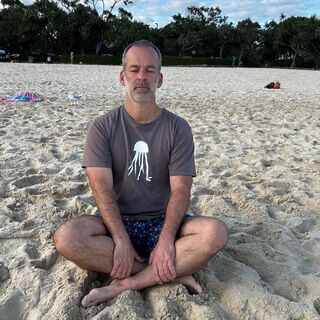
Take a moment to get comfortable find a quiet space where you won't be disturbed by any screens or notifications.
You can sit upright in a chair or on the floor with a cushion or even lay down.
Anywhere you can relax your shoulders and breathe freely.
Softly close your eyes or lower your gaze and let's begin our digital detox through breath.
Remember the mouth is closed and the tongue rests softly on the roof of the mouth.
Start by bringing your awareness to your breath.
Inhale and exhale gently through your nose noticing the cool air as you breathe in and the warmer air as you breathe out.
Feel the weight of your body against the chair or floor allowing it to be fully supported.
Now do a slow body scan.
Begin at the top of your head and mentally sweep your attention downward.
Soften your forehead and eyes,
Unclench your jaw,
Relax your neck and drop your shoulders away from your ears.
As you continue breathing feel your chest and belly rise on the inhale particularly your belly and watch it or feel it fall on the exhale.
Release any tightness in your hips and legs.
Let your hands rest easily.
By scanning your body this way you are grounding yourself in the present moment.
Letting go of tension bit by bit.
To enhance this even draw an imaginary line down the center of your body.
If you are distracted at any time come back to the line but also remember down that line is your nose,
Your airways,
It cuts down through your lungs and the middle of your diaphragm.
It is both a mental and physical reference point.
Place one hand on your belly just above your navel and the other on your chest.
Notice how you're breathing.
Guide the breath deeper.
As you inhale through your nose allow your belly to expand outward as if filling a balloon.
This means your diaphragm is pulling air deep into the lungs.
As you exhale through your nose feel your belly contract and fall gently.
Try to keep the hand on your chest relatively still and let the lower hand move with your belly.
This ensures you're using your diaphragm.
We'll now settle into slow breathing rhythm.
Inhale for a count of four and exhale for a count of six.
If the counts aren't exact that's ok.
Aim for a long smooth exhale longer than your inhale.
Breathing with a longer exhale than inhale helps engage your relaxation response.
Let's try it now.
Feel your abdomen rise on one two three four then let it fall on one two three four five six.
Continue this pacing and adjust the counts if needed to stay comfortable.
The key is a slow easy breath with an extended exhale.
As you breathe imagine inhaling a sense of calm and exhaling any stress or mental clutter from your digital day.
If your mind wanders perhaps thinking about emails or messages gently guide your focus back to the breathing count or the sensation of your hands moving or indeed the line you have drawn down the front of your body.
Each time you bring your attention back you're training your mind to be here and now improving your capacity to focus.
Feel free to sigh out any remaining tension while keeping your mouth closed.
With each passing breath you may notice your heart rate slowing and your muscles loosening.
Enjoy this simple act of breathing.
Nothing else to do nowhere else to be.
Now we'll deepen the practice by making our exhales even longer and slower adding a brief restful pause.
If you're comfortable lengthen your inhale slightly to about five and your exhale to a seven or an eight.
After you exhale pause for just a moment maybe two seconds of stillness before the next inhale.
Then breathe in gently and repeat.
Slow belly inhale unhurried extended exhale tiny pause.
These pauses at the end of the exhale are like mini rests for your mind.
Notice the quiet at the bottom of the breath and that your body is still okay in that silence.
This technique of elongating the exhale and pausing briefly helps to settle the nervous system.
Long exhales particularly are very soothing.
They tend to signal via the vagus nerve that it's time to relax slowing your heart rate and releasing tension.
Remember also pausing after the exhale allows more nitric oxide to build up in the nasal passages so that when you do inhale again it flushes down into your lungs and into your blood.
It is a powerful vasodilator assisting in increasing blood flow but also boosting and maintaining immunity levels.
Okay let's do a count before you continue through.
Inhale 2 3 4 5 exhale 2 3 4 5 6 7.
Pause and repeat.
Keep going for me.
Ensure you're not straining.
The breath should remain gentle.
If the hold or the longer exhale ever feels uncomfortable just return to an easier rhythm.
Signs that you are moving into rest and jest include warmth in the hands,
A build up of saliva in the mouth and also a need to maybe take a deeper breath.
As you settle in you may find a natural rhythm that feels like a slow wave flowing in and flowing out.
With each exhale imagine stress melting away,
Your body becoming heavier and more relaxed.
With each inhale imagine energy and fresh oxygen gently awakening your focus.
You are rebooting your system with every cycle of breath.
Clearing out the mental noise from screens and cultivating a calm alert mind.
While you breathe let's reinforce your present moment awareness.
Bring your attention to the subtle sensations,
The air touching your nostrils,
The expansion of your tummy,
The sound of your breath.
You might notice a sense of coolness in the nose on inhaling and a slight warmth on exhaling.
You may feel the warmth in the hands I've mentioned and most definitely the build up of saliva in the mouth.
Perhaps you feel your pulse calming.
If any thoughts about your phone,
Work or to do list pop up acknowledge them and let them float by and get back on centre to your breath.
Gently return focus to the here and now.
This inhale,
This exhale you're giving your mind a well deserved break.
By focusing on breathing you are practising concentration and letting your nervous system know it can shift out of doing mode into being mode.
When you are ready let go of the counting and any breath control.
Simply allow your breathing to return to its natural rhythm.
Notice if your natural breath now feels quieter or deeper than when we began.
Just observe it for a few moments in and out without any effort.
Begin to reawaken your body and mind slowly.
Wiggle your fingers and toes and on your next inhale invite a little more air in,
Maybe a slightly deeper breath.
Exhale naturally.
If your eyes have been closed you can open them slowly or keep them soft and unfocused.
Take this time to notice how you feel after the breathing practice.
Scan your mind and body gently.
If there is a bit more calm or clarity.
Perhaps your shoulders are more relaxed or your jaw is unclenched.
You might sense that the digital chatter in your mind has quietened down.
Even a short break from screens combined with conscious breathing can create this sense of relief and reset.
Now reflect on your experience.
You have just spent a sustained amount of time away from all devices focusing on your breath and body.
How did it feel to unplug and turn inward?
It might be useful to note any thoughts or realisations that arose.
If you have a journal nearby consider jotting down a few observations or how you feel right now.
Writing about your experience can help solidify the benefits.
Journaling has been shown to reduce stress and help process emotions by getting them out on paper.
For example you might write about any changes in your mood,
Any differences in how your mind feels compared to when you started or any intentions you have regarding your tech use after this section.
As you wrap up,
Thank yourself for taking this time to care for your wellbeing.
You have given your nervous system a chance to recuperate.
Setting even small daily digital boundaries like doing this breathing exercise instead of scrolling or taking short tech free breaks can make a difference in your stress levels.
Remind yourself that you have the power to pause and breathe anytime during your day.
The calm and focus you feel now is always just a few mindful breaths away.
Carry this sense of calm with you as you return to your day.
Whenever you face digital overwhelm or stress,
Remember this practice.
Unplug,
Breathe through your nose and ground yourself in the present.
Your mind will thank you for it.
Take one last deep,
Comfortable breath and gently conclude your practice.