Hello and welcome to this 15 minute breathwork session focused on relieving chronic stress.
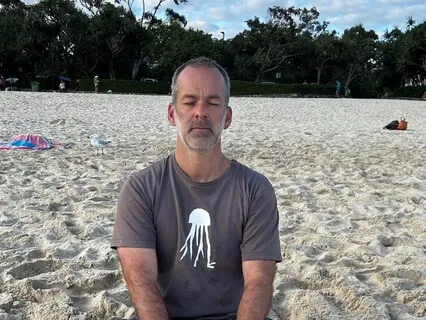
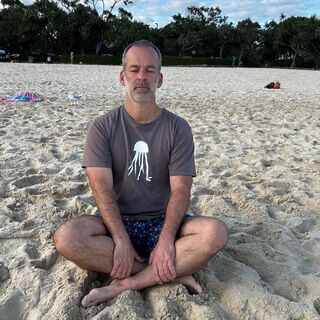
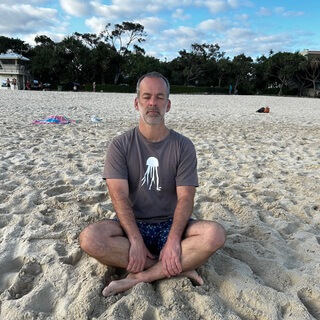
My name is Ross Pollard and I'll be guiding you through gentle breathing techniques to help calm your mind and body.
While I do this,
For me right now,
Could you please close your mouth,
Rest your tongue on the roof of your mouth and just breathe through your nose while you listen.
In today's fast paced world,
Stress has become incredibly common.
More than three-quarters of adults report physical or emotional symptoms of stress.
If you're feeling overwhelmed or tense,
Know that you are not alone.
As you breathe in and out of your nose,
Know this.
When we experience stress,
Our nervous system shifts into fight-or-flight mode.
The sympathetic nervous system,
The fight-or-flight side,
Revs up our heart rate,
Quickens our breathing and floods us with stress hormones like cortisol.
This response is meant to protect us from immediate threats but if it stays turned on it can leave us feeling anxious,
Drained and on constant alert.
Over time,
Being stuck in fight-or-flight can take a toll on our health,
Contributing to high blood pressure and even increasing risks of anxiety and depression.
Essentially,
Chronic stress can keep the alarm in our bodies ringing non-stop,
Dominating our nervous system and making it hard to find peace.
The good news is that we have a built-in tool to shift out of stress and into calm,
Our breath.
By breathing slowly and deeply through the nose,
We activate the rest and digest side of the nervous system,
The parasympathetic nervous system,
Which helps the body relax and recover.
Deep breathing,
Especially using the diaphragm,
Belly breathing,
Sends signals to your brain that it's okay to unwind.
In fact,
Diaphragmatic breathing triggers the body's relaxation response,
Slowing the heart rate and lowering stress hormones like cortisol and even adrenaline.
Research has shown that breathwork practices can significantly reduce stress and anxiety levels in participants,
Helping to counteract the effects of chronic stress.
As a former intensive care paramedic and a trained breathwork instructor,
I've seen firsthand how powerful these techniques can be.
Even in high-pressure emergency situations,
A few deep nasal intentional breaths can ground you and make you feel the difference.
This session is all about calming outcomes,
Not energizing or stimulating,
So everything we will do will be slow,
Gentle and soothing.
There's no need to force anything,
Just follow my voice and let your breath lead you towards relaxation.
Take a moment to make sure you are comfortable,
Keep the mouth closed as we've said,
Breathing in and out of the nose.
You can stay seated or you can even lay down if you like,
Whatever helps you feel at ease.
Make sure you can fully relax your shoulders and abdomen.
When you're ready,
Let's begin our journey from fight-or-flight to rest and digest using the power of your breath.
Let's start by settling into belly breathing,
Also known as diaphragmatic breathing.
Begin by placing one hand on your belly right around your navel and if you'd like your other hand on your chest.
This will help you feel movement of your breath.
Gently allow your eyes to close or your gaze to avert so that it's comfortable for you.
Take a normal breath first and notice how you're breathing at this moment.
Don't change anything yet,
Just observe the rise and fall of your belly and chest.
Now inhale deeply through your nose,
Sending the air toward your belly.
Gently breathe in until you feel your belly expand under your hand.
You don't need to inhale to the point of strain,
Just a smooth steady breath in.
Feel your abdomen rising like a soft balloon inflating.
The hand on your chest should stay almost still while the hand on your belly rises with the in-breath.
This means you're engaging your diaphragm,
The large muscle beneath your lungs that drives healthy breathing.
When you're ready to exhale,
Breathe out slowly through your nose,
Allowing your belly to fall naturally.
Imagine a balloon gently deflating as you exhale.
There's no rush,
Let the exhale be long and unforced like a quiet sigh of relief.
Notice the hand on your belly sinking back down.
Ideally your exhale is a bit longer than your inhale,
But don't worry about counting,
Just focus on smooth complete exhale.
At the end of the exhale you might naturally pause for a brief moment,
That's okay.
Then when your body is ready for the next breath,
Smoothly inhale through the nose again,
Filling the belly.
Continue breathing in this way,
Inhaling through the nose into the belly and exhaling through the nose.
Keep the breaths gentle and comfortable.
If your mind wanders or you notice thoughts popping up,
Which is completely normal,
Kindly guide your attention back to the sensation of the hand on your belly rising and falling.
Each time you breathe in,
Think of inviting calm into your body.
Each time you breathe out,
Imagine you're releasing tension and stress.
With every cycle of breath,
You are signaling safety to your nervous system.
Remember,
Nasal breathing,
Breathing through the nose,
Has added benefits.
Breathing through your nose warms and filters the air and it helps your body regulate airflow more effectively than the mouth.
In fact,
Nose breathing produces a natural gas called nitric oxide,
Which helps your lungs absorb oxygen more efficiently.
With better oxygen uptake,
Your body and brain get the fuel they need to relax.
Nose breathing also naturally encourages a slower pace,
Which can lower stress hormones and activate your body's relaxation response.
So by keeping your mouth gently closed and using your nose,
You're enhancing the calming effects of this exercise.
As you breathe,
Feel your belly expanding on each inhale and softening on each exhale.
Try to make your breathing as smooth and quiet as possible.
If it helps,
You can imagine breathing in calm and breathing out stress.
Perhaps visualize the breath like a gentle ocean wave flowing in and then flowing out.
With each breath in,
You fill up with soothing energy.
With each breath out,
You wash away worry and tension.
Take your time with this.
Inhale,
Belly rises.
Exhale,
Belly falls.
You might notice your heart rate slowing down or your muscles loosening up.
This is your body shifting towards relaxation.
You may also notice saliva building up in your mouth,
Which means you're definitely moving into rest and digest.
Deep belly breathing engages the vagus nerve,
A key nerve that tells your body it's safe and time to relax and slows your heart rate down.
You're essentially telling your brain that it can switch off the alarm.
Blood pressure may start to drop and cortisol levels can decrease as you continue these slow breaths.
Just by doing this,
You are actively counteracting the stress response.
If you encounter any brief moments of discomfort,
Say a tight spot in your shoulders or a racing thought,
See if you can send your next breath there.
For example,
Breathe into the area of tension and imagine it softening.
And if your mind wanders again,
Which it might,
Gently bring back your focus to the feeling of your breath.
Every inhale is a new beginning,
Every exhale a chance to let go.
Let's do a few more belly breaths together.
Nice and easy.
Inhaling deeply through the nose,
Feeling the belly expand,
And exhaling slowly through the nose,
Feeling the belly contract.
With each breath,
You are nurturing a sense of calm.
Your body is learning that it can relax.
This style of breathing,
Slow through the nose,
Using the diaphragm,
Balances the levels of oxygen and carbon dioxide in your blood,
Improving oxygen delivery to your tissues.
In simpler terms,
You're making each breath count,
Nourishing your body with oxygen while keeping you calm and in control.
Remember,
If you breathe too much,
Too deep,
And too fast,
You're blowing off carbon dioxide,
Which is important.
Healthy levels of carbon dioxide help the body release more oxygen to the tissues.
Spend another minute or two breathing like this.
You might already notice that that fight-or-flight feelings are dialing down.
Maybe your mind feels a bit clearer and your body a bit heavier or more grounded.
That's a sign of parasympathetic rest-and-digest system taking over,
Which is exactly what we want.
Studies have found that even a few minutes of deep,
Slow breathing through the nose can significantly activate this relaxation response.
You are doing a great job simply by breathing.
You're shifting your biology toward calm.
The next part will deepen this relaxation even further by adding gentle pauses to our breath.
Now that you have a comfortable slow rhythm,
Let's explore gentle breath holds.
These are small,
Easy pauses in your breathing that can further quiet your mind and signal even more relaxation to your body.
If at any point this doesn't feel good or you start to feel out of breath,
Just return to normal breathing.
Always listen to your body and never strain.
The goal is still comfort and calm.
First,
Take a nice slow inhale through your nose,
Letting your belly rise as you've been doing.
Then exhale softly through your nose,
Emptying the lungs at a relaxed pace.
When you reach the end of the exhale,
Pause.
Hold your breath with empty lungs for just a moment.
Perhaps count two to three seconds in your mind or simply feel the stillness.
This isn't a contest to see how long you can hold.
It's a gentle pause.
Notice the quiet at the bottom of the exhale,
The sense of suspension.
After two to three seconds or whenever you feel the natural urge to breathe in,
Softly inhale through your nose again,
Filling your belly with air.
Your body may appreciate the inhale even more after that little pause.
Feel the satisfying refill of air.
Then once again,
Exhale slowly through your nose.
At the end of the exhale,
Pause for a couple of seconds in that comfortable emptiness.
Continue with this pattern.
Inhale,
Belly rises.
Exhale,
Belly falls.
Pause and inhale again.
These brief breath holds allow a tiny build-up of carbon dioxide in your blood,
Which might sound odd but it can actually encourage your blood vessels to relax and improve circulation.
In fact,
Using slight breath holds is a technique taught to help reset an overactive stress response and reduce anxious breathing habits.
You're basically training your body that it's okay to be without air for a moment,
That there's no emergency and this can further reduce feelings of panic or urgency.
While you hold your breath,
Keep everything else relaxed.
Your jaw,
Your shoulders,
Your belly.
You can think to yourself during the pause,
I am safe,
I am calm.
Notice that even in stillness,
You are in control and at ease.
When you resume breathing,
Do it gently.
There's no need to gasp or take a huge gulp of air.
A smooth,
Quiet inhale is all you need.
Your body will naturally draw in the right amount of air.
Let's do a few more cycles with these gentle breath holds.
As we finish up with the breath holds,
Allow your breathing to return to a normal,
Easy rhythm.
You can let go of the deliberate pauses now and just notice how your breath naturally feels.
Often practicing like this,
Your body will choose a slower,
Steadier breathing rhythm on its own.
Take a moment to appreciate how you feel right now.
You might sense more space in your breath,
More openness in your chest or a calmer heartbeat.
You may even feel a little bit of warmth or tingling,
Particularly in your hands.
That's the result of improved circulation and your nervous system shifting into a relaxed state.
Do you feel a bit lighter or more grounded?
Perhaps your muscles are more relaxed or you have a sense of inner peace.
Even if you feel just 10% more relaxed than before,
That's a wonderful step towards training your body how to cope with stress.
Before you move or open your eyes,
Take this opportunity to truly savor the calm you've created.
You have just guided your nervous system out of fight-or-flight into a state of balance and safety.
With each belly breath,
You are telling your brain that it could release the tension and turn on the relaxation response.
This practice is building your resilience.
The more you train with these calming breaths,
The more easily your body can find calm in the daily life.
Research suggests that regular breath work can improve stress resilience and reduce anxiety over time.
And you've just given yourself the gift of healing and reset.
Let's take one more deep nourishing breath together.
Breathe in gently through your nose all the way down to your body and exhale slowly through the nose,
Letting go of any remaining stress.
Feel the ground or chair supporting you as you breathe.
On your next inhale,
If you like,
Gently roll your shoulders or wiggle your fingers and toes,
Bringing some subtle movement back into your body.
As you exhale,
Relax again.
There's no rush.
When you feel ready,
You can slowly open your eyes if they were closed.
Try to carry this sense of calm and centeredness with you as you go on with your day.
Remember that at any time you can come back to your breath.
It's free,
Always available to help you find peace.
Even a few belly breaths at your desk or a short breath pause during a stressful moment can help reset your nervous system.
Just a few minutes of deep breathing can keep your vagus nerve active and bring you back into a state of calm.
Thank yourself for taking this time to care for your mental and physical health.
By doing this practice,
You've shown yourself that you matter and that you have the power to influence how you feel.
Continued calm is just a breath away.
Take this tranquility with you now and step back into your day with a steady grounded presence.
Whenever life starts to feel overwhelming,
Remember the techniques you practiced here.
Inhale and feel your belly rise.
Exhale and slowly maybe pause for a moment and then return to this peaceful state.
You've got this.
Proud of the work you've done today.
Thank you for joining me in this breathwork session.
Be kind to yourself and keep breathing right.
Stay well,
Breathe right and take care.