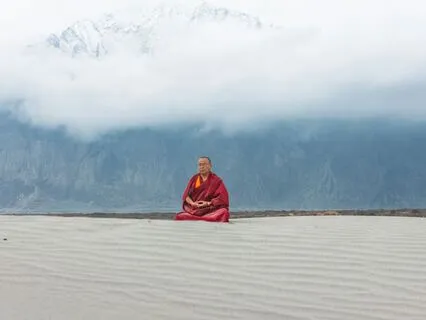
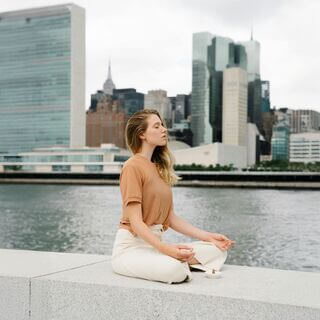
Starting a meditation habit is like starting any new habit.
Easy at the beginning,
Sketchy halfway through,
And eventually,
Second nature.
B.
J.
Fogg,
A Stanford University researcher and author of the book Tiny Habits,
Says that big behavioral change requires a high level of motivation that often can't be sustained.
Remember how you start every knee's day with a big,
Bold resolution,
Owning for it to be a distant memory by March 23rd?
Fogg says that to make a sustainable behavioral change,
We should think big,
But start small.
If we look at it through the lens of beginning a meditation habit,
A good place to begin is to commit to a time that feels achievable.
Five or ten minutes every single day.
We each have five or ten minutes in a day,
Right?
Often,
As a new meditator,
We can think that the longer meditations equal better meditations.
This is not true at the stage of a new practice.
For most of us,
Daily consistency is far better than occasional longer sits.
Besides,
You'll notice your awareness and concentration deepen from regular bouts of focused attention.
Begin with a commitment to sitting at least five minutes a day,
Uninterrupted.
Maybe even challenge yourself to get to three weeks.
Sometimes a habit forms in as little as three weeks.
Other times,
It can take three months,
Depending on how quickly you become accustomed to the new way of practice.
The second step to creating a meditation habit is to create the conditions that make practicing easy,
Maybe even fun.
One of the best ways to do this is to set up a meditation spot.
You may like to sit on a cushion in front of a candle,
A few photos of loved ones,
Or a statue,
Or something that inspires you to practice.
If you can be intentional with your space,
You'll feel like you are sitting for practice every single time you're there.
It will become your meditation spot,
And the energy of you feeling safe and comfortable will transpire into your practice.
So pick a spot that is as quiet as possible.
And I know this isn't always easy with roommates,
And partners,
And kids,
And dogs.
So just do the best that you can.
The third step is to find a comfortable posture.
If you need a sitting meditation,
You may like to begin with a chair,
And over time migrate to a block or a cushion.
There is no strict way to sit.
What's important is that you are comfortable and not in any kind of pain.
You may notice some discomfort when you first begin sitting,
But don't worry,
That's normal.
This will eventually pass the more comfortable you get sitting.
But of course,
If you are in pain,
Then please move.
Move as much as you need to.
You also have the option of lying down.
This is great.
Feel free to lie down on your back in a comfortable position without falling asleep.
That part's important.
Now that you have an intention in your mind,
Five to ten minutes of practice,
You have a meditation spot and a meditation seat,
You're ready to go about creating a practice.
The fourth step,
And perhaps the most important part of creating a meditation habit,
Is to couple your meditation practice with another activity.
We all have morning routines.
We just don't know it.
Maybe your normal routine is to wake up,
Brush your teeth,
Shower,
Coffee,
Read the paper.
Great.
Let's couple our meditation practice with one of those activities.
Let's use the example of brushing our teeth.
Every time when you wake up,
You go to the bathroom and you brush your teeth,
Follow that up with your five-minute meditation practice.
Or perhaps you like to run first thing in the morning.
Why don't you come home,
Stretch,
And do your five-minute meditation post-run?
Coupling your meditation practice with another habit that's already there is a surefire way to succeed.
The final step to creating a meditation habit is to reward yourself.
Rewarding yourself is the best way to acknowledge our dedication and send the feedback loop to the brain to tell us we've achieved something.
And this feels good.
You can reward yourself after your meditation with a nice warm cup of coffee.
Or you can track your meditations to see how far you have come from your very first meditation.
Or perhaps you and a friend could meditate together at the end of the week.
One of the best ways to reward yourself is to continuously remind yourself that each time you are sitting in meditation,
You are literally rewiring your brain to be happier,
Healthier,
For yourself and the world around you.