Hello and welcome.
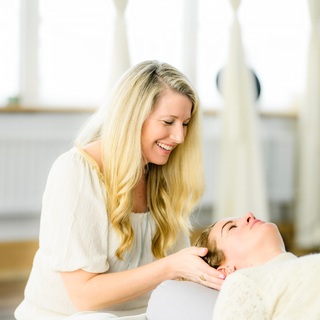
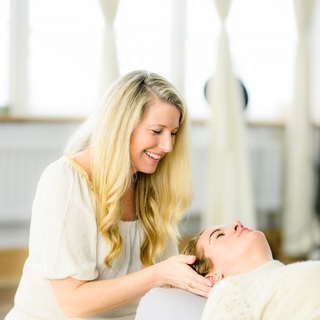
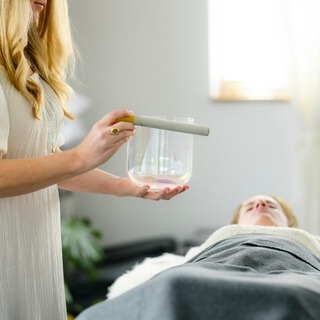
My name is Bailey and I am a nurse practitioner turned Reiki master teacher and sound healer.
So let's dive into these tips and tricks for you today.
Tip number one is to create a sleeping sanctuary in your bedroom.
So create a space that is clutter-free,
That feels really calming and relaxing and if you have any clutter or anything that's taking up a lot of space,
It may be a good time to go through things and see what you want to keep and what maybe you can donate or sell or give away just to create space and lightness in your sleeping environment.
And also so that when you get into bed,
You're not distracted by anything in your environment that you think,
Oh,
I need to go do that or,
Oh,
That's something I need to handle or manage.
To really keep your space,
Really almost like a sacred space for you to sleep.
And that also includes the light in your space.
So I would highly recommend if you don't have blackout curtains to get them.
And I also wanna say,
I'm gonna mention a few products that have helped me.
None of these are like affiliate links or anything.
They're just things that I wanna share with you that have really helped me in creating my own sleep routine and that I think maybe could help you or give you some ideas of things you could try if you haven't already.
And I would definitely recommend sleep or blackout curtains.
You can also use like an eye mask,
Which I use this when I am traveling and I'm not staying in a place that necessarily has blackout curtains,
Or I'll use it if I'm on an airplane or sometimes on the train.
And this is great for traveling,
But I wouldn't recommend relying on it all of the time because you actually have light receptors in your skin cells.
And so your body can sense the light if you're sleeping like in a bright room that even with the eye mask on.
So it's great to use the eye mask for shorter periods of time.
And if you're in a place where,
Say you can't use blackout curtains or install them,
Maybe you're renting or something,
Or it just doesn't work in the space that you live in,
An eye mask is a great option.
But if you can get blackout curtains,
They're really affordable.
And I would recommend that you hang them in a particular way,
Which in the design world,
We call it high and wide.
So hanging them slightly above the window,
Like the pole going slightly above the window and then slightly wider than the window.
So that way they cover any light that comes from the outside of the window.
And you get a lot better coverage that way.
So you could maybe hang it like six or eight inches above and then have it go out six or eight inches on the side.
That is something I definitely recommend and something that I have in my own bedroom.
And I live in Ireland and in the summertime,
It stays bright until almost 10,
30,
11.
So it's really,
Really important to have blackout curtains unless you wanna be up all night and then the sun starts,
It starts to get bright quite early in the morning as well,
Which is also nice,
But for sleep,
It's not always the best thing for us.
So that is number one.
And the second recommendation I have is to make sure that your sleeping environment temperature is on the cooler side.
There's been research that's shown that 65 degrees Fahrenheit or 18 degrees Celsius is the ideal sleeping temperature.
And I know that might not be possible for everyone in different parts of the world,
But like,
For example,
For me,
I have to crack the window.
Even in the winter time,
I keep the window cracked because also having a bit of fresh air can help keep the room feeling a bit cooler and the air less stagnant.
And for myself,
I know that really helps me.
So if whether you have air conditioning or you can crack a window,
I would recommend having a cooler environment,
Or it may mean switching out your blanket or your duvet from winter to summer if the temperature gets hotter.
So that is number two.
And tip number three would be to create a sleep routine or ritual.
So for example,
Something you could do and something that I do as well is to,
As I'm winding down in the evening after dinner,
Have a cup of,
Say,
Chamomile tea,
And at the same time,
Listen to some type of sound healing music or relaxing music.
So as far as sound healing frequencies,
The delta and beta frequencies are great to listen to at night because those are the brainwave states that we naturally go into as our body's starting to wind down.
So you can help your body start to kind of wind down by listening to those frequency music or that frequency of music.
You know,
It's a simple way to incorporate that into your routine,
And it really helps your body calm down because as your body listens to the sound healing frequencies,
It starts to attune itself to those frequencies.
So it really helps to mellow your system down and get you ready for bed.
And number four is to avoid screens,
Whether that's TV or cell phone,
Before you're going to sleep,
Which I know this can be a challenging one,
And also to try to keep your,
If you really struggle with sleep,
To keep your phone out of the bedroom because when we look at our phone,
You know,
Our phone is basically like a mini computer and it has all of our text messages,
All of our emails,
You know,
All of these stimulating items that when we look at them,
It gets us thinking about our to-do lists or,
You know,
Maybe something stressful in your life.
So this is something that I actually implemented for myself about a year ago,
And I really found a lot of benefit because prior to that,
I was using my cell phone for my alarm and my rain.
I listened to a rain sounds as I go to sleep or through the whole night,
And that's what really helps me fall asleep and stay asleep.
And that's another tip that,
You know,
Some people don't tolerate like background noise or white noises,
But that's something that you could also use to help you if you struggle falling asleep,
Like,
Especially if you're really sensitive to noises,
Which I am.
So if I hear something,
It can kind of make me perk up and be a little bit more alert.
And so the rain app helps to kind of drown out the background noise.
But what I found was having my phone right next to me in bed,
I would still be looking at like my email or social media,
Or,
You know,
Just different things on my phone that would kind of keep me stimulated.
And also when I would wake up in the morning,
That would be the first thing that I would look at.
So to help with that,
I bought what this device called a hatch.
And again,
This is not an advertisement.
I just have been using this and I love it.
I love how beautiful it is.
It looks,
I think it's so pretty,
Like sitting next to the bed,
But it's also really,
Really functional.
So it's actually an alarm clock.
And it also plays,
You can actually play sound healing music through it.
You can play different noises.
So I use this for my rain sounds all night and you can program it from your phone so that you can,
For example,
Like leave your phone in your kitchen and you can program it to turn the rain sounds on at a certain time and then have the alarm come on at a certain time as well.
And another thing that I really like about it is it's a gradual alarm.
So it mimics,
The reason why it's this shape is it mimics the light of the sun coming up in the morning to wake you up.
So it's also a really great thing for your nervous system because a lot of times,
When we wake up to an alarm that's really intense,
It's like a jolt to our nervous system,
Right out of the gate,
Getting up in the morning,
Which isn't really very good for us.
So it also allows us to wake up more slowly and naturally.
And it has a,
Mine is set so that I set the alarm,
Say for seven o'clock and at about 6.
45,
The light starts to come on.
So it starts to get brighter and brighter and brighter.
And you can actually pick which colors of the sunset you would like to have.
There's a few different options.
And then at seven o'clock,
The alarm comes on and mine is like a really gentle flute sound,
Which is really relaxing to wake up to.
And so then I don't have my phone as my alarm or my sound.
And I have to go into the kitchen to,
You know,
Get my phone,
Which is where I keep it plugged in or in my office where I keep it plugged in.
So I don't have my phone with me as I go to bed.
And then I don't have it with me when I wake up in the morning.
So this has been really helpful.
This particular one,
You know,
This is just one device.
I know there's other ones out there.
And this does have like a monthly membership,
I think,
That's like $5 or five euros a month.
I don't actually use that.
I just use it for the rain sounds and the alarm and keeping my phone out of the bedroom.
And it's really helped me.
I can really tell a difference in my mental health as well because I'm not looking at my email or social media or,
You know,
Just triggers on my phone that keep my mind going as I'm trying to go to sleep at night.
So if you struggle with overwhelm or stress or anxiety and especially find it hard to go to sleep at night,
You know,
Keeping your phone out of your bedroom can be really beneficial.
So that's another thing I wanted to share with you guys.
And tip number five is to start a self-Reiki practice as you go to sleep at night.
If you've already been attuned to Reiki and you are,
You know,
You have a self-Reiki practice,
Using your self-Reiki as you go to sleep is an amazing time to give yourself Reiki.
All you have to do is place,
You know,
One hand on your chest and one on your abdomen.
And this is what I do every night as I go to sleep.
And it is giving you the Reiki energy,
Which is so,
So healing and relaxing.
Reiki really helps to relax our nervous system.
It promotes healing on a physical,
Emotional,
Mental,
And spiritual level.
And it really also shifts our brainwave states from the more alert and active brainwave states,
Which is typically the beta brainwave states into the alpha and theta,
Which are helping the mind calm down.
And then eventually helps you slip into delta,
Which is the sleep state for brainwaves.
So it's a really great way to use your Reiki if you've already been attuned.
And if you haven't been attuned to Reiki,
It's something that I highly recommend if you struggle with stress,
Anxiety,
Or overwhelm,
Or sleep issues.
It's a great tool to have.
And you probably are aware I have my course,
Learn to Heal with Reiki,
Where I teach you mainly how to have your own self-practice.
As you go to sleep is a perfect time to listen to a Reiki video.
Now,
I know that might be tricky to do it without your phone in the bedroom.
So you kind of have to figure out what works for you.
Something that I've been experimenting with is I just bought this little MP3 player.
And so you can upload an audio track directly to this so that you don't have your phone in your bedroom.
And this was,
It was very cheap.
It was like 20 euros on Amazon,
I think.
So,
You know,
Something,
And there's actually probably cheaper ones out there as well.
So that's something you could do if you are wanting to listen to,
You know,
A Reiki meditation,
Or also Yoga Nidra is a great tool to use to help you fall asleep.
And again,
That's something you could upload to an MP3 player,
Which if you're not familiar with Yoga Nidra,
It's similar to a guided meditation.
And it focuses your mind on relaxing different parts of your body to kind of take you out of your thinking mind and get you more into your body and help you really relax.
Another thing you could do is listen to sound healing music as you fall asleep.
So that's another great tool,
Especially in the Delta frequency,
Because that is the brainwave state that we go into when we're sleeping.
So that is it for all of my tips.
I hope this helps you guys.
I know it's so frustrating when you can't fall asleep.
We're often in that,
You know,
Tired but wired state where we,
You know,
Feel like we need to sleep so much,
But our mind is going,
You know,
A million miles a minute.
The monkey mind is on.
So hopefully some of these tools and tricks and techniques can help you.
Thank you so very much for joining me.
I really enjoyed making this.
I would love to hear your comments below if you liked this,
If you found this helpful.
And yeah,
I'm just so appreciative and sending you guys so much love.
And I hope you have a beautiful rest of your day and take care.
Bye-bye.