Hello there.
Thank you so much for joining me for this continued reading of Anne of Avonlea,
The charming old novel from 1909 by Canadian author Lucy Maude Montgomery.
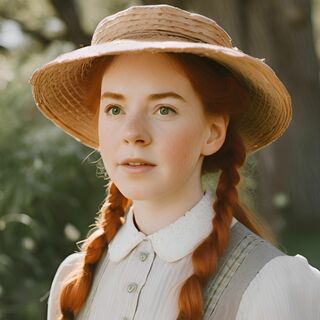
We are hearing about Anne Shirley,
The famous red-haired orphan from Anne of Green Gables,
As she's growing up.
She's now 16 and dealing with various challenges around community and friendship and becoming a schoolteacher.
Perhaps you've already heard the preceding parts of this story.
If you haven't and you'd like to,
You can certainly look for the playlist for Anne of Avonlea and you'll find all the parts there in order.
But for now,
Let's just take a moment here to have a nice deep exhale,
Letting go of the day,
Letting go of whichever baggage we might be bringing along with us into this moment.
For right now,
There's nowhere else we have to go,
Nothing else we have to be doing.
So we can just relax,
Get ourselves comfortable and enjoy the precious old novel of Anne of Avonlea.
Chapter 11.
Facts and fancies.
Teaching is really very interesting work,
Wrote Anne to a Queen's Academy chum.
Jane says she thinks it is monotonous,
But I don't find it so.
Something funny is almost sure to happen every day.
And the children say such amusing things.
Jane says she punishes her pupils when they make funny speeches,
Which is probably why she finds teaching monotonous.
This afternoon,
Little Jimmy Andrews was trying to spell speckled and couldn't manage it.
Well,
He said finally,
I can't spell it,
But I know what it means.
What?
I asked.
Sinclair Donnell's face,
Miss.
Sinclair is certainly very much freckled,
Although I try to prevent the others from commenting on it.
For I was freckled once and well,
Do I remember it?
But I don't think Sinclair minds.
It was because Jimmy called him Sinclair that Sinclair pounded him on the way home from school.
I heard of the pounding,
But not officially,
So I don't think I'll take any notice of it.
Yesterday,
I was trying to teach Lottie Wright to do addition.
I said,
If you had three candies in one hand and two in the other,
How many would you have altogether?
A mouthful,
Said Lottie.
And in the nature study class,
When I asked them to give me a good reason why toads shouldn't be killed,
Benji Sloan gravely answered,
Because it would rain the next day.
It's so hard not to laugh,
Stella.
I have to save up all my amusement until I get home,
And Marilla says it makes her nervous to hear wild shrieks of mirth proceeding from the East Gable without any apparent cause.
She says a man in Grafton went insane once,
And that was how it began.
Did you know that Thomas a Beckett was canonised as a snake?
Rose Bell says he was.
Also,
That William Tyndale wrote the New Testament.
Claude White says a glacier is a man who puts in window frames.
I think the most difficult thing in teaching,
As well as the most interesting,
Is to get the children to tell you their real thoughts about things.
One stormy day last week,
I gathered them around me at dinner hour and tried to get them to talk to me,
Just as if I were one of themselves.
I asked them to tell me the things they most wanted.
Some of the answers were commonplace enough.
Dolls,
Ponies and skates.
Others were decidedly original.
Hester Balter wanted to wear her Sunday dress every day and eat in the sitting room.
Hannibal wanted to be good without having to take any trouble about it.
Marjorie White,
Aged 10,
Wanted to be a widow.
Questioned why,
She gravely said that if you weren't married,
People called you an old maid,
And if you were,
Your husband bossed you.
But if you were a widow,
There'd be no danger of either.
Her most remarkable wish was Sally Bell's.
She wanted a honeymoon.
I asked her if she knew what it was and she said she thought it was an extra nice kind of bicycle,
Because her cousin in Montreal went on a honeymoon when he was married and he had always had the very latest in bicycles.
Another day,
I asked them all to tell me the naughtiest thing they had ever done.
I couldn't get the older ones to do so,
But the third class answered quite freely.
Eliza Bell had set fire to her aunt's carded rolls.
Asked if she meant to do it,
She said not altogether.
She just tried a little end to see how it would burn,
And the whole bundle blazed up in a jiffy.
Emerson Gillis had spent ten cents for candy when he should have put it in his missionary box.
Annetta Bell's worst crime was eating some blueberries that grew in the graveyard.
Willie White had slid down the sheep house roof a lot of times with his Sunday trousers on,
But I was punished for it because I had to wear patched pants to Sunday school all summer,
And when you're punished for a thing,
You don't have to repent of it,
Declared Willie.
I wish you could see some of their compositions.
So much do I wish it that I'll send you copies of some written recently.
Last week,
I told the fourth class I wanted them to write me letters about anything they pleased,
Adding by way of suggestion that they might tell me of some place they had visited or some interesting thing or person they had seen.
They were to write the letters on real notepaper,
Seal them in an envelope and address them to me,
All without any assistance from other people.
Last Friday morning,
I found a pile of letters on my desk,
And that evening I realised afresh that teaching has its pleasures as well as its pains.
Those compositions would atone for much.
Here is Ned Clay's.
Address,
Spelling and grammar as originally penned.
Miss Teacher Shirley.
Green Gables,
P.
E.
Island Can,
Birds.
Dear teacher,
I think I will write you a composition about birds.
Birds is very useful animals.
My cat catches birds.
His name is William,
But Pa calls him Tom.
He's all striped and he got one of his ears froze of last winter.
Only for that,
He would be a good looking cat.
My uncle has adopted a cat.
It come to his house one day and wouldn't go away and uncle says it has forgot more than most people ever knowed.
He lets it sleep on his rocking chair.
And my aunt says he thinks more of it than he does of his children.
That is not right.
We ought to be kind to cats and give them new milk,
But we ought not be better to them than to our children.
This is all I can think of,
So no more at present from Edward Blake Clay.
St Clair Donnell's is as usual short and to the point.
St Clair never wastes words.
I do not think he chose his subject or added the postscript out of malice,
A forethought.
It is just that he has not a great deal of tact or imagination.
Dear Miss Shirley,
You told us to describe something strange we have seen.
I will describe the Avonlea Hall.
It has two doors,
An inside one and an outside one.
It has six windows and a chimney.
It has two ends and two sides.
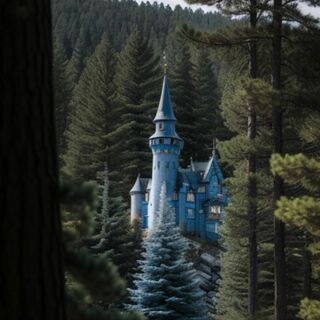
It is painted blue.
That is what makes it strange.
It is built on the lower Carmody Road.
It is the third most important building in Avonlea.
The others are the church and the blacksmith shop.
They hold debating clubs and lectures in it and concerts.
Yours truly,
Jacob Donnell.
P.
S.
The hall is a very bright blue.
Annette Bell's letter was quite long,
Which surprised me for writing essays is not Annette's forte and hers are generally as brief as St Clair's.
Annette is a quiet little puss and a model of good behaviour,
But there isn't a shadow of originality in her.
Here is her letter.
Dearest teacher,
I think I will write you a letter to tell you how much I love you.
I love you with my whole heart and soul and mind,
With all there is of me to love.
And I want to serve you forever.
It would be my highest privilege.
That is why I try so hard to be good in school and learn my lessons.
You are so beautiful,
My teacher.
Your voice is like music and your eyes are like pansies when the dew is on them.
You are like a tall,
Stately queen.
Your hair is like rippling gold.
Antony Pye says it is red,
But you needn't pay any attention to Antony.
I have only known you for a few months,
But I cannot realise that there was ever a time when I did not know you,
When you had not come into my life to bless and hallow it.
I will always look back to this year as the most wonderful in my life because it brought you to me.
Besides,
It's the year we moved to Avonlea from Newbridge.
My love for you has made my life very rich and it has kept me from much of harm and evil.
I owe this all to you,
My sweetest teacher.
I shall never forget how sweet you looked the time I saw you in that black dress with flowers in your hair.
I shall see you like that forever,
Even when we are both old and grey.
You will always be young and fair to me,
Dearest teacher.
I am thinking of you all the time,
In the morning and at the noontide and at the twilight.
I love you when you laugh and when you sigh,
Even when you look disdainful.
I never saw you look cross,
Though Antony Pye says you always look so,
But I don't wonder you look cross at him,
For he deserves it.
I love you in every dress.
You seem more adorable in each new dress than the last,
Dearest teacher.
Good night.
The sun has set and the stars are shining,
Stars that are as bright and beautiful as your eyes.
I kiss your hands and face,
My sweet.
May God watch over you and protect you from all harm.
Your affectionate pupil,
Annetta Bell.
This extraordinary letter puzzled me not a little.
I knew Annetta couldn't have composed it any more than she could fly.
When I went to school the next day,
I took her for a walk down to the brook at recess and asked her to tell me the truth about the letter.
Annetta cried and fessed up freely.
She said she had never written a letter and she didn't know how to or what to say,
But there was a bundle of love letters in her mother's top bureau drawer which had been written to her by an old beau.
It wasn't father,
Sobbed Annetta.
It was someone who was studying for a minister and so he could write lovely letters,
But Ma didn't marry him after all.
She said she couldn't make out what he was driving at half the time,
But I thought the letters were sweet and that I'd just copy things out of them here and there to write you.
I put teacher where he put lady and I put in something of my own when I could think of it and I changed some words.
I put dress in place of mood.
I didn't know just what a mood was,
But I supposed it was something to wear.
I didn't suppose you'd know the difference.
I don't see how you found out it wasn't all mine.
You must be awful clever teacher.
I told Annetta it was very wrong to copy another person's letter and pass it off as her own,
But I'm afraid that all Annetta repented of was being found out.
And I do love you teacher,
She sobbed.
It was all true,
Even if the minister wrote it first.
I do love you with all my heart.
It's very difficult to scold anybody properly under such circumstances.
Here is Barbara Shaw's letter.
I can't reproduce the blots of the original.
Dear teacher,
You said we might write about a visit.
I never visited but once.
It was at my Aunt Mary's last winter.
My Aunt Mary is a very particular woman and a great housekeeper.
The first night I was there,
We were at tea,
I knocked over a jug and broke it.
Aunt Mary said she had had that jug ever since she was married and nobody had ever broken it before.
When we got up,
I stepped on her dress and all the gathers tore out of the skirt.
The next morning when I got up,
I hit the pitcher against the basin and cracked them both and I upset a cup of tea on the table cloth at breakfast.
When I was helping Aunt Mary with the dinner dishes,
I dropped a china plate and it smashed.
That evening,
I fell downstairs and sprained my ankle and had to stay in bed for a week.
I heard Aunt Mary tell Uncle Joseph it was a mercy or I'd have broken everything in the house.
When I got better,
It was time to go home.
I don't like visiting very much.
I like going to school better,
Especially since I came to Avonlea.
Yours respectfully,
Barbara Shaw.
Willie Whites began,
Respected Miss,
I want to tell you about my very brave aunt.
She lives in Ontario and one day she went out to the barn and saw a dog in the yard.
The dog had no business there,
So she got a stick and whacked him hard and drove him into the barn and shut him up.
Pretty soon,
A man came looking for an imaginary lion.
Query,
Did Willie mean a menagerie lion?
That had run away from a circus and it turned out that the dog was a lion and my very brave aunt had drove him into the barn with a stick.
It was a wonder she was not et up,
But she was very brave.
Emerson Gillis says if she thought it was a dog,
She wasn't any braver than if it really was a dog.
But Emerson is jealous because he hasn't got a brave aunt himself,
Nothing but uncles.
I have kept the best for the last.
You laugh at me because I think Paul is a genius,
But I am sure his letter will convince you that he is a very uncommon child.
Paul lives away down near the shore with his grandmother and he has no playmates,
No real playmates.
You remember our school management professor told us that we must not have favourites among our pupils,
But I can't help loving Paul Irving,
The best of all mine.
I don't think it does any harm though,
For everybody loves Paul,
Even Mrs Lind who says she could never have believed she'd get so fond of a Yankee.
The other boys in school like him too,
There is nothing weak or girlish about him in spite of his dreams and fancies.
He is very manly and can hold his own in all games.
He fought Sinclair Donnell recently because Sinclair said the Union Jack was a way ahead of the Stars and Stripes as a flag.
The result was a drawn battle and a mutual agreement to respect each other's patriotism henceforth.
Sinclair says he can hit the hardest but Paul can hit the oftenest.
Paul's letter.
My dear teacher,
You told us we might write you about some interesting people we knew.
I think the most interesting people I know are my rock people,
And I mean to tell you about them.
I have never told anybody about them,
Except grandma and father,
But I would like to have you know about them because you understand things.
There are a great many people who do not understand things,
So there is no use in telling them.
My rock people live at the shore.
I used to visit them almost every evening before the winter came.
Now I can't go till spring,
But they will be there for people like that.
Never change.
That is the splendid thing about them.
Nora was the first one of them I got acquainted with,
And so I think I love her the best.
She lives in Andrews Cove and she has black hair and black eyes and she knows all about the mermaids and the water kelpies.
You ought to hear the stories she can tell.
Then there are the twin sailors.
They don't live anywhere.
They sail all the time,
But they often come ashore to talk to me.
They are a pair of jolly tars,
And they have seen everything in the world,
And more than what is in the world.
Do you know what happened?
The youngest twin sailor once,
He was sailing and he sailed right into a moon glade.
A moon glade is the track the full moon makes on the water when it is rising from the sea,
You know,
Teacher?
Well,
The youngest twin sailor sailed along the moon glade till he came right up to the moon and there was a little golden door in the moon and he opened it and sailed right through.
He had some wonderful adventures in the moon,
But it would make this letter too long to tell them.
Then there is the golden lady of the cave.
One day I found a big cave down on the shore and I went away in and after a while I found the golden lady.
She has golden hair right down to her feet and her dress is all glittering and glistening like gold that is alive,
And she has a golden harp and plays on it all day long.
You can hear the music any time along shore if you listen carefully,
But most people would think it was only the wind among the rocks.
I've never told Nora about the golden lady.
I was afraid it might hurt her feelings.
It even hurt her feelings if I talked too long with the twin sailors.
I always met the twin sailors at the striped rocks.
The youngest twin sailor is very good tempered,
But the oldest twin sailor can look dreadfully fierce at times.
I have my suspicions about that oldest twin.
I believe he'd be a pirate if he dared.
There's really something very mysterious about him.
He swore once and I told him if he ever did it again he needn't come ashore to talk to me because I'd promised grandmother I'd never associate with anybody that swore.
He was pretty well scared I can tell you,
And he said if I would forgive him he would take me to the sunset.
So the next evening when I was sitting on the striped rocks the oldest twin came sailing over the sea in an enchanted boat and I got in her the boat was all pearly and rainbowy like the inside of the mussel shells and her sail was like moonshine.
Well,
We sailed right across to the sunset.
Think of that teacher.
I've been in the sunset.
And what do you suppose it is?
The sunset is a land all flowers.
We sailed into a great garden and the clouds are beds of flowers.
We sailed into a great harbour all the colour of gold and I stepped right out of the boat on a big meadow all covered with buttercups as big as roses.
I stayed there for ever so long.
It seemed nearly a year but the oldest twin says it was only a few minutes.
You see in the sunset land the time is ever so much longer than it is here.
Your loving pupil Paul Irving.
P.
S.
Of course this letter isn't really true teacher.
P.
I.